RMIT University develops low-cost method to boost green hydrogen production by over 80 times
en.Wedoany.com Reported - Researchers at Australia's RMIT University, in collaboration with Chinese partner institutions, have demonstrated a new method to enhance green hydrogen production using low-cost materials, a discovery they say could help reduce the cost of producing clean hydrogen. By improving the widely used titanium dioxide material, the method achieved hydrogen production more than 80 times higher than untreated commercial titanium dioxide under the same laboratory test conditions.
Lead researcher Dr. Derek Hao from RMIT's School of Science said the work contributes to ongoing efforts aimed at making green hydrogen production more efficient and economical. "By demonstrating how common materials can be improved to produce more hydrogen, this research points to a practical direction for future work," he noted. "If similar gains can be achieved under real-world conditions, it could help reduce the cost of clean hydrogen production on a large scale." Green hydrogen is widely seen as playing a role in reducing emissions in sectors such as shipping, steel manufacturing, and aviation, but improving production efficiency and lowering costs remain challenges.
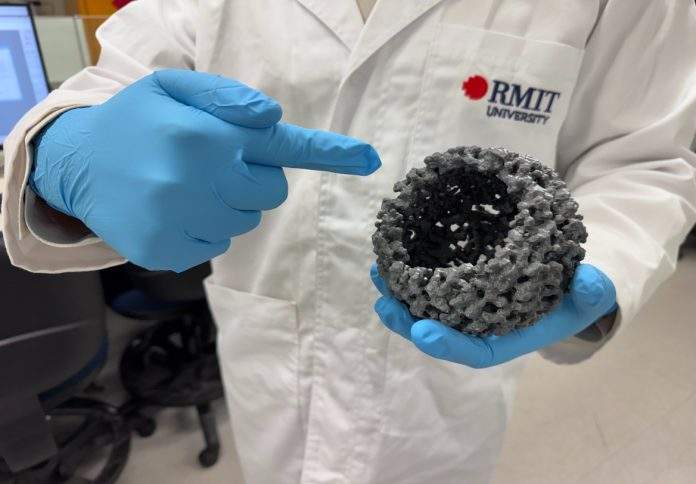
The research, conducted in collaboration with China's Zhoukou Normal University and Xinyang University, focused on improving titanium dioxide rather than developing an entirely new hydrogen production system. The team modified the material by adding a small amount of nickel, introducing defects to influence energy movement, and shaping the material into microscopic hollow spheres to improve light capture. According to the researchers, these combined changes allowed the material to retain energy for longer periods and channel more energy into hydrogen production.
Hao said the findings also highlight the potential of using readily available materials to replace more expensive alternatives. "This work shows that comparable performance can be achieved using low-cost, widely available materials, which is crucial for scaling up hydrogen production," he said.
The researchers reported that the improved material maintained its performance in repeated laboratory tests, producing the strongest results under ultraviolet light while also showing some activity under visible light. RMIT noted that the experiments were conducted under controlled laboratory conditions using a methanol-containing solution, representing a simplified hydrogen production system rather than full water splitting. The university said further research is needed to evaluate the technology's performance under direct sunlight and without the use of added chemicals.
The study, co-authored by RMIT researchers Associate Professor Ravichandar Babarao, Dr. Li Gao, and Associate Professor Yichao Wang, was published in Applied Catalysis B: Environment and Energy under the title "Nanoconfined Ni single-atom Ni–O–Ti atomic asymmetric sites for highly efficient and stable photocatalytic hydrogen evolution."
Related Products



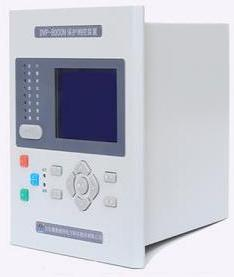
Microcomputer Protection and Substation Automation
Beijing Agent Devote Power Technology Development Co., Ltd.
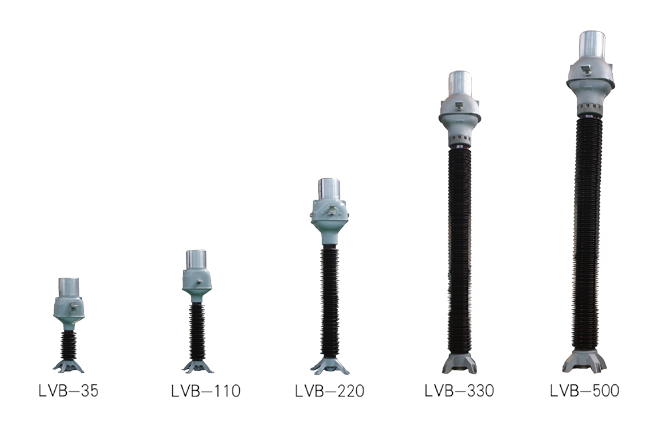
LVB Series 35-500kV Oil-immersed Inverted Current Transformer
Shandong Taikai Instrument Transformer Co., Ltd.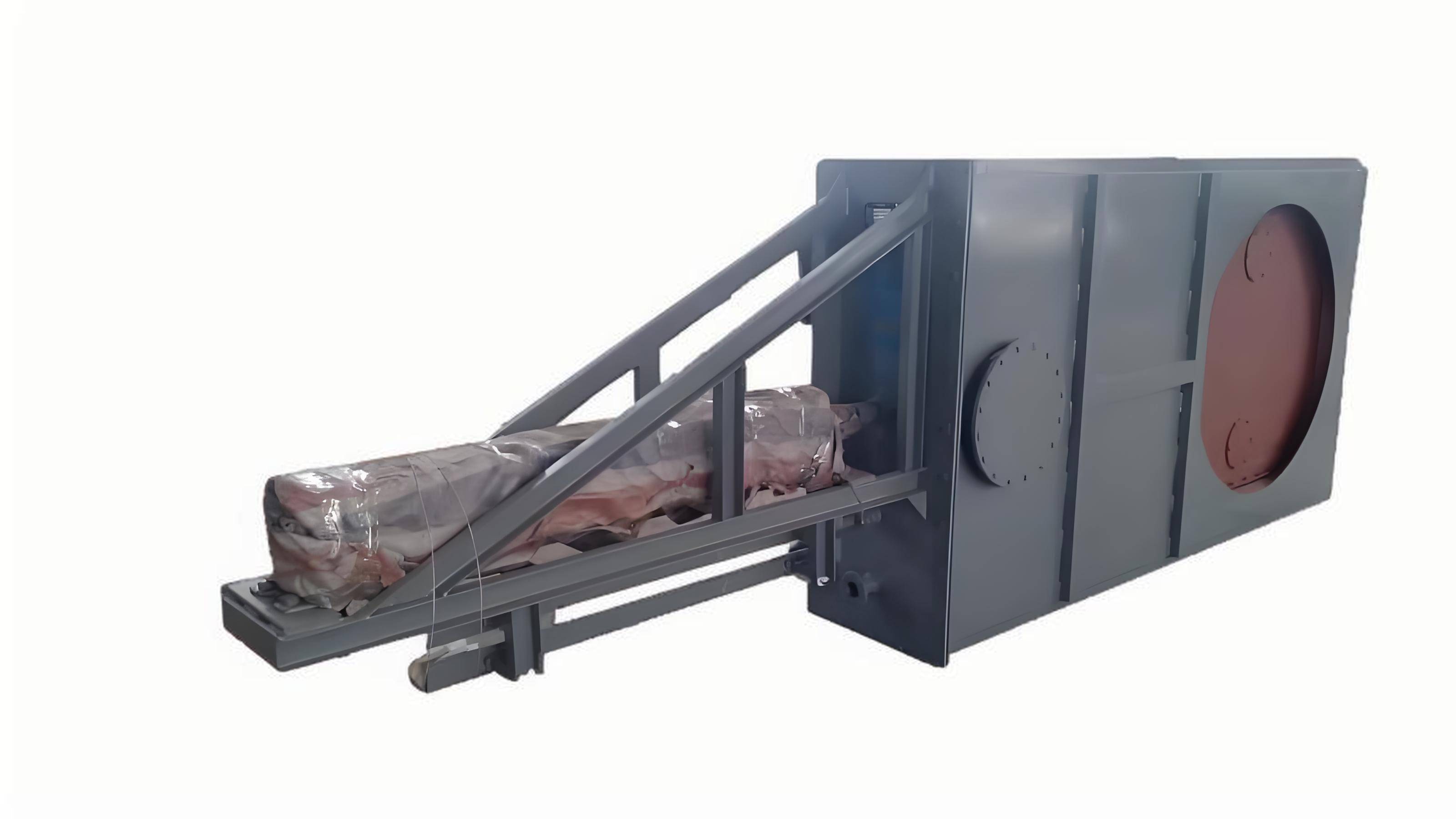
Double-slide Triple-sealed Hot Air Isolation Door
Xi'an Yingchuan Electric Power Equipment Co., Ltd.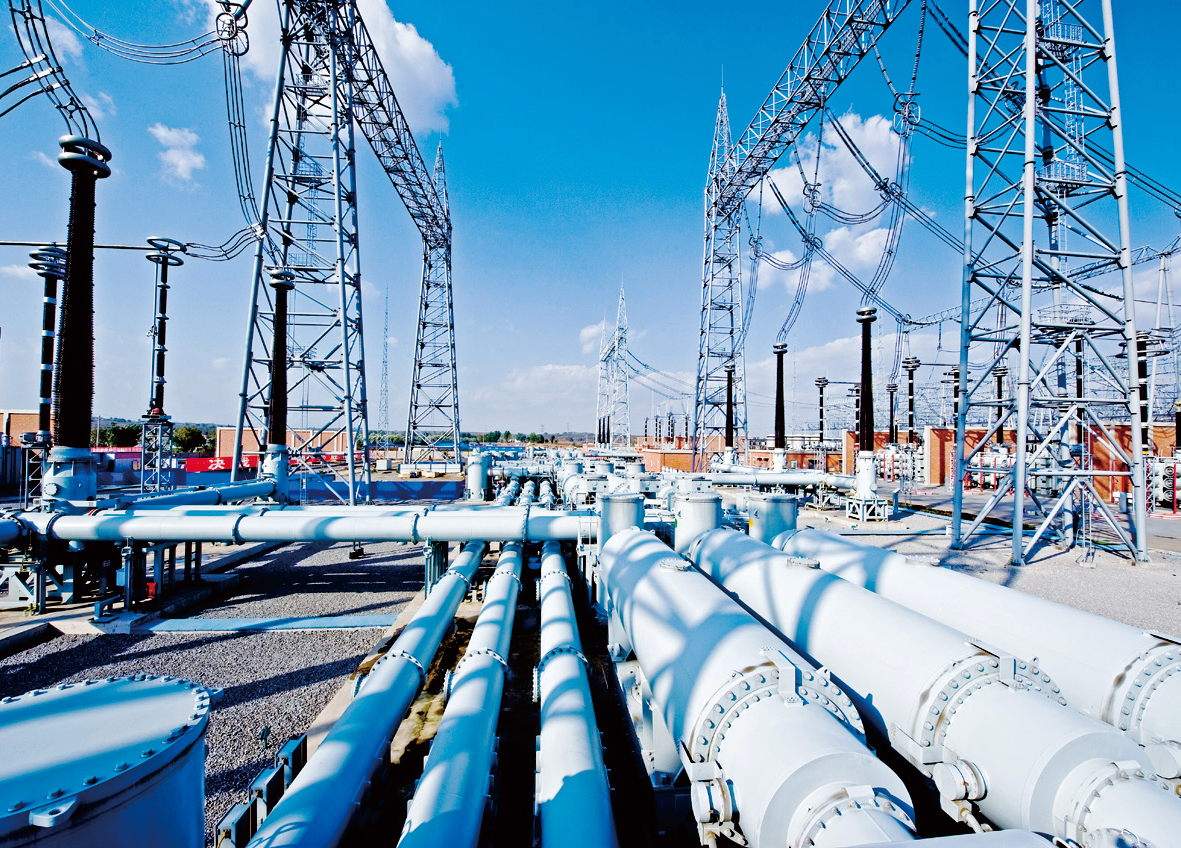
40.5kV-1100kV Gas Insulated Metal-Enclosed Switchgear (GIS)
Henan Pinggao Electric Co., Ltd.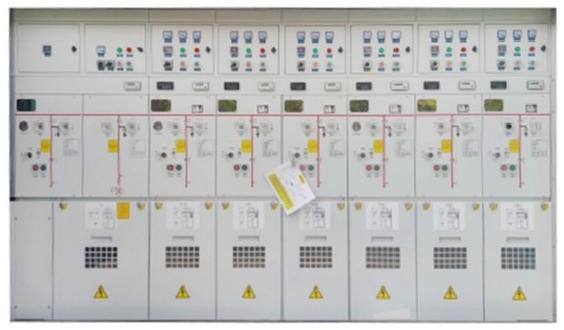
NISELA Series Environmentally Friendly Gas-Insulated Ring Main Unit
XJ DELISHIER ELECTRIC CO., LTD.
Inductive Power Harvesting Self-Powered Device - Safuneng
SELF ENERGY TECHNOLOGY (SHENZHEN) CO., LTD.
Standard Nozzle Flowmeter
Jinggong Automatic Control Instrument Complete Technology Development Company