Brazil Plans to Create a Single Aviation Market with South American Neighbors in Phases
en.Wedoany.com Reported - Brazilian Ports and Airports Minister Tomé Franca stated that Brazil has the opportunity to create a single aviation market with South American countries, offering greater flexibility for foreign airlines to operate domestic flights within Brazil—a possibility currently completely prohibited by law. Franca made this assessment in an interview with Agência iNFRA. Initial steps began with the signing of memorandums of understanding with Argentina, Chile, and Paraguay, with Uruguay expected to join as well.

Progress in Brazil's aviation liberalization will depend on a study conducted within a year by a working group composed of representatives from each signatory country. Sensitive issues historically used as justifications for Brazil's closure of domestic flights to foreign airlines, such as labor and competition concerns, will be analyzed and discussed within this framework alongside affected industries. The government hopes to see Brazil's airspace become more open and interconnected, although this may require phased implementation and legal amendments. The political environment is considered favorable for advancing this agenda in Congress, as both chambers have already approved bills with similar intentions.
Franca stated that the working group's primary goal is to bring national regulations and operational conditions to the table, covering areas such as labor laws and consumer protection, then analyze how to structure everything and work toward a single market, potentially in phases. He formally signed the agreement last week in Asunción, Paraguay. Although the more open skies policy for domestic flights is still in its infancy, this move has been welcomed by industry chain stakeholders, who see it as a significant step toward revitalizing the aviation market and note that Brazil is considerably behind compared to other economies. For example, it was only in 2018 that Brazil allowed airlines headquartered locally to have 100% foreign capital.
While further studies are needed for domestic aviation liberalization, Brazil has signed agreements with Argentina and Paraguay that immediately open new possibilities for international operations and could help establish a common market in Latin America. The possibility of foreign airlines operating domestic flights (with both origin and destination within Brazil) covers the eighth and ninth freedoms of the air, which respectively authorize foreign carriers to operate domestic segments as extensions of international routes, or to operate freely without connection to another flight. According to the minister, the initial proposal is to broadly authorize the eighth freedom, while limiting the ninth freedom to South America, thereby creating a single aviation market in the region, similar to what already exists in Europe.
The eighth freedom is considered easier to implement, as it stems from routes already operable in Brazil, avoiding sensitive discussions involving operational safety and labor laws. For example, TAP Air Portugal already flies from Lisbon to Belém (PA) and then to Manaus (AM); it is currently not authorized to sell tickets in Brazil to passengers interested only in that domestic segment. If the eighth freedom is granted, TAP has already expressed interest.
The Ports and Airports Ministry assesses that in a continental country with over 200 million people, the market is far from ideal. Among Brazil's more than 5,000 cities, fewer than 200 are served by airlines, with the domestic aviation market concentrated among three companies: Azul, Gol, and Latam. Franca stated that even if 100% of airports do not need to operate scheduled flights, there are still many cities with demand that lack air transport services, and attracting more companies to operate is a way to improve service levels.
Some resistance to the liberalization initiative comes from flight crews, who oppose Brazil allowing foreign nationals to form domestic flight crews. Franca stated that this aspect requires discussion within the working group with flight crews, understanding their positions, respecting and comprehending their goals. He questioned whether Brazil can ensure more jobs by allowing more companies to operate, and said that increasing the number of airlines to achieve this depends on dialogue with affected groups. The minister also noted that the working group may not necessarily conclude that a common market can be established, as this depends on regulatory and competition coordination among South American countries, and Brazil cannot accept worse working hours for the sake of liberalization.
Brazilian airlines oppose opening the market, arguing that foreign companies entering domestic routes would create an unfair competitive environment, as these airlines do not bear certain costs considered high in Brazil. Franca argued that Brazil should create a healthy competitive environment where domestic and foreign companies compete on an equal footing, and the market is large enough to accommodate all participants. He stated that people who do not use air transport today will start using it because they will gain services currently unavailable. Efforts to support more companies entering are not without consideration for the government's commitment to making the operating environment healthier for existing companies, such as approving 13.56 billion reais in loans to airlines through the National Civil Aviation Fund (FNAC), and taking measures to mitigate the impact of the Middle East war. Franca noted, "In this geopolitical process, I don't know of any country that has done what Brazil has done." He also mentioned that ongoing dialogue with the Ministry of Finance continues to secure more favorable treatment for airlines under the new tax system—under the consumption tax reform passed by Congress, the industry says the impact on ticket prices could exceed 20%. Franca stated that discussions with the Ministry of Finance also covered reducing the Financial Transaction Tax (IOF) and the Income Tax (IR) on aircraft leasing.
Related Products
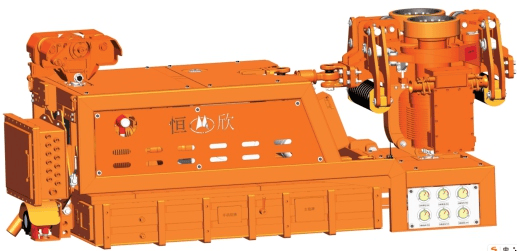

Explosion-proof lithium battery dispatching monorail crane locomotive (permanent magnet frequency conversion integrated machine)
Xiangtan Hengxin Industrial Co., Ltd.
GSR6-27.5kV SF6 Free Gas-insulated Metal-enclosed Switchgear
Zhejiang Juhonkia Intelligent Electric Co., Ltd.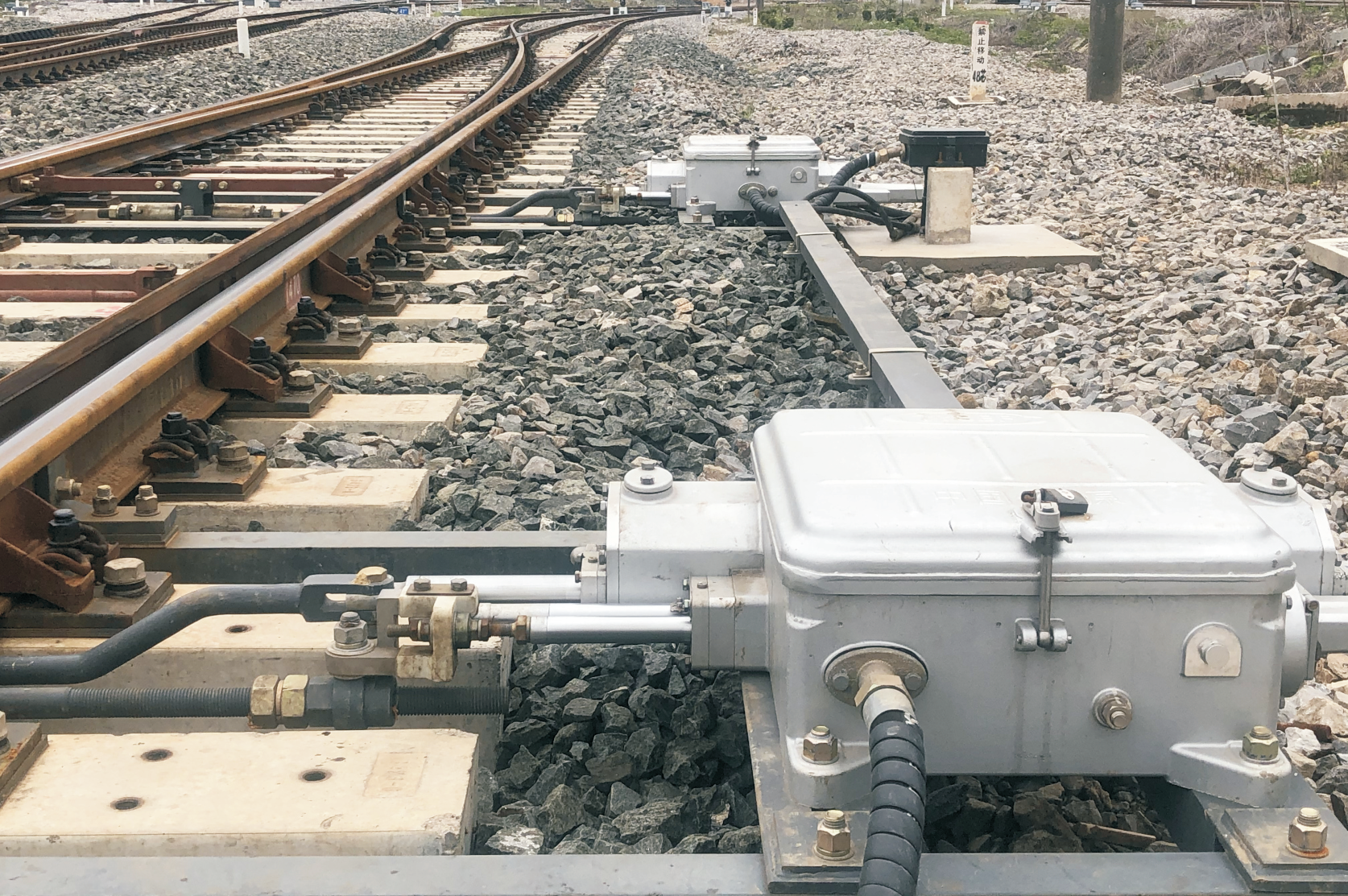
ZY(J)7(M) Sealed Type Electro-Hydraulic Turnout Machine
TAIYUAN CR JINGFENG EQUIPMENT TECHNOLOGY CO., LTD.



"Shunyi 1600" Deep-submerging Bottom-sitting Multi-functional Wind Power Engineering Vessel
Zhengli Offshore Engineering Co., Ltd.



3m intelligent buoy combining navigation safety and real-time marine monitoring integrated navigation and marine monitoring system for real-time maritime data
Chengdu Dixin Technology Co., Ltd.