Finland's IQM and German Railway Complete End-to-End Validation of Quantum-Classical Hybrid Algorithm
en.Wedoany.com Reported - Finnish superconducting quantum computing company IQM and Europe's largest railway operator, German Railway (DB), have jointly released a research white paper. Based on real operational data from German Railway, the two parties built a quantum-classical hybrid algorithm architecture and fully executed the entire process—from problem modeling and algorithm solving to outputting scheduling solutions—on existing quantum hardware. This architecture is designed to be scalable, and similar methods can, in principle, be applied to fields such as logistics, energy, and manufacturing.
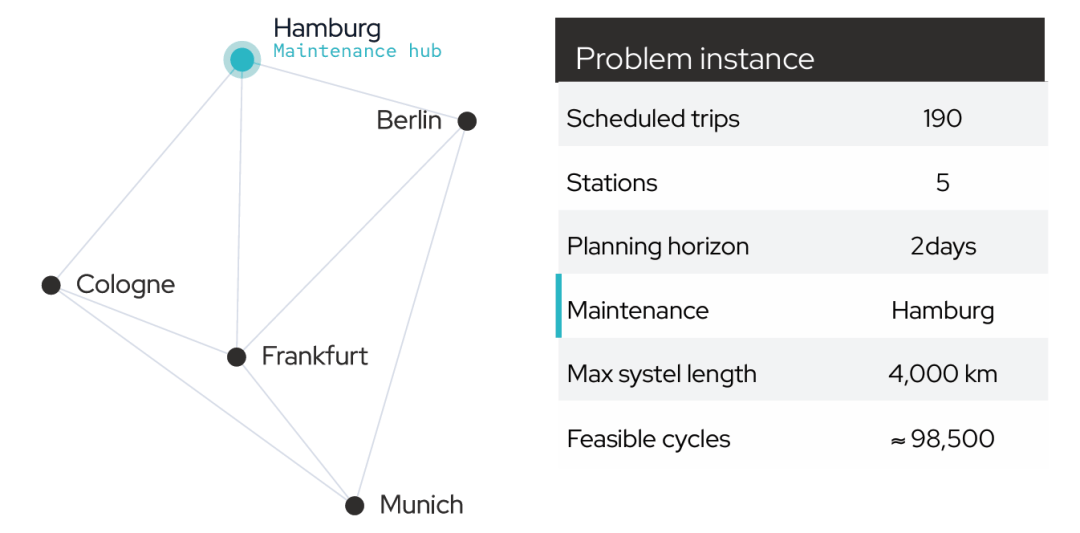
The dataset used in this study includes the operational schedules of 190 trains between five German cities, which were transformed into approximately 98,500 possible scheduling cycle combinations. Railway scheduling optimization typically requires handling a vast number of possible combinations, involving the coordination of multiple constraints such as train operation arrangements and resource allocation. Instead of directly using a quantum computer to solve the entire optimization problem, the research team adopted a phased hybrid architecture: the classical computing framework manages the overall scale and constraint structure, decomposes sub-problems suitable for quantum processing, and submits them to the Quantum Approximate Optimization Algorithm (QAOA) running on quantum hardware. The results are then returned to the classical framework to complete the overall computation and iteration.
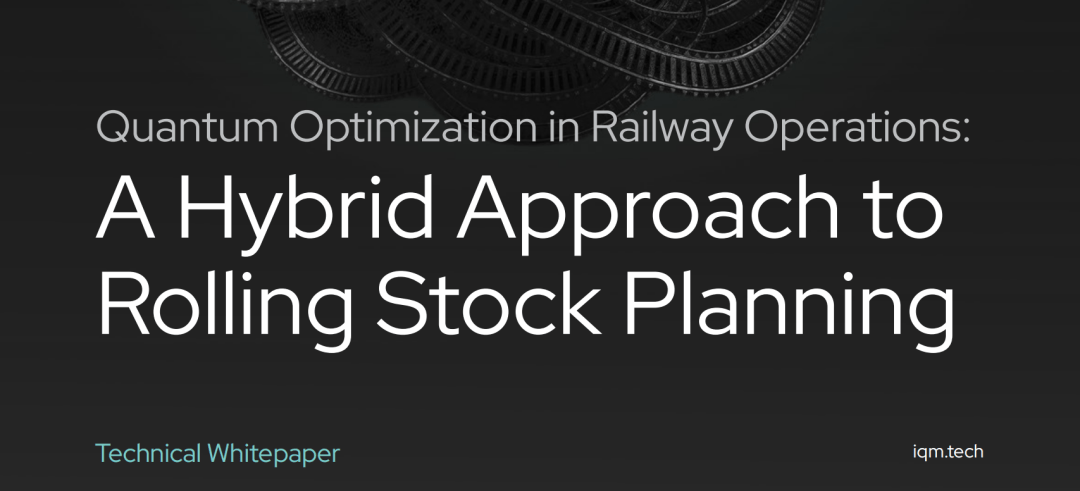
The research results published in the white paper show: First, the approach can produce feasible solutions on existing hardware without relying on large-scale fault-tolerant quantum computers that have not yet been realized. Second, there is a statistically significant positive correlation between solution quality and hardware capability; the larger the sub-problem scale the quantum processor can handle, the higher the final solution quality. Third, the entire process runs end-to-end on IQM's quantum computer, from problem modeling to result output, all completed on proprietary hardware, establishing a reproducible technical baseline.
Manfred Riek, Head of Quantum Technologies at German Railway, stated that this collaboration is an attempt to solve real operational problems in an environment combining high-performance computing and quantum computing. Dr. Inés de Vega, Chief Scientist at IQM, noted that the project demonstrates a potential pathway for quantum computing to handle enterprise-level complex optimization problems.
Both parties pointed out that this study primarily addresses scheduling planning problems under known and relatively stable operating conditions. More challenging real-time rescheduling scenarios in railway operations, such as minute-level decision-making under disruptions like train delays, sudden speed restrictions, or equipment failures, have not yet been validated within this framework. However, as quantum hardware performance improves, this hybrid architecture can, in principle, be extended to such scenarios.
Founded in 2018, IQM is the first European quantum computing company to list on the U.S. Nasdaq. It was spun off from Finland's VTT Technical Research Centre and Aalto University, providing full-stack superconducting quantum computing solutions covering chip design, hardware manufacturing, control systems, software platforms, and system delivery, supporting both on-premises deployment and cloud access. IQM has sold over 20 quantum computers, making it one of the largest European quantum computing vendors by on-premises delivery volume, and was recognized as a Major Player in the IDC MarketScape: Worldwide Quantum Computing Vendor Assessment 2026.

Related Products
![IVECO Cash-in-Transit [DMT5048XYCL3-AM] - Chongqing Dima Industry Co., Ltd](https://img.wedoany.com/2026/0911/20260911030157582.png)


China - Alashankou/Khorgos - Europe Full Range Transportation (Mala/Hamburg/Duisburg/Budapest, etc.)
Shenzhen Neptune Logistics Co., Ltd.
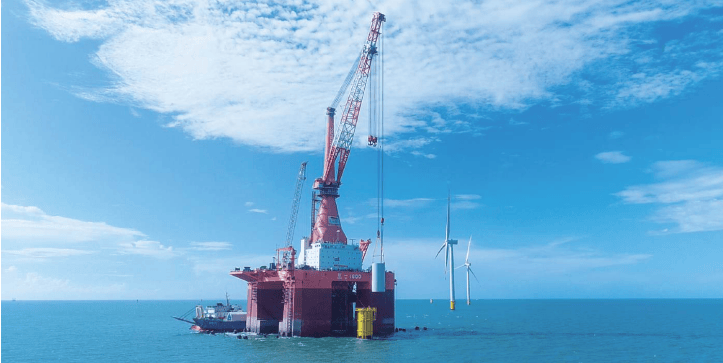
"Shunyi 1600" Deep-submerging Bottom-sitting Multi-functional Wind Power Engineering Vessel
Zhengli Offshore Engineering Co., Ltd.
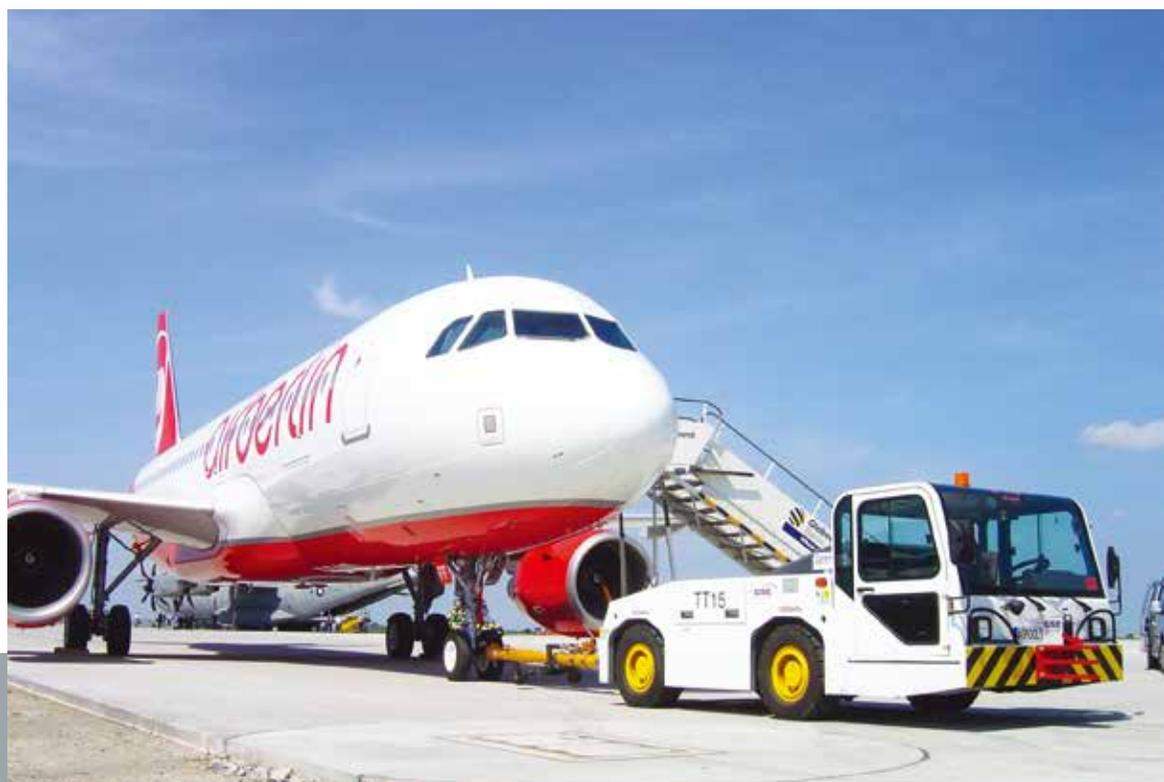
WGQY Series Aircraft Tow Tractor-WGQY15, WGQY27
Weihai Guangtai Airport Equipment Co., Ltd.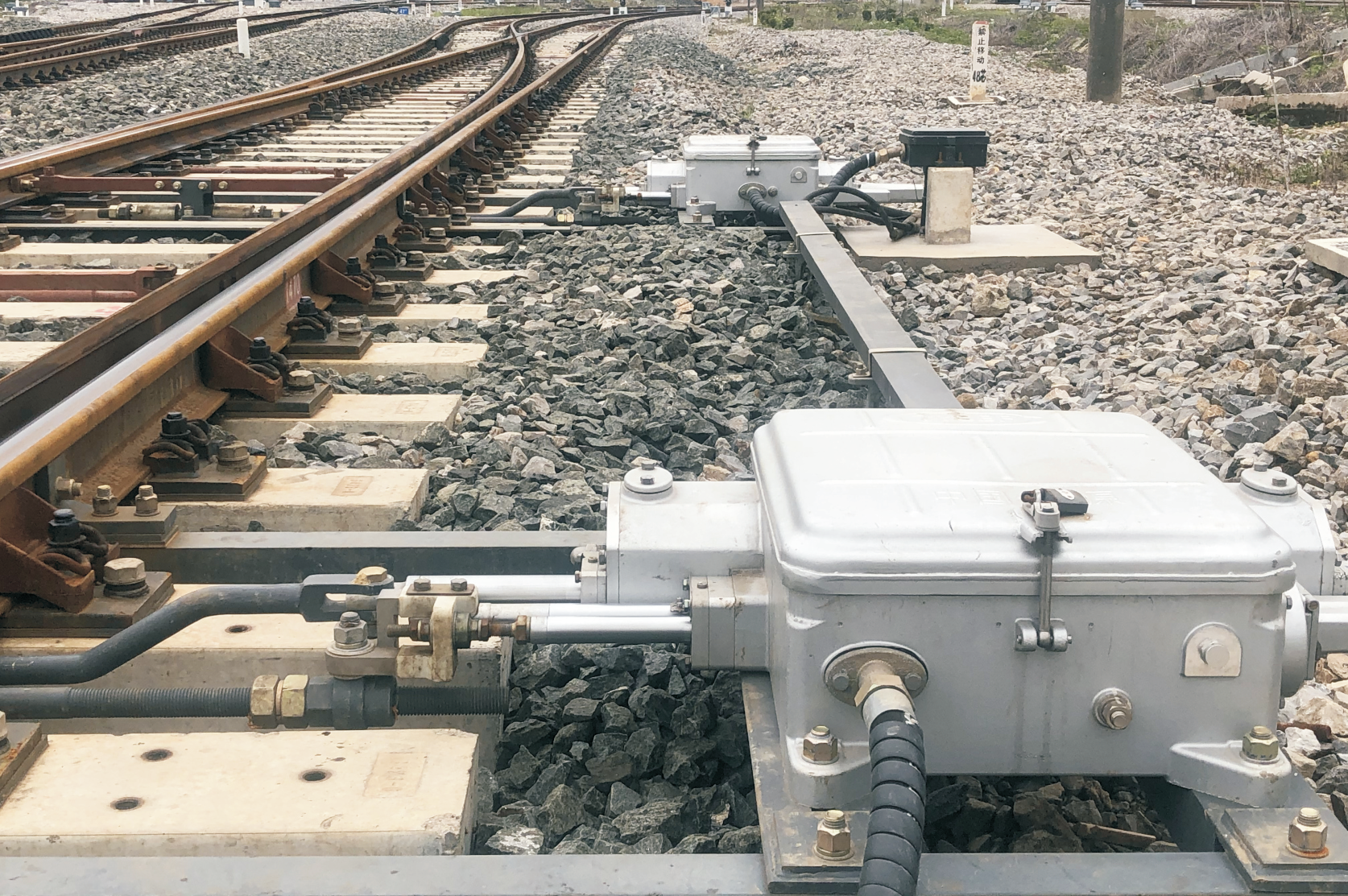
ZY(J)7(M) Sealed Type Electro-Hydraulic Turnout Machine
TAIYUAN CR JINGFENG EQUIPMENT TECHNOLOGY CO., LTD.