UESTC Proposes Low-Orbit Satellite Beamforming Method, Reducing Processing Time by Up to 99.71%
en.Wedoany.com Reported - The University of Electronic Science and Technology of China (UESTC), in collaboration with the Tianfu Wireless Intelligent Research Institute, has proposed a low-complexity digital beamforming method for low-earth orbit (LEO) satellite beam scanning. This method significantly reduces processing time while maintaining acceptable beam performance. Addressing the challenge of tracking ground targets due to the high-speed movement of LEO satellites, it provides a solution for real-time beam scanning communications.
Phased array antennas are standard in LEO satellite communications. Their large-scale arrays control the feed phase and amplitude of each element to change the direction of the pattern's maximum, enabling beam scanning. However, the high-speed motion of satellites causes ground terminals to constantly perceive changes in satellite position, necessitating a beam scanning method that is both fast and capable of maintaining multifunctional pattern performance to ensure communication continuity.
The method comprises two stages: first, a convex optimization process determines the excitation related to the initial beam; then, a low-complexity beamforming method determines the excitation related to the scanning beam. This process is formulated as an orthogonal Procrustes analysis problem with a closed-form solution, requiring no iteration or matrix inversion, thus achieving low-complexity computation. The method can rapidly synthesize complex scanning beams in specified directions, operating with acceptable beam performance loss.
Compared to traditional phase-shift methods, this approach better maintains complex beam shapes, achieving a favorable trade-off between beamforming performance and complexity, making it suitable for multi-user satellite communication scenarios. Numerical simulations in various scenarios validate its effectiveness: on a 16-element uniform linear array, the computational delay is as low as 0.01 milliseconds; on a 14×14 element uniform planar array, the computational delay is 0.18 seconds, while achieving acceptable sidelobe level degradation. Compared to improved genetic algorithms and convex optimization-based methods, this approach reduces processing time by 70% to 99.71% while maintaining strict sidelobe level performance bounds. Compared to traditional phase-shift methods, processing time increases by up to 25%, but the sidelobe level can be reduced by at least 76%.
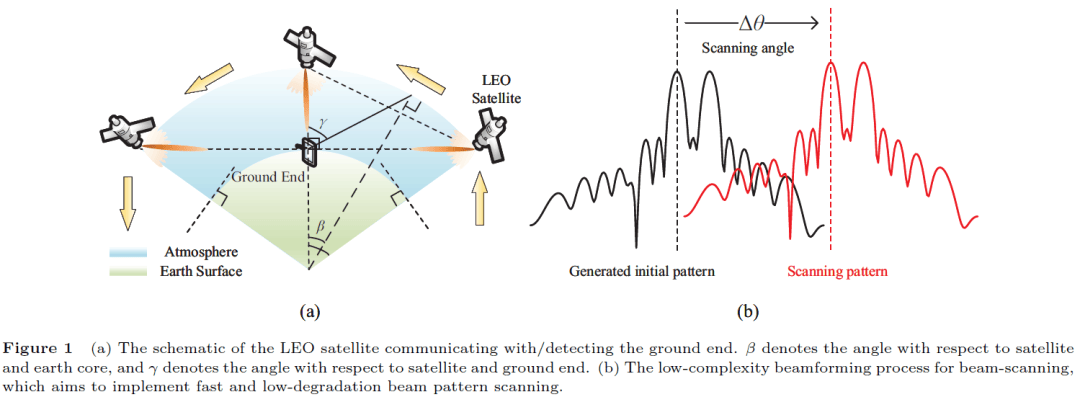
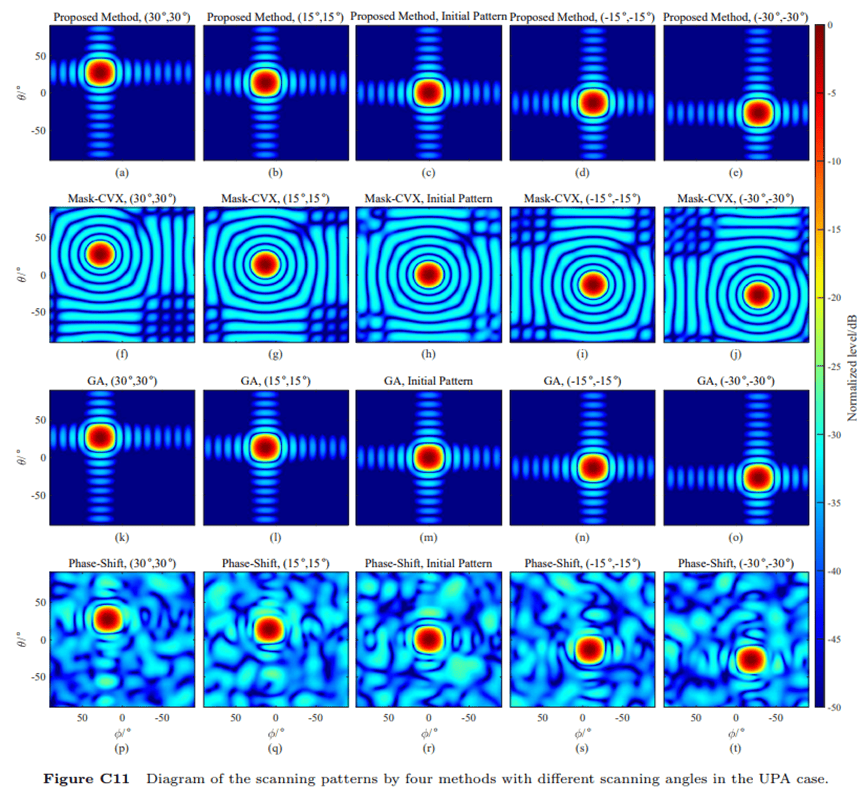
The related research results have been published in the journal Science China Information Sciences (English edition) (Sci China Inf Sci, 2026, 69(8): 189304), co-authored by Tian Yutong, Yang Haining, Yi Shijia, Li Na, and Cheng Yujian from UESTC, and Yang Haining from the Tianfu Wireless Intelligent Research Institute.
Related Products

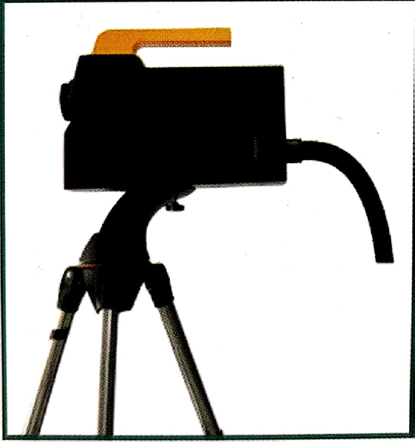
Automatic Aiming Laser Remote Obstacle Removal Robot
Pinggao Group Weihai High-Voltage Apparatus Co., Ltd.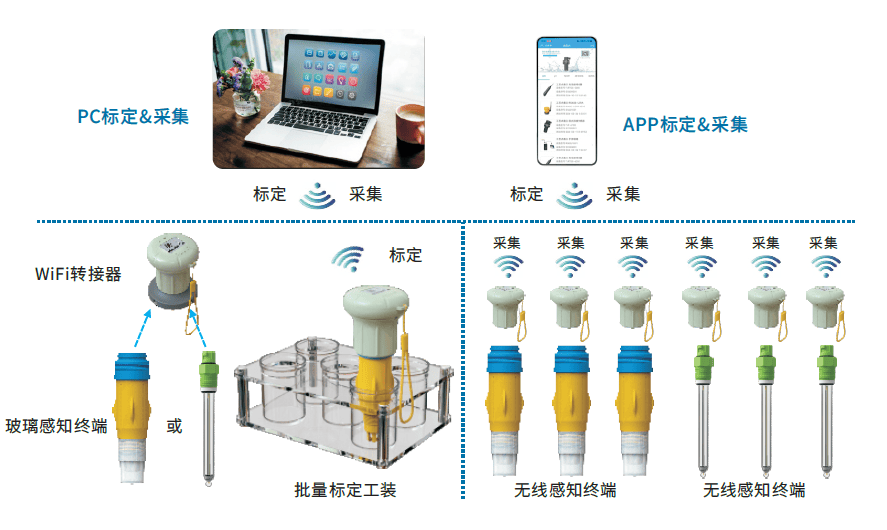

Comprehensive Mining Automation Control System
Beijing Tianma Intelligent Control Technology Co., Ltd.

20 Inch 1600*900 Full HD 60Hz TFT LED Monitor with VGA and DP Interfaces for Desktop Computers-Business Use
Guangzhou Zanying Optoelectronics Technology Co., Ltd.

Industrial and Commercial Point-Type Gas Detector
Jinan Benan Technology Development Co., Ltd.
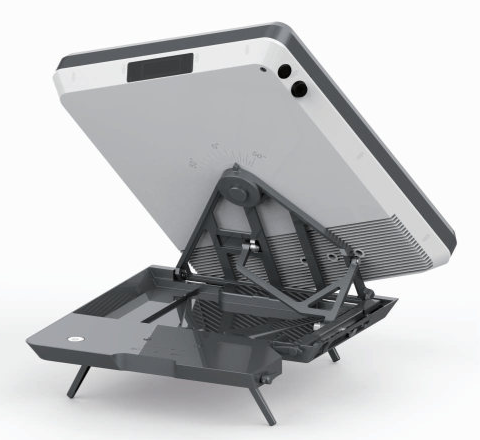
Flat Portable Satellite Terminal 0.35m Aperture Manual Portable Terminal
China Starwin Science & Technology Co., Ltd.