Huawei Explains Two-Way Empowerment of Computing and Electricity at 2026 WAIC China
en.Wedoany.com Reported - During the 2026 World Artificial Intelligence Conference (WAIC), Li Jiguang, General Manager of Huawei's China Enterprise Power System Department, and Huang Feng, President of Huawei's Smart Power Generation Corps, engaged in a dialogue with the media on the "Action Plan for Promoting Two-Way Empowerment Between Artificial Intelligence and Energy" jointly issued by four ministries and commissions, the digital transformation path of power generation, and ecosystem strategies. Li Jiguang and Huang Feng stated that the power industry is shifting from "one-way AI empowerment" to "two-way empowerment of computing and electricity," with AI's role having been upgraded from an efficiency tool to the dual core requirement of "survival + production" for the new-type power system.
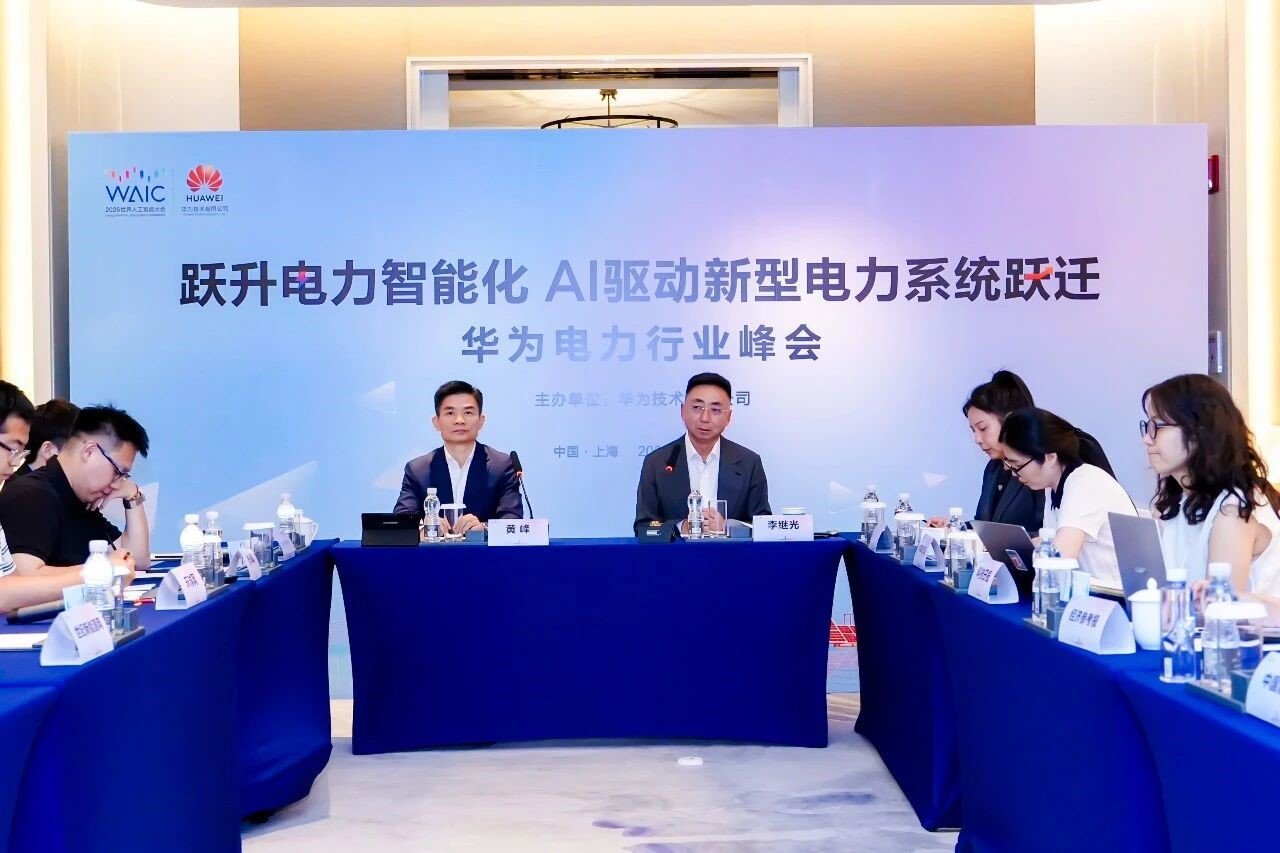
In May this year, the National Development and Reform Commission, the National Energy Administration, the Ministry of Industry and Information Technology, and the National Data Administration jointly issued the "Action Plan for Promoting Two-Way Empowerment Between Artificial Intelligence and Energy," proposing that by 2030, the clean energy supply guarantee capacity for AI computing infrastructure and the level of AI application in the energy sector will be significantly improved, building a new development pattern of two-way empowerment and deep integration between AI and energy.
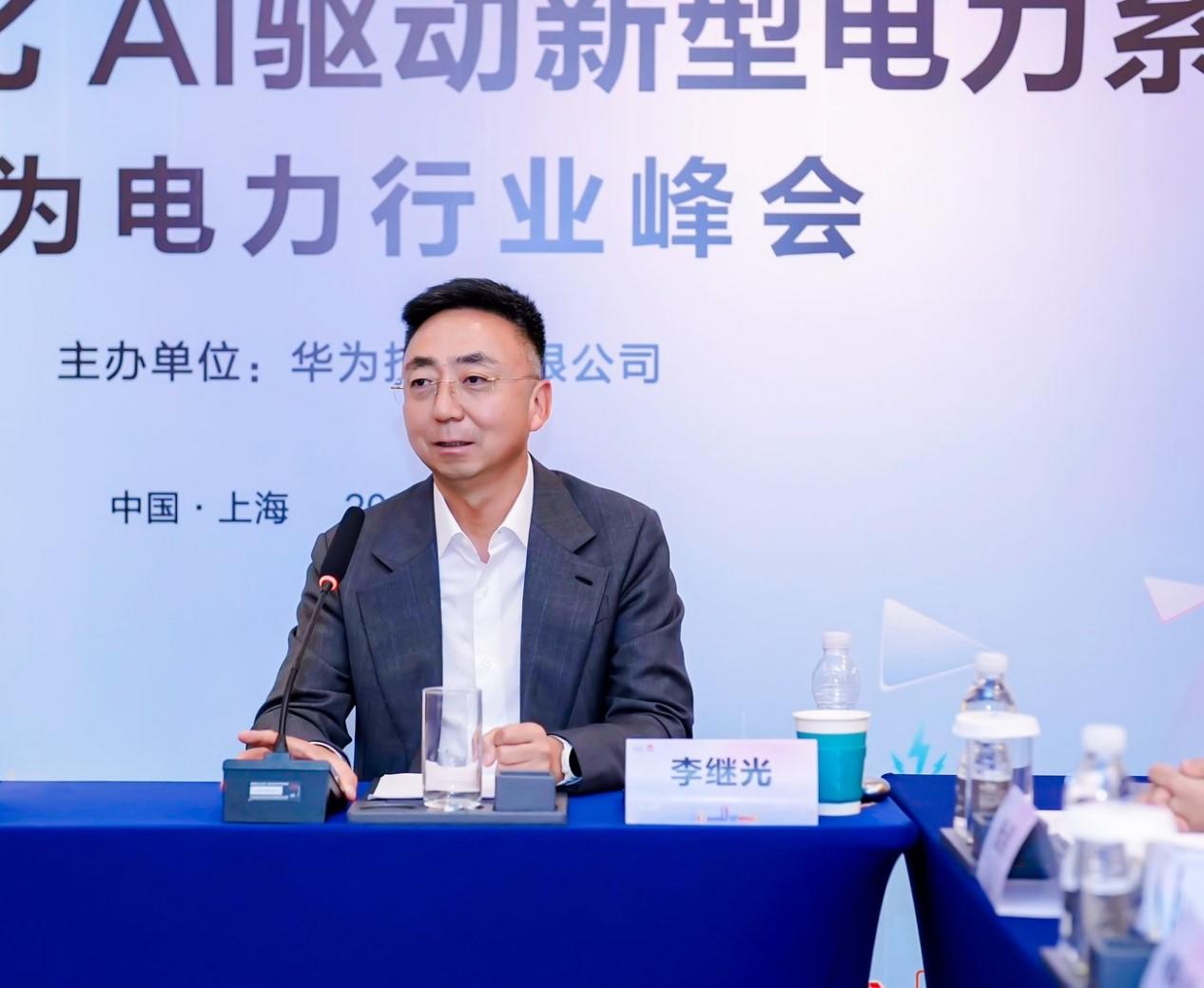
Li Jiguang believes the document signals three shifts: first, from "building computing power" to "computing-electricity coordination," with computing power following electricity supply and pricing; second, AI moving from technology demonstrations to business applications, delving into production scenarios such as new energy power forecasting and predictive equipment maintenance; third, from point applications to systematic development, with the Yalong River hydro-wind-solar integrated dispatch having already achieved end-to-end AI upgrades.
On May 26, the National Energy Administration held a national on-site promotion conference on "AI + Energy" in Shenzhen, where 51 first-batch high-value "AI + Energy" scenarios were released. Li Jiguang stated that Huawei has proposed a target communication network of "strong backbone, converged medium voltage, transparent low voltage, and space-ground integration," using a unified network and unified platform to address insufficient site coverage and data fragmentation, supporting diverse upper-layer models with unified underlying infrastructure, rather than building 51 fragmented systems. Huawei's AI architecture is divided into three layers: the bottom layer comprises infrastructure such as computing, networking, and storage; the middle layer consists of Huawei Cloud and AI enablement platforms; and the upper layer involves developing scenario-based applications in partnership with ecosystem partners.
Huang Feng emphasized that enterprise digital and intelligent transformation should "be grounded in the present while looking to the future; plan holistically, implement step by step, and carry one blueprint through to completion." ICT infrastructure must not become a bottleneck for transformation—it should be built first and moderately ahead of demand, laying the foundation for upper-layer application upgrades through a "cloud-edge-device" architecture, encompassing eight core elements: reliable networking, elastic cloud services, resilient storage, governed data, domain-aware models, powerful computing, end-to-end security, and convenient toolchains.
The Smart Power Generation Corps focuses on customers' core needs, including digital transformation planning at the group level, multi-energy complementarity at the regional level, and production-sales coordination at the plant level. Production-sales coordination specifically involves traditional thermal power fuel management to reduce energy consumption per kilowatt-hour, green energy meteorological power forecasting to promote grid absorption, predictive equipment maintenance to reduce unplanned outages, and auxiliary decision-making for power trading to enhance trading returns.
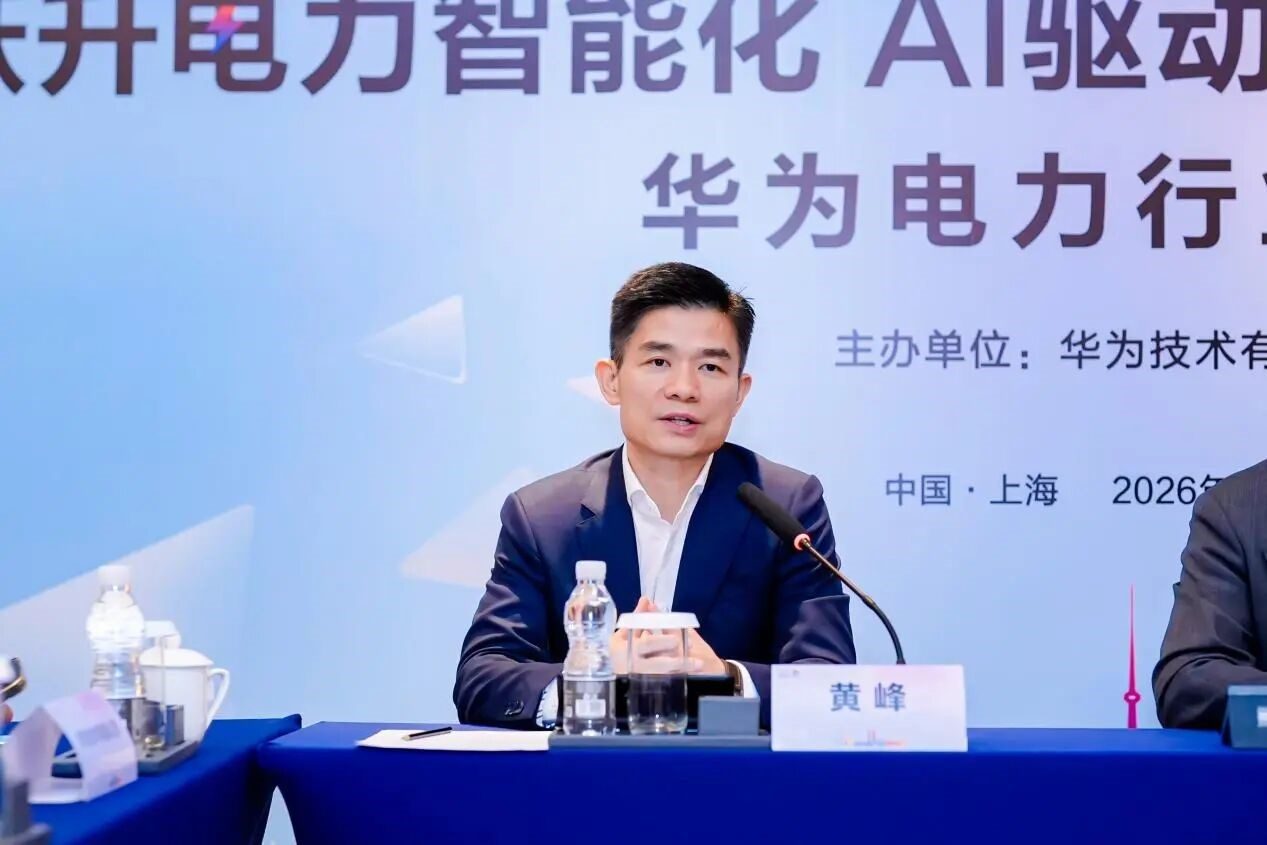
Regarding the vision for smart power generation, Huang Feng proposed three points: centering on user experience, providing governance, management, and execution layers with a ROADS experience—Real-time, On-demand, All-online, DIY, and Social; targeting business value, creating commercial value around "green, profitability, efficiency, and safety"; and leveraging smart factories as a means to achieve collaboration among "natural persons, digital humans, and robots," gradually advancing toward the "smart factory."
In terms of ecosystem restructuring, Li Jiguang stated that Huawei will focus on four tasks: building computing infrastructure, jointly tackling high-value scenarios, productizing scenarios, and exploring computing-electricity coordination with power enterprises. He noted that no single enterprise can complete AI applications end-to-end, and Huawei will select partners with power industry expertise, AI capabilities, and productization and continuous operation capabilities to jointly develop products, expand markets, and share risks.
Regarding the pace of implementation, Li Jiguang remained cautious, stating that large-scale deployment of AI in power production may still take some time. Huawei will adhere to a "small entry points, deep penetration" approach, first solidifying high-value scenarios, then accelerating replication with out-of-the-box integrated appliances.
Related Products

TWP16 P-Band Tropospheric Wind Profile Radar
China Huayun Meteorological Technology Group Co., Ltd.
Industrial and Commercial Point-Type Gas Detector
Jinan Benan Technology Development Co., Ltd.

G.652.D Wavelength-extended Non-dispersion Shifted Single-mode Optical Fiber
HONGAN GROUP CO., LTD.


Multi-function Marine Monitoring Low-altitude Detection Radar Sea-air Boundary Ocean Dynamic Environment Measurement
Chengdu Dixin Technology Co., Ltd.