Jiaxing Token Operations Center in Zhejiang, China Launched, First Batch of 20 Partners Signed
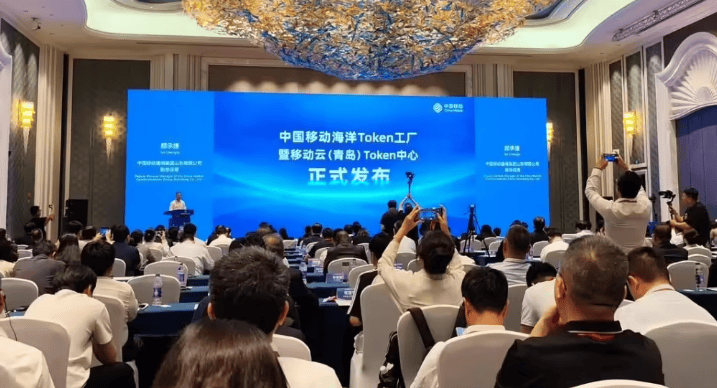
en.Wedoany.com Reported - On the afternoon of July 30, the launch conference of the Yangtze River Delta (Jiaxing) Token Operations Center was held at Jiaxing Salon Hotel, marking the official public debut of the center. The conference also featured the operations center unveiling ceremony and the ecological cooperation signing ceremony. China Mobile Jiaxing Branch, as a strategic partner in the Token economy, participated in the ecological co-construction, with its core computing resources officially settled in the operations center, providing full-chain capability support for Jiaxing's token industry.
In March this year, the National Data Administration officially named Token as "Ci Yuan" (Token), and artificial intelligence has fully entered a new stage of the token economy. Tokens are the standardized value carriers of large model intelligent services and the core metering units connecting computing power, models, and applications. As AI applications accelerate their deployment, the focus of industrial competition is shifting from competition over model parameters and computing power scale to the use of effective tokens at lower costs and higher efficiency. As the fundamental resource for token production, the supply capacity of computing power directly determines the quality and efficiency of the token economy's development.
Jiaxing is located in the heart of the Yangtze River Delta, with a solid manufacturing base and a vibrant digital economy. The city is home to 6,327 industrial enterprises above designated size and over 230 AI technology innovation enterprises, and its rich industrial scenarios generate strong demand for AI applications. However, many enterprises still face practical pain points such as difficulty in model selection, high invocation costs, and fragmented resource connections. The establishment of the Yangtze River Delta (Jiaxing) Token Operations Center is precisely intended to solve the challenges of enterprise AI implementation and lower the threshold for intelligent transformation through resource aggregation, intelligent scheduling, and unified operations.
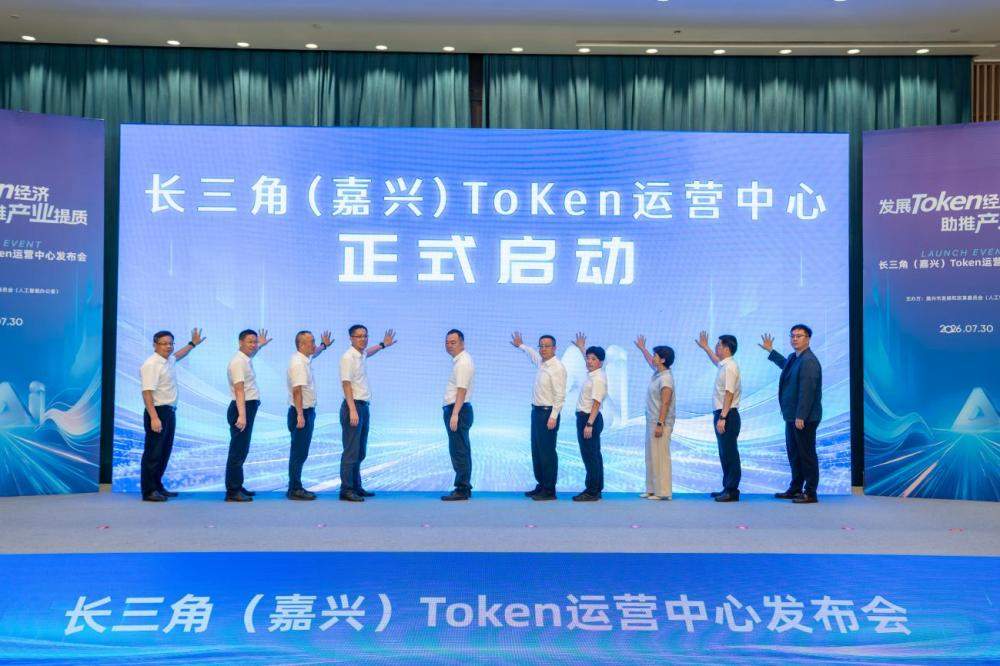
The Yangtze River Delta (Jiaxing) Token Operations Center is positioned as "rooted in Jiaxing, serving the Yangtze River Delta, and connecting national resources," and primarily undertakes three functions: first, building an inclusive service gateway, enabling enterprises in the Yangtze River Delta to enjoy "one-time access, full-network connectivity" through a unified Token service platform, thereby lowering the barrier to AI application; second, establishing a resource scheduling hub that connects high-quality computing power supply with real industrial demand in the Yangtze River Delta, ensuring that computing power is not left idle and demand is not unmet; third, exploring green and trustworthy services, leveraging Jiaxing's pioneering efforts in computing-power-electricity collaboration to build a green Token traceability and evaluation system, providing credible, measurable, and traceable AI services for enterprises going global. As the unified service window of the operations center facing the market, the official portal website has been launched simultaneously, relying on its state-owned background to build the "five unifications" core capabilities: unified API access, unified Token metering, unified fee settlement, unified policy deduction, and unified security auditing. The platform functions like a large-scale "data model supermarket," where enterprises can, with a single integration, invoke over a hundred mainstream large models on demand, with intelligent matching of cost-optimal solutions, making AI capabilities as convenient, transparent, and readily available as water and electricity.
As a strategic partner in the Token economy, China Mobile Jiaxing Branch, leveraging China Mobile's computing power network and Mobile Cloud resource advantages, provides the operations center with secure, trustworthy, and elastically scalable intelligent computing supply, comprehensively supporting the platform in delivering low-cost, high-efficiency token services to enterprises.
On the computing power infrastructure front, China Mobile has thoroughly implemented the national "East Data, West Computing" project and has deployed 11 ultra-large-scale regional intelligent computing centers nationwide. In Zhejiang, China Mobile Zhejiang, relying on its three capability pillars of Mobile Cloud, Wutong Big Data, and the Jiutian AI platform, has built a "1+3+N+X" multi-tiered, three-dimensional computing power layout with the China Mobile Yangtze River Delta (Jiashan) Intelligent Computing Center as the core hub, with total computing power exceeding 8.9 EFLOPS, serving hundreds of thousands of government and enterprise units across the province. Among them, the China Mobile Yangtze River Delta (Jiashan) Intelligent Computing Center has planned an overall carrying capacity for a 50,000-card-level intelligent computing cluster, with an initial computing power scale of approximately 15,000 PFLOPS, capable of supporting various businesses such as large model training, AI inference, and industrial simulation. It is a core component of Jiaxing's four 10,000-card-level computing power clusters, providing a solid computing power foundation for the operations center's token production.
On the model services front, China Mobile's Model Service Platform (MoMA) has integrated over 300 mainstream AI models, including Jiutian, DeepSeek, Tongyi Qianwen, Doubao, and Kimi, pioneering a centralized Token operation model. Through its intelligent routing engine, it automatically matches the optimal model based on three strategies—"cost priority, effect priority, and balance priority"—and supports second-level model failover. The platform deploys a self-developed inference engine based on domestic computing power, reducing the unit Token cost by approximately 30%. Going forward, the MoMA platform will be deeply integrated with the operations center, leveraging its core capabilities in model integration, agent construction, and industry application deployment to provide enterprises with integrated services from computing power supply and model scheduling to scenario applications, ensuring that enterprises can afford and effectively utilize large model capabilities.
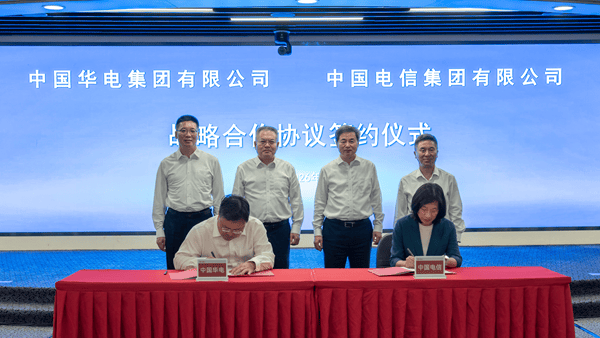
At the conference, the first batch of 20 ecological partners officially signed and settled in, covering local manufacturing leaders such as Zhenshi Group, Jushi Group, Xinfengming Group, Zhejiang Chenguang Cable, and Wankai New Materials, as well as technology and cultural enterprises such as Himalaya, Qiniu Information, and Jiuzhou Culture. Research institutes, industry associations, the AI OPC community, and local token tuning enterprises such as Shishi Technology also jointly participated in ecological co-construction, initially forming a complete collaborative network from resource supply to scenario application.
China Mobile Jiaxing Branch stated that, in the next step, it will take this signing as an opportunity to continue increasing investment in computing resources and AI capabilities in Jiaxing, deeply coordinate with the Yangtze River Delta (Jiaxing) Token Operations Center to advance the implementation of application pilots and the expansion of the industrial ecosystem, jointly explore innovative paths for the Token economy, empower the real economy, and promote the quality upgrading of regional industries.
Related Products


MUX Series Communication Interface Device for Security and Stability Control System
Nanjing NR Electric Co., Ltd.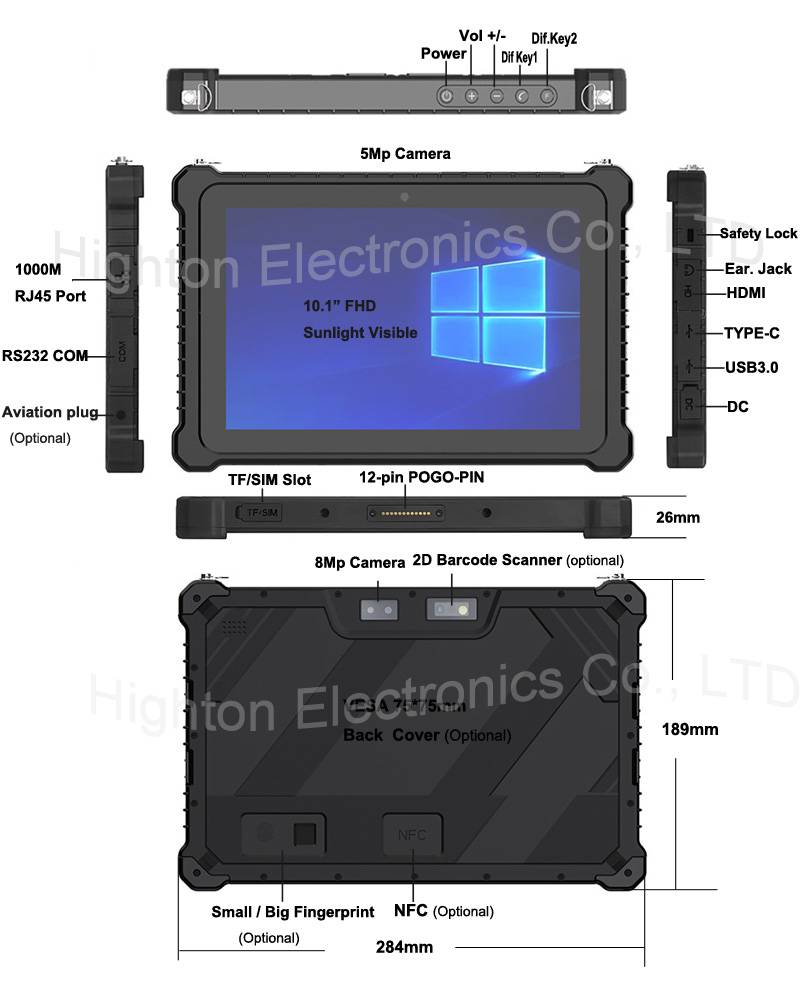
Hot Selling 10 Inch Intel N5100 I5 I7 FHD 8 +128GB 16+256GB Win10 Pro Win11 Pro 4G 5G Rugged Tablet PC Pad with NFC Barcode
Highton Electronics Co., Ltd.

Flat Portable Satellite Terminal 0.35m Aperture Manual Portable Terminal
China Starwin Science & Technology Co., Ltd.
G.652.D Wavelength-extended Non-dispersion Shifted Single-mode Optical Fiber
HONGAN GROUP CO., LTD.

Comprehensive Mining Automation Control System
Beijing Tianma Intelligent Control Technology Co., Ltd.
Automatic Aiming Laser Remote Obstacle Removal Robot
Pinggao Group Weihai High-Voltage Apparatus Co., Ltd.