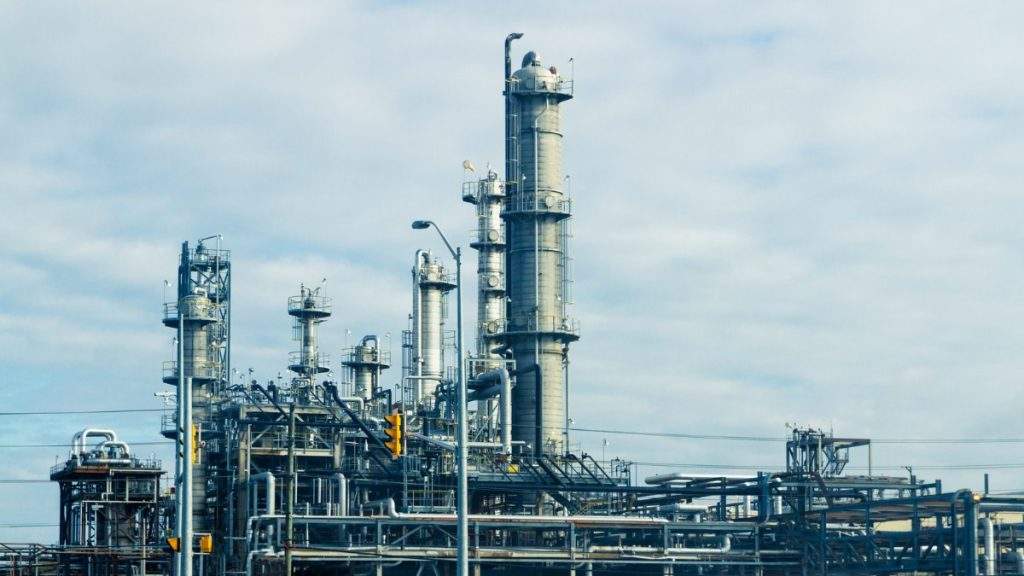
Brazil's National Energy Policy Council Approves Pre-Salt Natural Gas Auction, Prioritizing Fertilizers, Steel, Chemicals
en.Wedoany.com Reported - Brazil's National Energy Policy Council (CNPE) recently issued a resolution paving the way for the auction of the federal government's share of natural gas from pre-salt production-sharing contracts managed by Pré-Sal Petróleo (PPSA). The resolution, issued after years of discussion, identifies fertilizers, steel, chemicals, and petrochemicals as target industries for long-term policy, with potential beneficiaries in the petrochemical sector including Braskem.
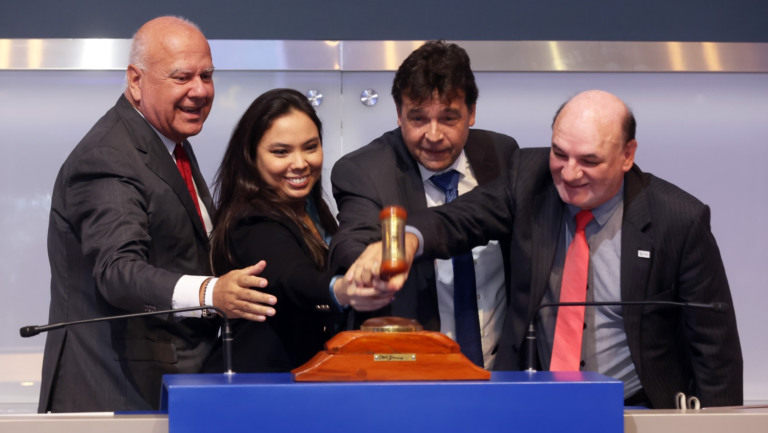
The resolution, approved on Thursday (July 30), establishes both short-term and long-term auction models. Target industries will receive priority in the long-term auction, which is expected to be held in 2027, with supply starting in 2031. The short-term auction, on the other hand, is planned to take place before 2030 and will be open to any consumer, including natural gas thermal power plants, as well as other traders interested in combining assets and expanding their markets. The Brazilian government stated that the measure aims to increase market liquidity.
The division between the two auction models is linked to the federal natural gas supply curve. According to the plan, federal natural gas supply is expected to reach 1 million cubic meters per day around 2027 and 3 million cubic meters per day by the turn of the decade. PPSA plans to hold the first short-term auction in November or December 2026. Prior to that, PPSA and Petrobras must conclude ongoing negotiations to revise the pre-salt natural gas transportation and processing contracts, whose terms also affect the natural gas molecule price.
On the regulatory front, Brazil's National Agency of Petroleum, Natural Gas and Biofuels (ANP) has established a special committee to investigate disputes and potential anti-competitive practices in infrastructure access negotiations.
On pricing, the Ministry of Mines and Energy (MME) expects industrial feedstock prices to drop by more than 50% as the new policy takes effect. Federal natural gas is currently sold by Petrobras at approximately US$12 per million British thermal units (MMBtu); under the new policy, its value could fall to around US$5 per MMBtu. The final price will still depend on the outcome of negotiations between Petrobras and PPSA.
The CNPE decision was welcomed by energy consumers. The Brazilian Association of Large Energy Consumers (Abrace) believes the federal natural gas auction could "disrupt" the Brazilian market and boost industrial competitiveness. The association's president, Paulo Pedrosa, noted that Brazil's natural gas market has not grown for over a decade. He stated that industrial natural gas consumption in Brazil has been stagnant for 14 years, with the chemical industry operating at a capacity idle rate of up to 37%. He gave an interview to eixos studios on Wednesday (July 29) at the Sergipe Oil & Gas (SOG 2026) event in Aracaju.
Regarding the market opening (gas release) process, Petrobras' Exploration and Production Director, Sylvia Anjos, stated that regulatory changes in the natural gas sector could delay the Sergipe Deepwater Project (SEAP) and discourage new investments across the production chain. Senator Laercio Oliveira (PP/SE), a drafter of the Natural Gas Law, believes that disputes should be resolved within a framework of dialogue and legal certainty, taking into account the interests of all players in the sector—including Petrobras.
Three state-level regulatory agencies have joined the National Natural Gas Market Development Pact. On Wednesday (29), at the opening of Sergipe Oil & Gas 2026, Agrese (Sergipe), Agems (Mato Grosso do Sul), and ARSP (Espírito Santo) signed the first technical cooperation agreements with ANP and MME. MME's Natural Gas Director, Marcello Weydt, believes these agreements help avoid new litigation and build a more coordinated regulatory environment for the industry.
The Sergipe state government plans to include the state industrial development company (Codise) as a minority shareholder in Sergas (Sergipe state gas company) to maintain the state-level distributor's mixed capital structure. This information was disclosed by the state's Secretary of Economic and Technological Development, Marcelo Menezes.
ANP Director Symone Araújo stated that there is no room for revision of the regulatory resolution on liquefied natural gas (LNG) terminal access already issued by the agency. She said the process was extensively discussed and the decision is established, "very well calibrated." Eneva's Director of External Relations, Aurélio Amaral, expressed caution and concern over the ANP resolution, arguing that the measure could create legal uncertainty for planned investments, particularly in integrated terminals combined with thermal power plants.
National Electricity Secretary João Daniel Cascalho stated that MME is negotiating with Eneva to flexibly adjust gas-fired power plant contracts. The agreement could serve as a reference for negotiations with other companies, aimed at helping reduce curtailment of renewable power generation. The issue was discussed on Thursday (30) at an event held by the Federal Court of Accounts (TCU), with the government expecting to finalize the model in August.
Minister of Mines and Energy Alexandre Silveira (PSD) argued on Thursday (30) that no new subsidies should be granted for electricity generation during a possible fourth term of President Lula (PT). The proposal comes against the backdrop of the continued growth of the Energy Development Account (CDE), which puts pressure on electricity prices.
MME this week released the methodology for selecting areas for offshore wind power projects, dividing the process into three stages: identifying potential areas, determining areas of interest, and prioritizing areas. The methodology, developed by the Energy Research Company (EPE), is a follow-up to the regulation of the offshore wind power framework approved in January 2025.
José Ricardo Sasseron, Vice President of Government Affairs and Corporate Sustainability at Banco do Brasil, argued that the green industrialization process in the Northeast should not be limited to data center construction. He believes the surplus of renewable energy should be channeled into industrial activities capable of generating more jobs and income to reduce inequality.
On the international front, nuclear power plants along the Danube River in Hungary and Romania were forced to reduce output this week and may shut down completely in the coming days due to record-low water levels. In France, where nuclear power accounts for about two-thirds of the country's electricity, generation also had to be reduced. This information comes from reports by Reuters and Brazil's Valor Econômico.
On oil prices, despite ongoing military strikes between the United States and Iran, prices closed lower on Thursday (30). As Tehran stated it was negotiating with Oman over the management of the Strait of Hormuz, ship traffic in the region decreased, and oil prices retreated accordingly. Brent crude fell 1.37% to US$86.88 per barrel.
Related Products

Steel Pipes for Refining and Coal Chemical Industries
YANGZHOU LONTRIN ENERGY EQUIPMENT CO.,LTD.
High Thermal Conductivity Encapsulating Resin
Nantong BESALL Sealing Technology Company.,Limited



New Environmentally Friendly Green Potassium Salt Collector
Chonfar Engineering and Technology Co., Ltd.

CAP1400 main feedwater flow nozzle flowmeter.
Jiangsu Hongda Instrument Technology Co., LTD.