HXS Cuts NVIDIA H100 Inference Energy Use by 17.2%-27.4%
en.Wedoany.com Reported - Trust Carbon Infrastructure announced that its patent-pending HXS compute efficiency layer, as confirmed by independently signed measurements, reduces energy consumption and increases inference capacity on NVIDIA H100 hardware while maintaining consistent model outputs. GPU shortages, power constraints, and cooling costs are increasingly limiting infrastructure expansion, and if this combination is widely replicated across the industry, it will immediately draw attention and scrutiny from the enterprise sector.

For enterprises operating large-scale inference clusters, economics are increasingly driven by hardware utilization rather than simply adding more accelerators, shifting infrastructure optimization discussions from hardware replacement to software-driven efficiency gains. Inference has become one of the fastest-growing operational expenditures for organizations deploying generative AI at production scale; electricity prices continue to fluctuate, data center power allocation is constrained, and cooling infrastructure often hits practical limits before rack space runs out. In this context, Trust Carbon states that HXS belongs to the category of software techniques that extract more useful work from already-deployed systems.
The company's published signed measurement results show that HXS, running on a single NVIDIA H100 80GB GPU with vLLM 0.26.0, consistently reduced energy consumption across five widely used open-source AI models—Alibaba's Qwen2.5-72B-Instruct, Meta's Llama 3.3 70B, DeepSeek's R1-Distill 70B, Google's Gemma 3 27B, and Microsoft's Phi-4—while maintaining fully consistent outputs. Per-GPU energy consumption decreased by 17.2% to 27.4% across models, with operating temperatures dropping by up to 15 degrees Celsius.
Cooling is nearly as important as power consumption. Lower board temperatures affect rack density, thermal management strategies, hardware lifespan, and facility operating costs—metrics that receive less attention than raw performance indicators but are increasingly evaluated by operators alongside compute capacity when planning multi-megawatt AI deployments.
In testing, one configuration corresponding to Microsoft Phi-4 showed a significantly larger improvement than the overall test set: power consumption dropped from 306 watts to 152 watts, a 50.5% reduction; throughput increased from 109.8 requests per second to 293.7 requests per second, while maintaining the same latency targets with no latency percentile degradation, consistent outputs, and zero recorded errors. Software optimizations typically improve one metric at the expense of another—throughput gains often come with latency costs, and power reductions may reflect lower utilization; simultaneously optimizing multiple operational characteristics while maintaining output consistency is exactly the type of result infrastructure engineers want to independently reproduce before making procurement decisions.
Trust Carbon will showcase HXS in Silicon Valley during the first week of August while seeking an exclusive licensing partner or potential acquisition. This commercial approach suggests the company believes embedding the technology within established infrastructure providers offers more value than building a standalone software business. Large GPU cluster operators, hyperscale cloud providers, AI infrastructure startups, and server manufacturers are all likely to evaluate this software that improves utilization without requiring new accelerator purchases.
For hardware iteration, this carries another implication: hardware vendors have historically relied on generational GPU upgrades to deliver efficiency improvements; software that extends the economic lifespan of existing hardware complicates upgrade cycles, particularly when organizations can defer expensive infrastructure refreshes while maintaining acceptable service levels.
However, the caveat is equally clear: although the measurement results are signed, they were still collected by the vendor under controlled test conditions. Enterprise buyers typically require independent validation across different production environments before assuming similar benefits under real customer traffic; workload composition, request patterns, batching behavior, and software configurations all substantially affect inference efficiency. Trust Carbon also acknowledges that energy reductions vary by application characteristics and recommends customers validate performance with their own production traffic before using the published data.
For infrastructure buyers, even before independent validation is complete, early measurement results can justify technical evaluation—modest efficiency gains could significantly alter operating costs, rack utilization, and scaling plans in large GPU deployments. If HXS can consistently improve inference throughput, organizations may delay hardware purchases, but production validation is essential before changing procurement or deployment assumptions. HXS also claims scalability beyond AI inference; currently only inference measurement results have been signed and publicly disclosed, and whether similar efficiency gains can transfer to broader server workloads remains unresolved until comparable testing is available. Performance consistency under mixed workloads, varying traffic patterns, multi-GPU environments, orchestration platforms, and independent third-party benchmarking still require broader evidence to support large-scale deployment decisions.
Cloud providers, AI infrastructure vendors, server manufacturers, and enterprises operating large inference clusters are all likely to evaluate this type of software that improves hardware utilization without requiring immediate capital expansion.
Related Products
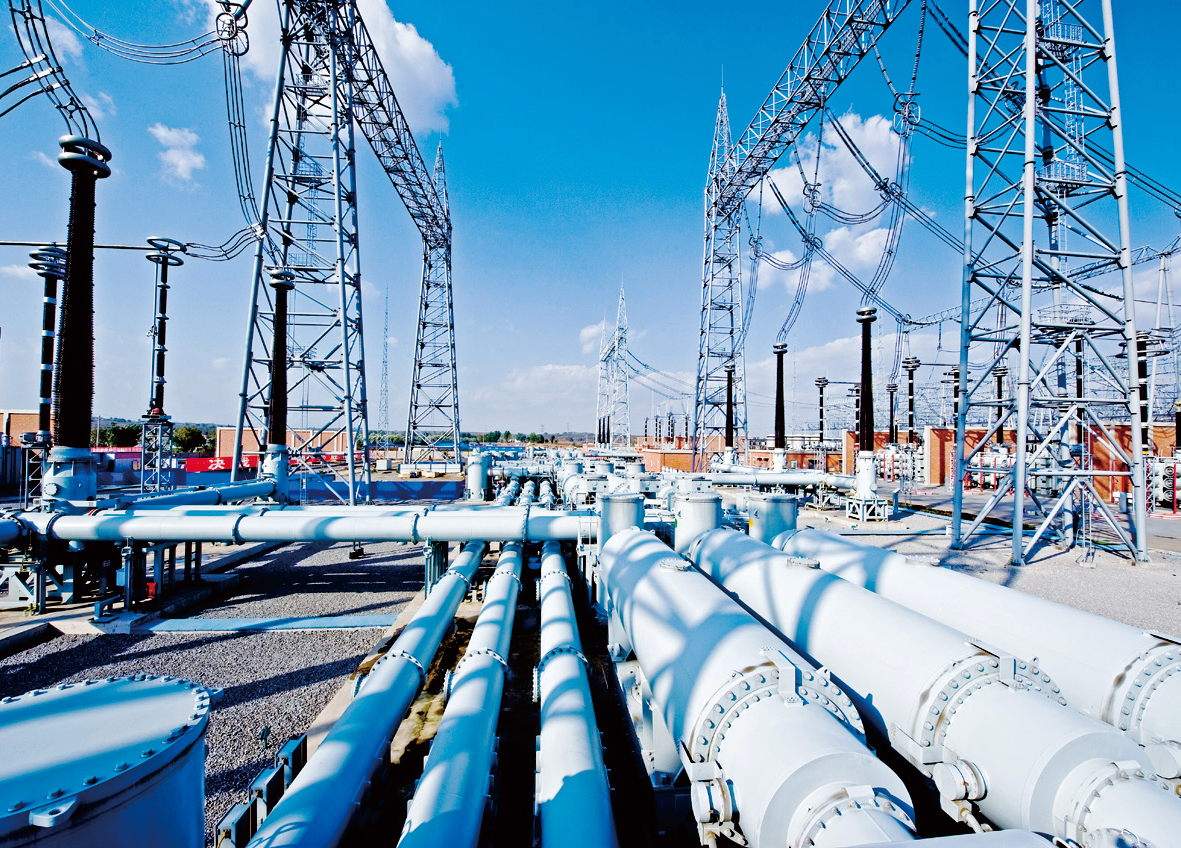

40.5kV-1100kV Gas Insulated Metal-Enclosed Switchgear (GIS)
Henan Pinggao Electric Co., Ltd.

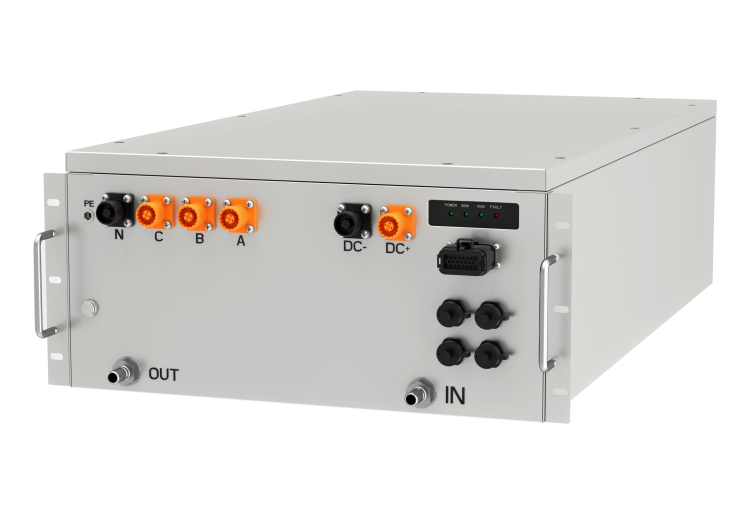
Mars (Liquid Cooling) Series Industrial and Commercial Energy Storage Converter High Protection Module
Shenzhen Winline Technology Co., Ltd.
CITIC Heavy Industries Offshore Wind Power Equipment Hydraulic Pile Hammer
CITIC Heavy Industries Co., Ltd.
Smart Photovoltaic Prefabricated Substation
Shanghai Jinyou Jinhong Intelligent Electric Co., Ltd.