Brazilian Enterprises Split AI Workloads Across Hybrid Cloud
en.Wedoany.com Reported - Brazilian enterprises are distributing AI workloads across private infrastructure and domestic public cloud regions, with tight supply of advanced GPUs, data residency regulations, and cost-control pressures driving this architectural shift. ISG research shows that data and preprocessing stages remain on-premises, while training and inference tasks are gradually migrating to elastic cloud capacity within Brazil. This change has also raised concerns about latency, resilience, and vendor dependency.

At the core of this hybrid architecture is no longer a simple choice between private or public cloud, but rather determining where each stage of an AI workload should run to avoid compliance, cost, or performance issues. Data and early-stage processing remain in private environments, managed environments, or colocation facilities. Training and inference tasks can be shifted to public cloud regions within Brazil, leveraging elastic capacity to reduce procurement dependence on scarce accelerator hardware. This is a pragmatic response to limited hardware supply, but the trade-off is shifting uncertainty onto cloud service availability, interconnection quality, pricing levels, and vendor concentration.
For infrastructure buyers, the key change is occurring domestically rather than cross-border. Domestic cloud regions offer more deployment options while also placing workloads and data under the jurisdiction of Brazil's data residency requirements. Design decisions have therefore become more granular: which dataset, which model stage, which application or recovery process belongs to which platform. The weight of latency between metro facilities has increased, as has the ability to migrate workloads without breaking control, service levels, or budget constraints.
Advanced GPUs remain expensive and difficult to procure in private environments. Brazilian enterprises are instead renting compute capacity in local cloud regions to avoid lengthy procurement cycles and high costs of idle hardware. But elastic capacity is not unlimited: compute can tighten, reserved instances can become more expensive, and dedicated instances may not be available on demand when projects transition from testing to production. Public cloud usage also changes the cost structure of AI. Training tasks generate significant compute expenses, while costs from storage migration, idle resources, duplicate datasets, and inference growth accumulate in less visible ways. ISG notes that FinOps is gradually becoming a core management discipline, using anomaly detection and placement policies to balance spending against performance.
This trend reflects a broader correction in enterprise cloud strategy: flexibility without financial control has produced surprising bills, and AI brings larger, harder-to-predict consumption patterns. The 2026 ISG Provider Lens report states that Brazilian enterprises are driving infrastructure standardization rather than maintaining highly customized systems. Standardization helps reduce operational variance and makes automated processes easier to audit, but it may also force business units to abandon exceptions they consider critical. Legacy applications, industry-specific governance requirements, and vendor lock-in often do not fit neatly into common platforms.
On the automation front, Brazilian enterprises are combining policy-as-code and infrastructure-as-code with human review. Autonomous agents face higher thresholds before entering production systems, with organizations requiring pre-defined operational boundaries, documented decision processes, validated rollback procedures, and proof that humans can intervene before agents affect production systems. This caution has sound business rationale: infrastructure-changing agents can trigger cost spikes, outages, security exposures, or compliance failures at machine speed. Automation's appeal lies in reducing operational burden and accelerating response times, but when decisions span cloud, private infrastructure, and managed services boundaries, accountability becomes harder to assign.
Developers will encounter more control points in delivery pipelines. Operations teams need consistent state information across multiple environments, while audit teams expect logs that not only show what changed but also identify which policy, which model, which user, or which service authorized the change. Existing observability products often only record the event itself, failing to provide this complete chain of accountability. Brazilian enterprises are also moving beyond informal cost-tracking methods, with FinOps policies increasingly intervening in workload placement, capacity reservation, anomaly detection, and economic assessment of private infrastructure. Compute patterns can shift rapidly—stable inference workloads may justify purchasing dedicated equipment, while experimental training demands may not.
Resilience capabilities are being put to real tests. Automated rollback, immutable backups, and orchestrated disaster recovery are becoming expected operational baselines, but the real question is whether these mechanisms have been tested under real dependencies, including identity services, network routing, data synchronization, managed platforms, and external providers. Hybrid recovery plans often look convincing on paper—until a regional outage simultaneously cuts multiple assumed dependencies: the private environment may still be available, but the cloud control plane, network connectivity, or support channels are unreachable.
Deterministic latency is not simply a matter of geographic proximity. Network congestion, routing changes, interconnection capacity, and application design can all produce inconsistent results. Enterprises with data preparation in one environment and inference in another need to measure the full transaction path, not just the distance between facilities. Enterprises in regulated industries have little room for improvisation: financial services, healthcare, and public institutions require verifiable access controls, local support within Brazil, and fully documented operational evidence. Service providers need to demonstrate who can access systems, where decision records are stored, how failures are reversed, and whether recovery procedures have actually been executed rather than merely documented.
ISG is a consulting firm that evaluates technology providers, and its reports reflect the market ecosystem it researches and serves. The research establishes operational priorities rather than independently measured improvements in availability, cost, or compliance. Buyers still need to build evidence at the level of specific providers and workloads. Current market pressures are clear: domestic AI capacity is expanding, private GPU supply remains constrained, regulators are unlikely to accept control weaknesses explained away by elasticity, and enterprises are increasingly unwilling to tolerate customized infrastructure that is expensive to operate, difficult to secure, and inconsistently auditable. For investors, providers that combine local capacity with disciplined operations are more attractive. For buyers, vendor selection has moved beyond raw compute power and list prices—interconnection quality, support coverage, rollback evidence, access records, and recovery testing are now entering contract discussions.
Related Products


Flat Portable Satellite Terminal 0.35m Aperture Manual Portable Terminal
China Starwin Science & Technology Co., Ltd.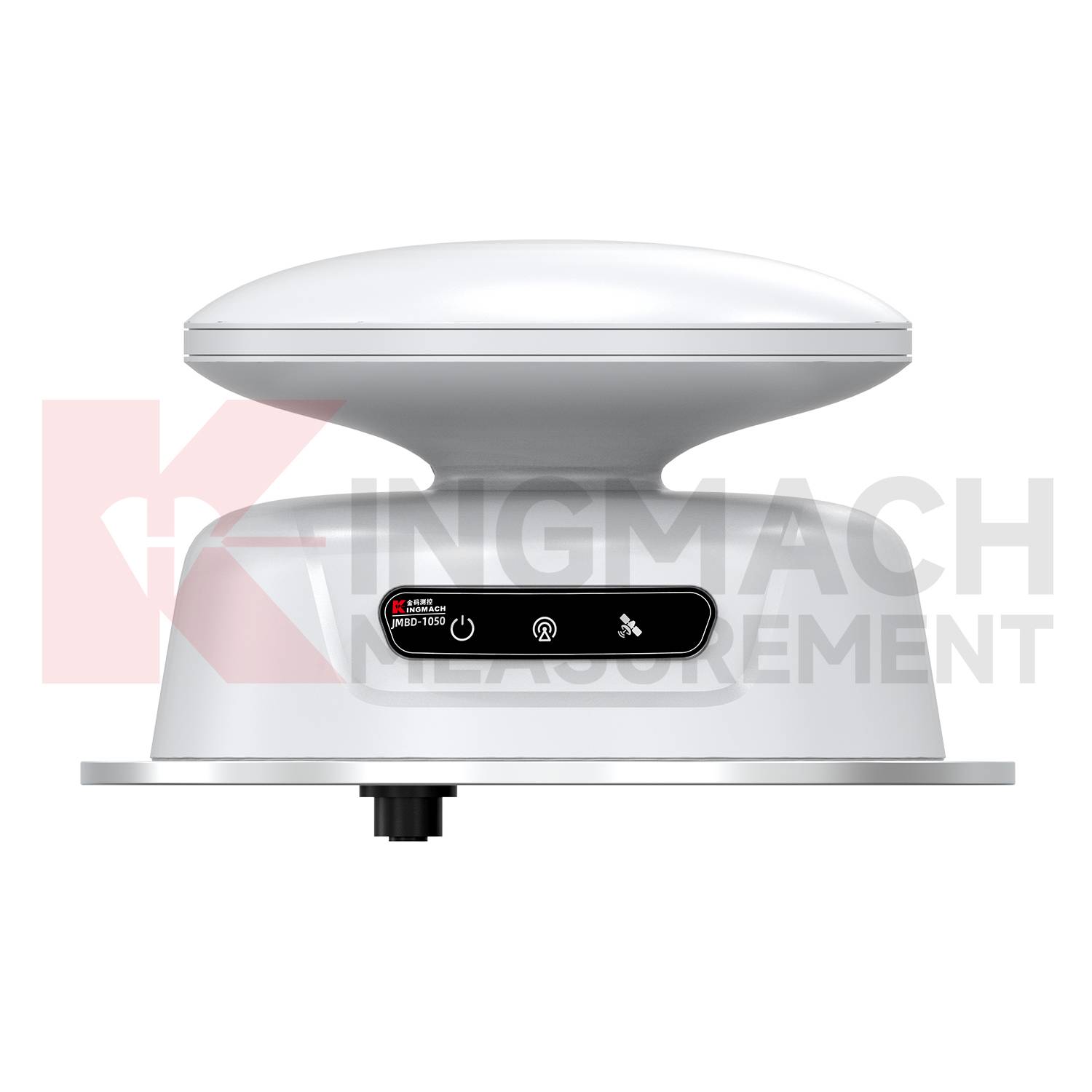



20 Inch 1600*900 Full HD 60Hz TFT LED Monitor with VGA and DP Interfaces for Desktop Computers-Business Use
Guangzhou Zanying Optoelectronics Technology Co., Ltd.
Automatic Aiming Laser Remote Obstacle Removal Robot
Pinggao Group Weihai High-Voltage Apparatus Co., Ltd.

One-Stop Steward Service for the Entire Logistics System Integration Chain
Zhongding Intelligent (Wuxi) Technology Co., Ltd.