Spanish GRAMOLA project tests 1,200 m² of shade netting to protect Elche pomegranates
en.Wedoany.com Reported - Spain's Innovation Cooperation Group (Grupo de Cooperación para la Innovación, GC) is evaluating a range of climate-change adaptation cultivation strategies through the GRAMOLA project in field trials in the Elche soft-seed pomegranate production area. The Elche soft-seed pomegranate is currently the only pomegranate variety in the world to hold Protected Designation of Origin (PDO) status.
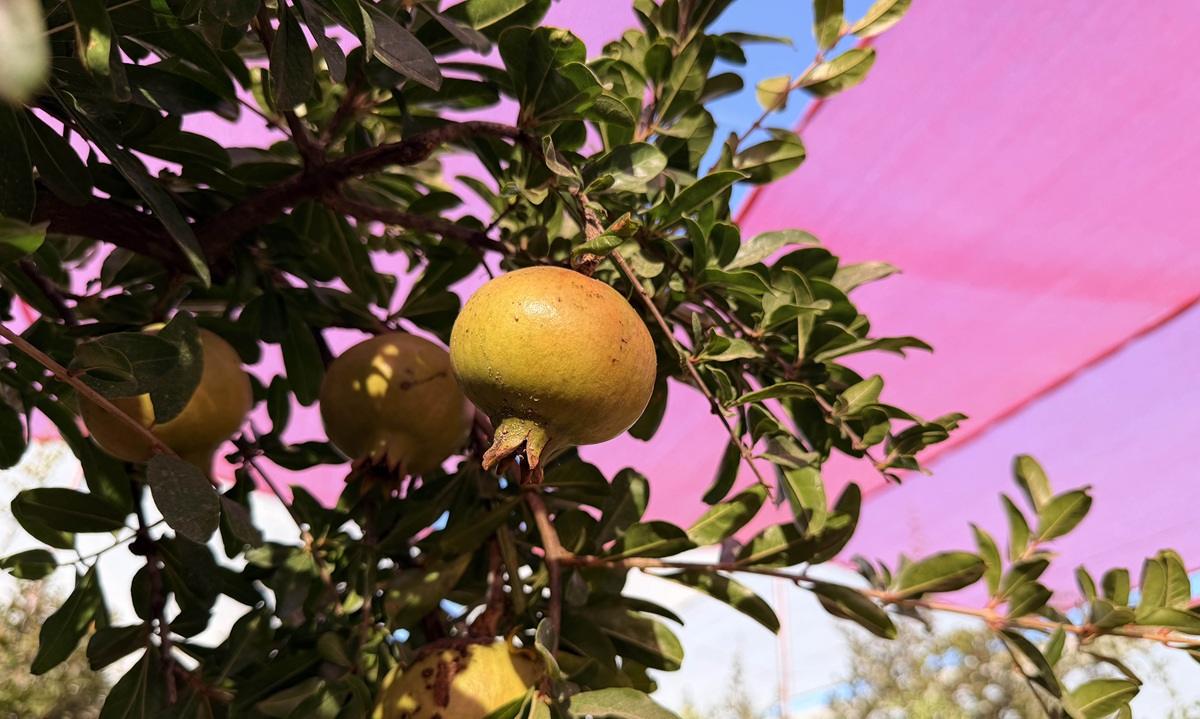
The project aims to verify whether environmental sensors, different types of shade netting and sustainable treatments can reduce the incidence of physiological disorders in the arils and improve fruit quality. Trials are being conducted in two experimental plots—one with the full set of treatments and one serving as a control—to compare crop performance with and without netting.
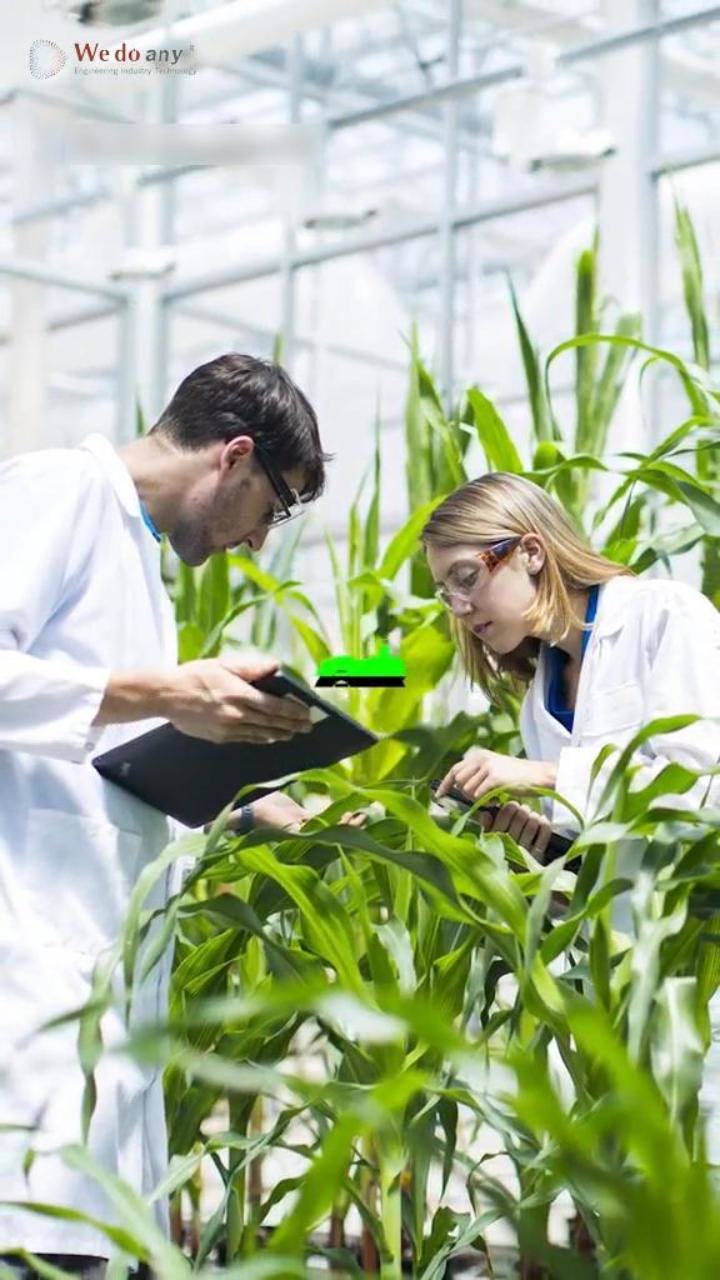
Both plots are equipped with continuous monitoring systems consisting of soil and environmental temperature and humidity probes, as well as sensors installed in the canopy, which record in real time the environmental conditions the pomegranates experience throughout their development. Belén Martínez, researcher at the Sustainable Agriculture Research Unit of the Valencian Institute for Agricultural Research (IVIA) and co-leader of the project, stated that the crop is monitored in real time throughout its entire growth cycle, with the aim of understanding the conditions the fruit actually experiences.
The trial has installed 1,200 square meters of shade netting distributed across three zones of 400 square meters each. Each zone uses netting with different materials, colors and properties to modify the quantity and type of light reaching the crop. These structures were installed in June, when solar radiation is at its strongest, and are kept in place until September before being removed, allowing the fruit to complete maturation under conventional conditions; the netting can be reused in the next production cycle.
Project researcher Julia Morales explained that high temperatures, associated with climate change, may be one of the triggers of internal fruit disorders. The research team is attempting to lower tree temperatures and observe how the crop responds.
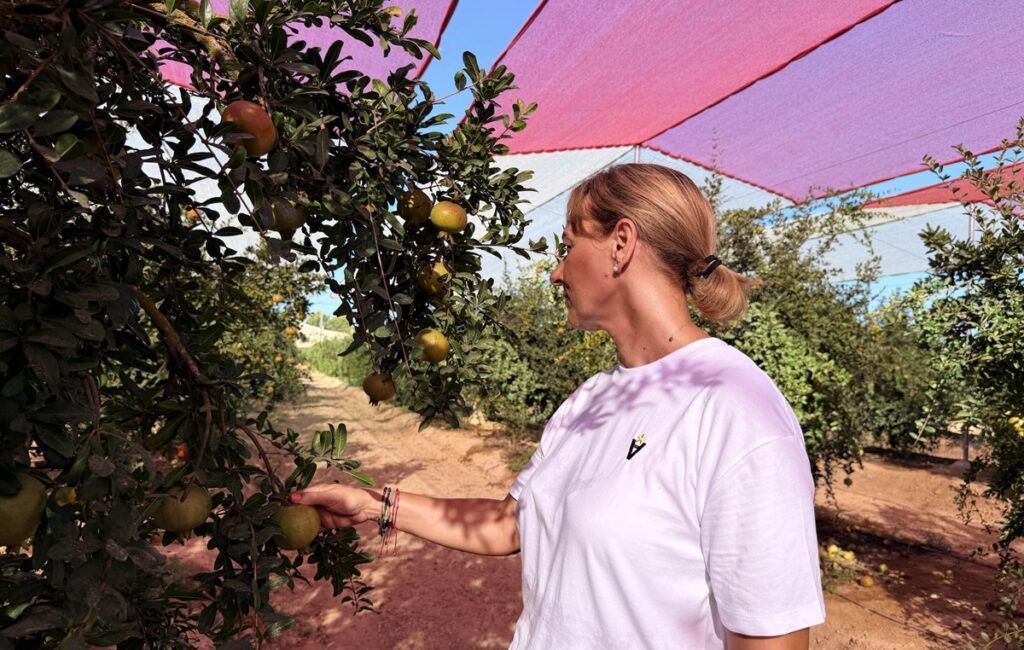
At the same time, the project is also assessing foliar application programs based on kaolin and silicon, products that can act as protectants against heat stress and solar radiation. Applications began in early June and are carried out every three weeks until early September. Researchers will later compare the results obtained from the foliar treatments with those from the netting strategy.
Sampling is carried out throughout the entire production cycle to correlate physiological disorders with environmental conditions and crop status. The project will also analyze the nutritional, hormonal and metabolomic profiles of the fruit, as well as its performance during cold storage and marketing. For the Elche soft-seed pomegranate PDO Regulatory Council, understanding the root causes of physiological disorders and developing sustainable measures to reduce their incidence is key to preserving the variety's differentiating qualities, such as its sweetness and soft seeds.
The research will be repeated in the next production cycle to validate results under different climatic conditions. Martínez explained that field trials require at least two evaluation cycles because climate variability can alter crop responses. At the end of the project, the cooperation group will identify the periods when these physiological disorders occur most frequently and determine whether any of the evaluated strategies can reduce their incidence and improve fruit quality.
The cooperation group is made up of IVIA, the Elche soft-seed pomegranate PDO and Hermanos Fuentes 2022 SL, with support from the Elche Agricultural Experiment Station. The project runs for two years and is co-funded by the European Union, Spain's Ministry of Agriculture, Fisheries and Food, and the Valencian regional government (Generalitat Valenciana) through the FEADER fund.
Related Products




Industrial and Commercial Point-Type Gas Detector
Jinan Benan Technology Development Co., Ltd.
714CD Series C-Band Weather Radar
Chengdu Zhongdian Jinjiang Information Industry Co., Ltd.
4HS-8 High-efficiency Peanut Inverted-laying Harvester
Hebei Yongfa Hongtian Agricultural Machinery Manufacturing Co., Ltd.