Fraunhofer Institute for Laser Technology Develops PFAS-Free Laser Coating Processes
en.Wedoany.com Reported - The Fraunhofer Institute for Laser Technology (Fraunhofer ILT), together with industrial partners, is developing laser-based PFAS-free high-performance coating processes in the four projects RePEEK, EPOS, LEMBAS, and pureWaterSeal, covering industrial applications such as large metal components, plain bearings, elastomer rollers, and seals. These processes exploit the ability of laser energy to act on material surfaces with precision, locally, and for short durations, enabling reliable application of PFAS-free alternative materials onto different substrates while avoiding the problems of conventional oven processes, which either consume excessive energy or thermally damage the substrate.
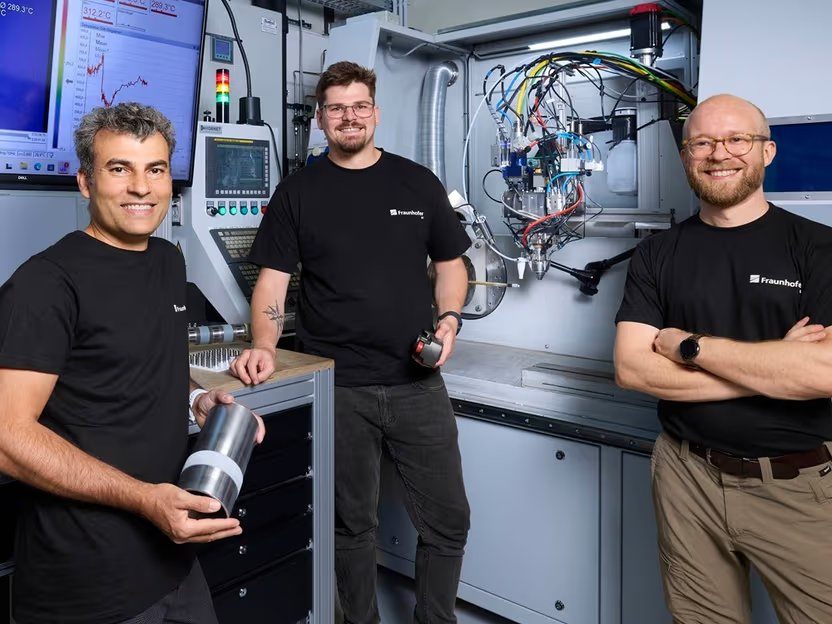
Per- and polyfluoroalkyl substances (PFAS) possess extremely high chemical and thermal stability, enabling them to reduce friction, prevent wear and corrosion, avoid adhesion, and provide emergency running performance when lubricant films fail. Dr. Samuel Moritz Fink, head of the Thin Film Processes group at the institute, states that PFAS-containing materials are typically located at the points where components bear the greatest loads. Alternative materials must not only adhere to metal, plastic, or rubber surfaces but also withstand high temperatures, remain intact under load, and offer economic viability for coating large components. Materials such as polyether ether ketone (PEEK) show potential in terms of chemical and mechanical properties, but may not achieve the full performance of polytetrafluoroethylene (PTFE), so simply replacing the material is not sufficient.
The key lies in the coating process. Dr. Christian Vedder, head of the Surface Technology and Material Removal department at the institute, points out that the research focus is not merely on material substitution, but on the targeted construction of innovative layer systems through laser processes. Lasers can structure surfaces, improve the connection between alternative materials and components, or locally modify coatings, all while avoiding intense heating of the entire component.
The RePEEK project develops PEEK-based coatings for highly loaded moving components in mechanical engineering, such as large plain bearings, seals, pistons, and solenoid valves. In large plain bearings of wind turbines, the shaft typically operates within a layer system containing PTFE. If large metal components are heated entirely in an oven, energy consumption is high and cycle times are long, as far more material is heated than is actually required for the coating. The research team first uses a laser to generate a deliberately roughened metal layer on the metal surface, then applies PEEK powder in the same process environment and melts it locally, anchoring the plastic onto the rough metal surface to form a composite material consisting of a metallic functional layer and a PEEK-based top layer. For this purpose, the team developed a cyclone nozzle technology, for which a patent has been applied. This nozzle significantly decelerates the gas flow, causing the powder to impact the surface at low velocity without bouncing off, thereby improving material utilization and process controllability.
The EPOS project, led by Delil Idris Demir of Fraunhofer ILT, investigates how PEEK-based coatings can be built up on large plain bearing components with high process reliability and in a multi-layer manner. Step-by-step coating application enables greater coating thicknesses without heating entire components weighing several tons. ACS Coating Systems is involved in the project; the company has been continuously developing such sliding coatings since the mid-1990s and now produces coatings with thicknesses ranging from a few micrometers to one millimeter. Its managing director, Dr. Christoph Stecher, contributes to the project from the perspectives of coating structure, industrial application, and subsequent series production. Polymer Service GmbH Merseburg (PSM), under the leadership of Prof. Dr. Katrin Reincke, examines and evaluates the coatings, focusing on the crystallinity, microstructure, thermal state, and mechanical and thermomechanical properties of PEEK, in order to coordinate the laser process with the multi-layer coating structure, ensuring uniform coating adhesion and the ability to withstand the loads encountered in plain bearing operation.
The LEMBAS project targets elastomer rollers and drums used in film production, the packaging industry, paper production, and medical technology. Particles on roller surfaces can cause problems in high-speed processes, and the industry commonly uses silicone coatings to provide anti-stick properties, but their durability often fails to meet the requirements of modern high-speed processes. Adam El-Sarout of the Thin Film Processes group at Fraunhofer ILT notes that while silicone coatings provide the required anti-stick properties, they do not always achieve the durability demanded by modern high-speed processes. The team, in cooperation with coating specialist Rhenotherm, is developing laser processes using high-performance polymers such as PEEK, polyamide, or polypropylene, which are more wear-resistant, more chemically resistant, and PFAS-free compared to silicone. The technical challenge lies in the temperature window: high-performance polymers require high temperatures for melting, while elastomers such as EPDM have limited heat resistance—if the rubber roller were heated entirely, the substrate would be damaged. The laser generates high temperatures only locally and briefly within the coating material, melting the functional layer while protecting the underlying elastomer component. The team has also developed an intermediate layer to protect the elastomer and strengthen coating adhesion, and has adjusted the optical and rheological properties of the materials to suit the laser process.
The pureWaterSeal project is conducted jointly by the Fraunhofer Institute for Laser Technology (ILT) and the Fraunhofer Institute for Mechanics of Materials (IWM), with the goal of developing sustainable seals that require no PFAS and can operate with water-based lubricants. IWM experts have developed diamond-like carbon (DLC) coatings specifically designed for PFAS-free plastic components, and the ILT team subsequently structures the coatings using lasers, locally eliminating internal stresses and mechanical loads while maintaining overall coating stability. The combination of laser structuring and coating reduces friction, improves wear resistance, and extends seal service life. According to Matthias Laermann, head of the Surface Structuring team at the institute, Germany consumes approximately one million tons of oil-containing lubricants annually, and just one liter can contaminate up to one million liters of groundwater. The first prototypes are already operating in pumps at geothermal power plants, and the research team is working with industrial partners to adapt the seals for applications such as passenger vehicles, ship propellers, wind turbines, and harvesters, while also preparing for transfer to larger equipment and industrial series production.
The common conclusion of these projects is that eliminating PFAS cannot be achieved through material substitution alone; it also requires suitable manufacturing and surface treatment processes. Lasers serve as a key tool, enabling local coating application, melting, or functional layer structuring without imposing unnecessary thermal burden on the underlying components. Companies do not need to wait for a single alternative that covers all PFAS applications—Fraunhofer ILT and its industrial partners are developing tailored layer systems for different components and application requirements, including low-friction surfaces for plain bearings, wear-resistant anti-stick coatings for rollers, and PFAS-free sealing systems for water-based lubricant environments.
Related Products


Industrial and Commercial Point-Type Gas Detector
Jinan Benan Technology Development Co., Ltd.
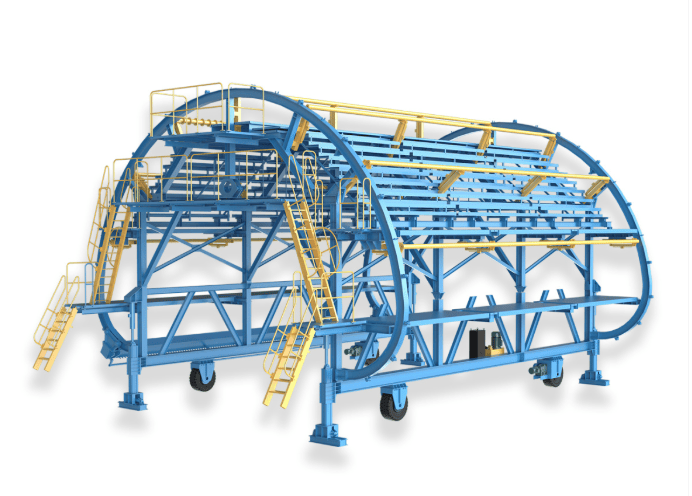
QLZNGJ Intelligent Steel Reinforcement Trolley
Luoyang China Railway Qiangli Machinery Co., Ltd.
Aluminum-Magnesium Alloy High-Pressure Die-Casting Molds
NINGBO HELI TECHNOLOGY CO., LTD.
Strip Coating and Plating Production Line Equipment
MCC-SFRE HEAVY INDUSTRY EQUIPMENT CO., LTD.
LBH4000 Batch Environmental Protection Asphalt Mixing Plant | Asphalt Batching Plant | Asphalt Mixing Plant
Jilin Province Road Construction Machinery Co., Ltd.