Nigeria's New Deepwater Oil and Gas Rules Aim to Attract Up to $50 Billion
en.Wedoany.com Reported - Nigeria's presidency disclosed on August 11 that President Bola Tinubu has approved the "Deepwater Oil and Gas Project Incentive (Tax Relief) Order 2026." Signed on August 6 and published in the official gazette on August 10, the order replaces project-by-project negotiations with unified eligibility criteria and implementation procedures, aiming to attract up to $50 billion in deepwater oil and gas investment.
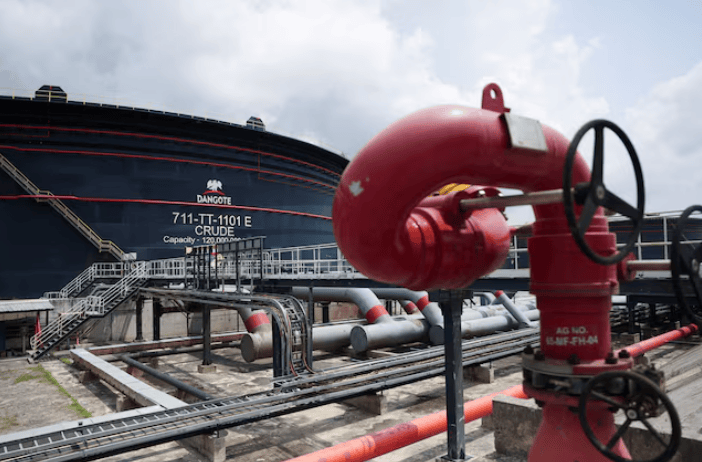
The new rules cover existing deepwater leases, as well as leases granted after February 28, 2024, or formed through conversion of relevant licenses. Projects under existing leases must make a final investment decision by December 31, 2029, and notify the Nigerian Upstream Petroleum Regulatory Commission within 30 days of that decision. Projects that fail to meet the deadline without obtaining a force majeure extension will have their standard production tax credit halved.
Tax credits for crude oil projects are calculated in tiers based on recoverable reserves. Projects with recoverable reserves not exceeding 400 million barrels of oil equivalent may claim a credit of $3 per barrel or 20% of the fiscal reference oil price, whichever is lower, for cumulative eligible production of up to 150 million barrels; projects with recoverable reserves exceeding 400 million barrels of oil equivalent qualify for an increased credit of $4.50 per barrel or 20% of the fiscal reference oil price, for cumulative eligible production of up to 500 million barrels. Leases granted after February 28, 2024, may also receive an additional credit of $1 per barrel, and when the fiscal reference oil price falls below $50 per barrel, the monthly credit is halved.
Non-associated gas projects are also covered by the incentives. Projects with liquid hydrocarbon content not exceeding 30 barrels per million standard cubic feet may claim a credit of $1 per thousand standard cubic feet or 30% of the fiscal reference gas price; projects with liquid hydrocarbon content exceeding 30 barrels but not exceeding 100 barrels qualify for a credit of $0.50 per thousand standard cubic feet or 30% of the fiscal reference gas price. The cumulative eligible gas volume for both categories is 5 trillion standard cubic feet.
Eligible greenfield projects may continue to apply for supplementary production tax credits. Combined standard and supplementary credits cap at $11.50 per barrel for crude oil projects and $8 per barrel of oil equivalent for non-associated gas projects. Certain production sharing contracts may also have profit oil split ratios reset, with contractors and the government sharing on an initial 70:30 basis, with separate cost recovery and tax accounting for approved projects.
Project engineering must in principle be carried out within Nigeria. Long-lead equipment on the critical construction path, as well as work whose integrated cost of execution in-country exceeds that of executing abroad by more than 10%, may be performed outside Nigeria upon approval by the Nigerian Content Development and Monitoring Board. Applicant companies must submit an open economic model containing cost, price, production, and fiscal assumptions to the Federal Inland Revenue Service, which should issue a decision within 45 days of receiving complete materials.
Credits will be calculated monthly based on actual production and sales volumes after the project commences operations and are limited to approved projects. Unused credits may be carried forward for up to four years and may not be refunded, transferred, sold, or discounted. Where a project's unit technical cost exceeds the regulatory benchmark, the credit will be reduced by 10%; where incentives are obtained through misrepresentation, concealment of data, or violation of approval conditions, the tax authority may revoke eligibility and recover taxes, penalties, and interest.
Nigeria's presidency listed the Shell Bonga South West deepwater project, with an investment of approximately $10 billion, among the first projects to fall under the new framework. The project is expected to reach a final investment decision in 2027. The Nigerian Upstream Petroleum Regulatory Commission projects that 22 major offshore projects will advance between 2026 and 2030, with potential investment ranging from $30 billion to $50 billion; since 2024, the commission has approved oil and gas field development plans exceeding $57 billion.
Related Products

Bidirectional Metal Hard Sealed Seawater Butterfly Valve
Henan Quanshun Flow Control Science & Technology Co., Ltd.

Hydraulic Turbine Genset
Dongfang Electric Corporation Dongfang Electric Machinery Co., Ltd.

G.652.D Wavelength-extended Non-dispersion Shifted Single-mode Optical Fiber
HONGAN GROUP CO., LTD.
YB □ -12/0.4/1250 Outdoor Prefabricated Substation (European Style)
Shangrao Shangyu Intelligent Electric Co., Ltd.
Prefabricated Houses and Electrical Energy Boxes
Chengdu Ruilong Machinery Manufacturing Co., Ltd.