Chimingpu Launches Multi-Material Metallographic CMP Consumables, Mirror-Finish Sample Pass Rate Reaches 98%
en.Wedoany.com Reported - Chimingpu's independently developed metallographic chemical mechanical polishing (CMP) consumables, covering the full spectrum of metals, semiconductors, and optical ceramics, consist of rough polishing diamond suspensions, material-specific fine polishing slurries, and matching cleaning agents. They are compatible with fully automatic metallographic grinding and polishing machines as well as semi-automatic grinding equipment. The CMP process integrates mechanical micro-cutting with chemical mild etching to achieve nanoscale damage-free mirror surfaces.
GB/T 34895-2017 "General Rules for Metallographic Examination of Heat-Treated Parts" requires metallographic specimens to be free of scratches, deformed layers, and abrasive residue. Traditional sample preparation typically uses a single polishing slurry matched to a single material, requiring laboratories to stock over a dozen consumables. Frequent reagent changes during specimen switching can cause cross-reactions, leading to grain boundary corrosion and surface haze. Imported complete polishing consumable sets have long procurement lead times and high minimum order quantities, making them cost-prohibitive for small and medium-sized industrial testing laboratories.
The diamond suspensions for rough polishing are available in particle sizes ranging from 0.05 to 15 microns in graded options. The water-based formulation remains stable without stratification or agglomeration for 72 hours at room temperature, effectively removing deep damage layers caused by wire cutting and abrasive wheel cutting, reducing subsequent fine polishing time by over 30%. Hard or semi-hard substrates such as stainless steel, titanium alloys, ceramics, silicon wafers, and sapphire can be uniformly pre-ground without the need to switch rough polishing agents by material.
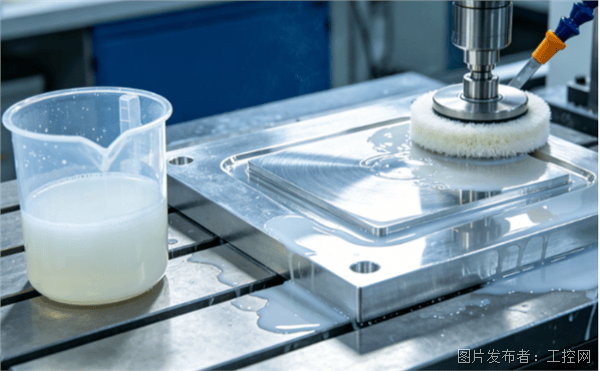
The fine polishing slurries are divided into six specialized formulations based on substrate material. The silicon wafer CMP fine polishing slurry employs nano-silica abrasive particles with a weakly alkaline buffer system, compatible with 8/12-inch semiconductor silicon substrates, delivering scratch-free silicon lattice, stable within-wafer uniformity, and suitable for chip packaging metallography and TEM slice pre-preparation. The titanium alloy CMP fine polishing slurry features a chlorine-free acidic corrosion-inhibiting formulation for aerospace titanium alloys and medical implant titanium materials, achieving a surface roughness Ra of no more than 0.2 nanometers after polishing, suppressing selective grain boundary corrosion, and producing artifact-free images under polarized light and EBSD characterization. The aluminum alloy CMP fine polishing slurry is a high oxidation selectivity system designed for new energy aluminum alloy die castings and aluminum interconnect substrates, preventing over-etching of soft aluminum while revealing casting porosity and grain boundaries, making it suitable for quality inspection of lightweight components. The stainless steel CMP fine polishing slurry is a neutral eco-friendly formulation covering martensitic and austenitic stainless steel molds and surgical instrument specimens, free of rainbow oxidation patterns, enabling observation of carbide precipitates and weld heat-affected zone microstructures. The ceramic CMP fine polishing slurry uses ceria composite abrasives, compatible with aluminum nitride, silicon carbide, and alumina power ceramic substrates, free of edge chipping, and designed for third-generation semiconductor packaging metallographic inspection. The sapphire CMP fine polishing slurry features ultra-fine ceria-based abrasives for LED substrates and optical windows, free of subsurface damage, allowing observation of lattice defects under differential interference contrast microscopy.
Residual nano-abrasive particles after polishing can cause black spots in microscopic observation and EBSD signal distortion. Chimingpu provides two matching cleaning agents that are chemically compatible with the same series of polishing slurries, ensuring no secondary contamination. The ceramic, glass, and sapphire cleaning agent is a weakly alkaline chelating formulation compatible with ultrasonic and spray cleaning, gently dissolving ceria and silica particles. The stainless steel-specific cleaning agent is a chloride-ion-free formulation that removes metallic debris and wax-based auxiliary residues, preventing long-term rusting of stored specimens.
The standardized sample preparation process employs fully automatic metallographic grinding and polishing equipment with a rotational speed of 100–300 r/min and polishing pressure of 0.1–0.5 N/cm². Metal specimens are rough polished with 3-micron diamond suspension for 3 minutes, followed by fine polishing with the corresponding slurry for 4–6 minutes, ultrasonic cleaning with the same series cleaning agent for 2 minutes, and dehydration with ethanol. Semiconductor and ceramic specimens are lightly polished with 1.5-micron diamond suspension at low pressure for 2 minutes, fine polished with the dedicated slurry at low speed for 6–8 minutes, and cleaned by immersion in the optical-grade cleaning agent to prevent water marks and spots on silicon substrates and ceramic surfaces.
In terms of system synergy, the polishing slurries and cleaning agents share the same additive system, preventing flocculation and sedimentation between process steps, avoiding haze and micro-scratches, and enhancing metallographic image clarity. The abrasive particles undergo in-situ coating modification, remaining lump-free during recirculation and doubling the maintenance interval of polishing pads. A single brand covering all specimen categories reduces multi-supplier procurement and specimen-switching setup time. The entire product line contains no highly corrosive heavy metal components, making waste liquid treatment easier than with imported consumables and compliant with laboratory hazardous chemical management and green testing requirements.
This consumable system has been applied in heat treatment quality testing laboratories for metallographic and weld microstructure inspection of steels and titanium-aluminum alloys, in semiconductor packaging laboratories for metallographic cross-sectioning and EBSD orientation analysis of silicon wafers and silicon carbide ceramic substrates, in precision optical inspection institutions for defect observation of sapphire windows and ceramic components, and in new energy component laboratories for failure analysis of aluminum alloy housings and stainless steel connectors. Compared with traditional dispersed consumable solutions, single-batch specimen preparation time is reduced by 35%, and the one-pass rate for mirror-finish specimens has increased from 76% to 98%, with testing data repeatability and stability meeting industry review standards. Chimingpu will continue to optimize polishing formulations for wide-bandgap semiconductors and emerging composite metal materials, further expanding the CMP sample preparation adaptability for specialty specimens.
Related Products
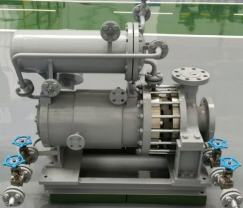


Pneumatic high-pressure wear-resistant ball valve
Zhejiang Deca Control Valve Meter Co., Ltd.
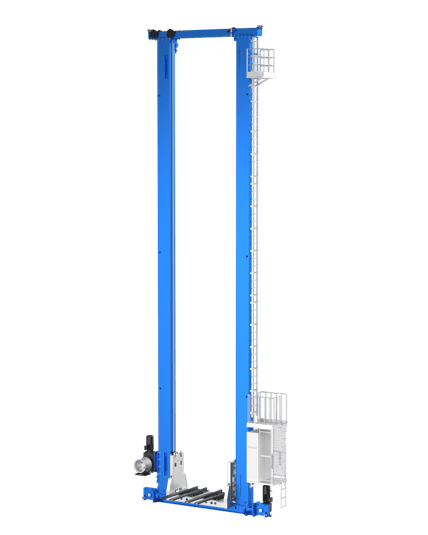
Pallet Solutions Product Line: HD3000 Double-Column Stacker Crane
Zhongding Intelligent (Wuxi) Technology Co., Ltd.

CAP1400 main feedwater flow nozzle flowmeter.
Jiangsu Hongda Instrument Technology Co., LTD.
High-Speed Railway Lifting, Transporting, and Erecting Equipment: Integrated Transport and Erection Machine
Hanjiang Heavy Industry Co., Ltd. of China Railway 11th Bureau Group