ORNL 3D Prints Nearly 2-Ton Composite Mold for Boeing Aircraft
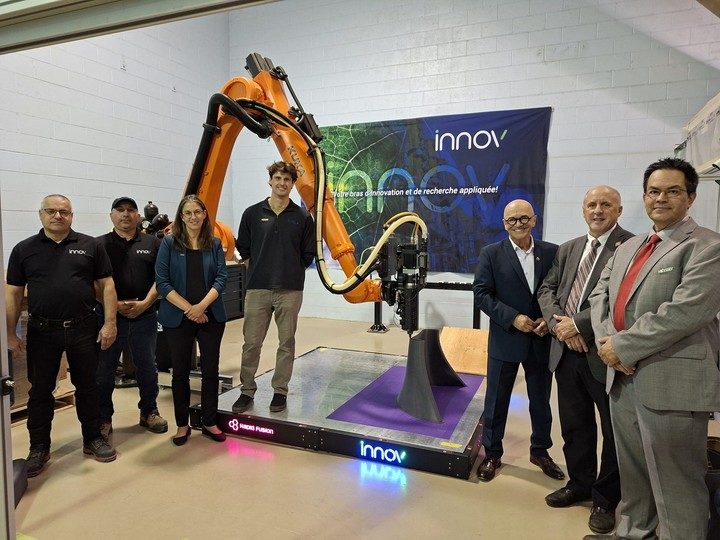
en.Wedoany.com Reported - On September 21, the U.S. Department of Energy's Oak Ridge National Laboratory (ORNL) announced the completion of a large-scale metal additive manufacturing project in collaboration with Boeing. The two parties used wire arc additive manufacturing technology to 3D print a nearly 2-ton Stamp Form Die (SFD) thermoplastic composite forming mold. The mold is approximately 6 feet tall and 4 feet wide, with continuous printing lasting 8 weeks. It will subsequently be used by Boeing for NASA's High-Rate Composite Aircraft Manufacturing (HiCAM) project to validate rapid forming processes for large thermoplastic composite aircraft components.
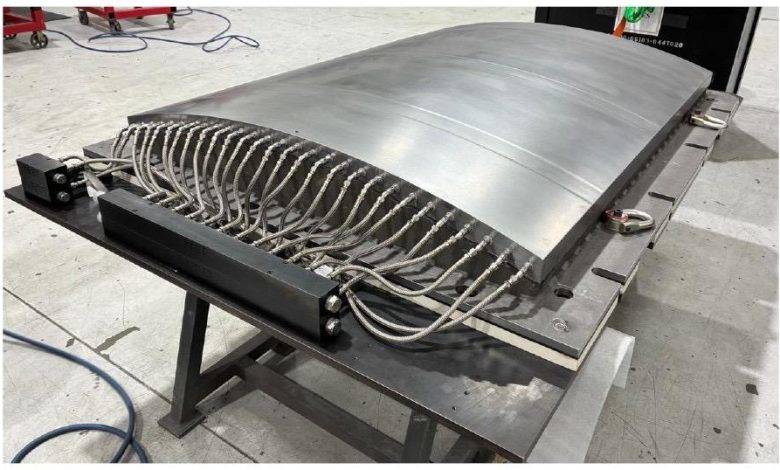
The SFD is a pressure forming tool. Thermoplastic composite sheets are heated and placed between upper and lower metal molds, where pressure is applied to form the component. Traditional SFDs typically require multiple manufacturing steps including machining, casting, forging, and drilling. This ORNL-Boeing collaboration focused on validating whether wire arc additive manufacturing (WAAM) can shorten the manufacturing cycle for large tooling and directly integrate temperature control channels into the mold interior.
The project used the Arc-1 system at ORNL's Manufacturing Demonstration Facility for printing. The system consists of an industrial robot and a welding torch, building up material layer by layer by continuously melting metal wire, and can simultaneously feed multiple metal materials. For this mold, the main load-bearing areas of the body use low-carbon steel to meet structural strength and stiffness requirements, while the working surface is deposited with stainless steel to improve corrosion resistance, dimensional stability, and long-term durability. The multi-material WAAM process enables a single large tooling to be configured with materials according to the performance requirements of different regions.
The temperature control structure is another key focus of this mold design. Traditional large metal molds typically have straight heating and cooling channels formed by drilling, whereas additive manufacturing allows engineers to directly form curved flow channels arranged along the mold surface during printing, bringing the heating and cooling medium closer to the forming surface. This design can improve mold temperature distribution and thermal cycle efficiency, with a direct impact on the rapid heating, forming, and cooling processes of thermoplastic composites.
Large steel tooling faces significant residual stress and deformation issues during the WAAM process. As molten metal is deposited layer by layer and cools, the mold is prone to warping and dimensional deviation. The ORNL team addressed this by adding temporary reinforcing ribs to the back of the mold and using residual stress simulations to continuously refine the structural design and printing compensation parameters. After a cumulative 32 rounds of simulation iterations, the deviation between the final printed part and the target geometry was controlled to within a few millimeters.
After printing was completed, the mold was transported to Baker Industries in Michigan for annealing to relieve internal residual stresses. The temporary support ribs installed during the printing phase were then removed, and finishing and other manufacturing steps continued to bring the final SFD to Boeing's requirements. Baker Industries is a subsidiary of Lincoln Electric, and the WAAM technology was previously advanced by ORNL and Lincoln Electric through a cooperative research and development agreement.
The mold will enter the composite aircraft manufacturing validation system of NASA's HiCAM project. HiCAM focuses on how to increase the manufacturing rate of composite civil aircraft structures, with rapid thermoplastic composite forming being one of the important technical pathways. This project validates the manufacturing phase of large metal forming tooling, rather than directly 3D printing aircraft structural components; its core milestone lies in using multi-material WAAM to complete a nearly 2-ton complex aerospace composite mold and integrating temperature control channels, structural compensation, and subsequent finishing into a complete manufacturing process.
Related Products


Industrial and Commercial Point-Type Gas Detector
Jinan Benan Technology Development Co., Ltd.

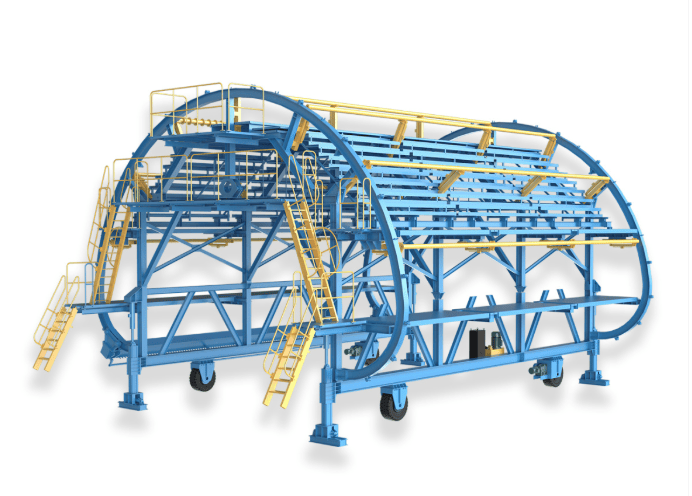
QLZNGJ Intelligent Steel Reinforcement Trolley
Luoyang China Railway Qiangli Machinery Co., Ltd.
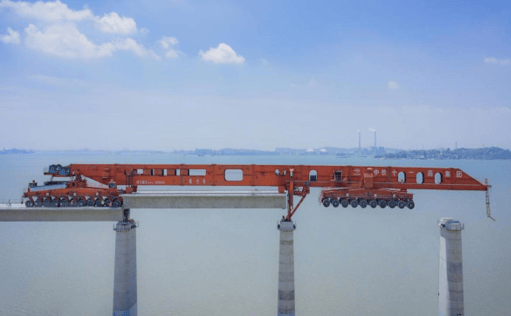
High-Speed Railway Lifting, Transporting, and Erecting Equipment: Integrated Transport and Erection Machine
Hanjiang Heavy Industry Co., Ltd. of China Railway 11th Bureau Group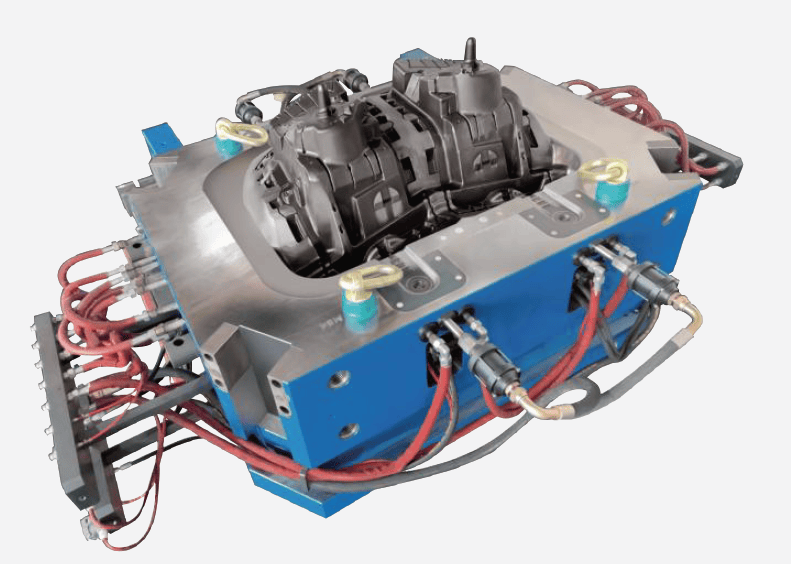
Aluminum-Magnesium Alloy High-Pressure Die-Casting Molds
NINGBO HELI TECHNOLOGY CO., LTD.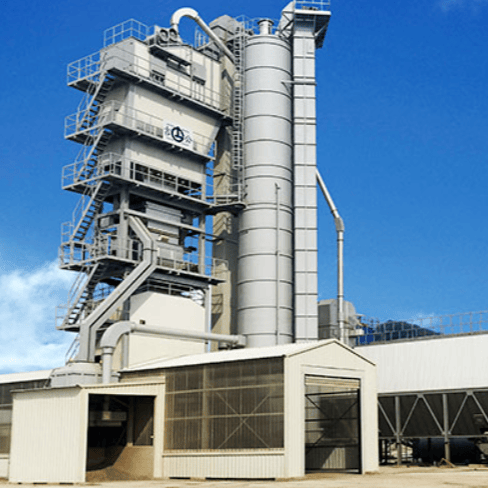
LBH4000 Batch Environmental Protection Asphalt Mixing Plant | Asphalt Batching Plant | Asphalt Mixing Plant
Jilin Province Road Construction Machinery Co., Ltd.