en.Wedoany.com Reported - Nigeria is advancing an energy autonomy strategy on two fronts simultaneously to reduce West Africa's long-standing dependence on international fuel markets. On one hand, it is pushing to establish a regional benchmark index to independently set prices for its refined products; on the other, it is studying reforms to crude oil allocation rules to ensure refineries such as Dangote can secure adequate supply at more favorable costs.
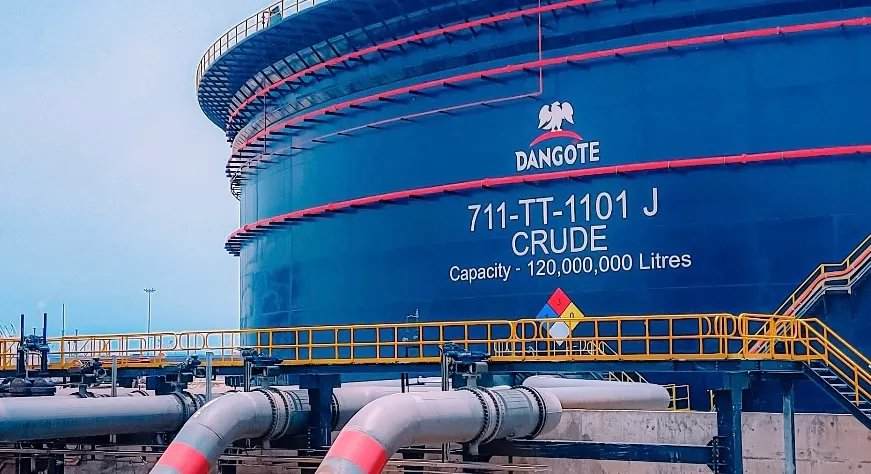
Both initiatives are directly tied to the rise of the Dangote Refinery in Lagos, which has a daily capacity of 650,000 barrels—the largest in Africa—and is reshaping the fuel distribution landscape across the entire West African region.
Speaking at the West African Refined Fuel Market Conference held this week in Abuja, Olu Verheijen, Special Adviser on Energy to Nigerian President Bola Tinubu, stated that regionally refined products "should not need to leave West Africa" for the market to determine their credible value.
According to data from S&P Global Commodities at Sea, clean petroleum product imports to West Africa fell 23% between April and May to approximately 765,000 barrels per day, largely attributed to increased output from the Dangote Refinery. However, the Nigerian Midstream and Downstream Petroleum Regulatory Authority (NMDPRA) cautioned that "a price benchmark is not in itself a market," noting that pipelines, storage terminals, ports, and logistics networks are equally indispensable, and that increased refining capacity must translate into a liquid and integrated market.
Yet a more pressing issue stands in the way of achieving this goal: the Dangote Refinery's access to Nigerian crude. The company points out that the current pricing structure forces refineries to source crude only through producing companies' trading arms, adding $3 to $4 per barrel in raw material costs. To address this, the Crude Oil Refinery-owners Association of Nigeria (CORAN) this week proposed two amendments to the domestic supply obligation during a regulator-led review: allowing producers to deliver crude directly to neighboring refineries without routing through trunk pipelines; and granting discounts to refineries that extract crude at the source, avoiding freight charges they do not actually incur.
The current environment is favorable. The Nigerian Upstream Petroleum Regulatory Commission (NUPRC) reports that producers' compliance with local supply quotas has surged to over 90% this quarter, up from less than 43% in the previous quarter. However, this figure only reflects the comparison between actual deliveries and allocated volumes, and does not indicate whether refineries' true demand is being met.
A NUPRC official stated that CORAN's proposals have been "put on the table" due to pressure from inland refineries, but also noted that implementing them would first require addressing differences in crude quality and adjusting prices accordingly.