Panama Canal Authority Launches Tender for Río Indio Reservoir Management
en.Wedoany.com Reported - The Panama Canal Authority (ACP) has launched a tender for project management consulting services for the Río Indio reservoir project. The project, with an estimated investment of $1.6 billion, aims to secure the freshwater supply for the transoceanic waterway. The Request for Qualifications (RFQ) was published on August 18, soliciting project management, engineering, and construction consulting services for the reservoir project under the Water Projects Office, with a submission deadline of October 6.

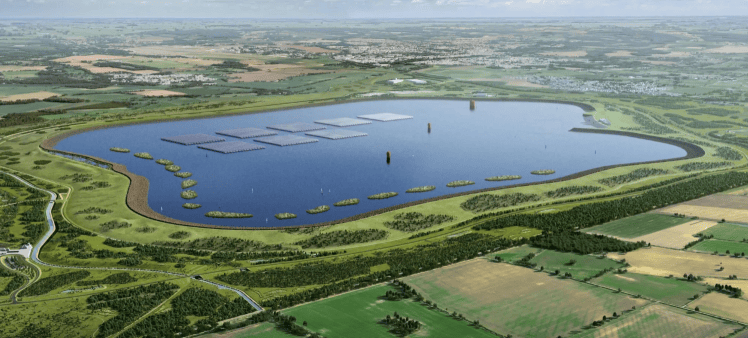
The scope of work includes a dam, an artificial lake, and a 5.2-mile-long, 4.5-meter-diameter water conveyance tunnel leading to Lake Gatún, ensuring water for canal operations and drinking water for approximately 2 million Panamanians. The tunnel will be excavated using a tunnel boring machine, differing from the drill-and-blast method outlined in the 2019 conceptual design. In addition to the main rockfill dam and spillway, the project includes three auxiliary saddle dams and bottom outlet facilities. The ACP has not yet disclosed the estimated value of the works.
Bidders are not required to establish a local presence in Panama; foreign companies may bid through local representatives. Consortia are permitted to bid, but pricing and technical proposals must be submitted under the consortium's name. The tender documents establish a separation between the winning bidder and construction work: companies involved in the reservoir's conceptual design are prohibited from bidding on this contract, and the winning bidder, along with its affiliates, parent companies, joint venture partners, shareholders, and directors, may not participate in any portion of the construction contracts or supply goods to the eventual constructor. ACP Deputy Administrator Ilya Espino de Marotta told Engineering News-Record (ENR) in June that there are similarities between dam and lock construction, but the focus is on tunnel construction, work the authority has never undertaken before. She will assume the role of Administrator of the Authority on October 1.
The project's Category III environmental impact study began in the spring and will document all technical and baseline data for the reservoir, with plans to submit it to Panama's Ministry of Environment between December and January. A design-build tender will follow, targeting a 2028 construction start, with the reservoir expected to be operational by 2031.
Concerns over water for canal operations have intensified recently. In the first nine months of fiscal year 2026, the canal recorded 10,726 transits and 390 million tons of cargo, both up year-over-year. Under the project schedule, the reservoir would not supply water to Lake Gatún until 2031 or 2032, later than the dry season currently emerging. Faced with growing traffic volumes and a potentially severe El Niño in 2026-27, the ACP has taken measures to conserve resources and views the January-April 2027 dry season as a risk exposure it is actively managing.
On August 20, the ACP limited daily booking slots to 9 for Neopanamax locks and 25 for Panamax locks, effective for booking dates starting September 4; starting with booking dates from September 15, Panamax slots will be reduced to 23. Combined, the two lock systems offer 34 slots per day, dropping to 32 next month. Maximum allowable drafts have been reduced multiple times since June: the current limit for Neopanamax vessels is 48.5 feet, dropping to 48 feet on September 2 and 47.5 feet on October 1. From May to August, rainfall in the watershed was 34% below historical averages and inflows were 44% lower; the ACP stated that although the rainy season has begun, the hydrological response remains significantly reduced.
Lake Gatún, which also supplies freshwater to over 2 million Panamanians, has not yet reached crisis levels. On August 21, the lake level stood at 84.1 feet, about one foot below the average late-August level from 1965 to 2020, but more than 4 feet above the same period in 2023. The ACP projects Lake Gatún will reach 83 feet by mid-October, below the five-year October average of 85.5 feet. In 61 years of daily records, only three Octobers—2015, 2019, and 2023—had lower levels, and each was followed by years with restrictions.
In 2023, the ACP partnered with the U.S. Army Corps of Engineers to develop a comprehensive water resources management study, projecting that water demand in the canal basin will increase from 50.4 equivalent transits per day to 64.0 over the next half-century. The study concluded that no single measure offers a complete solution and that any viable plan requires actions both within and outside the watershed. Río Indio ranked 16th among 18 measures, with annual economic benefits of $282 million, second only to a Caribbean inter-basin water transfer scheme; the study did not provide a cost estimate for Río Indio and therefore did not derive a benefit-cost ratio for it.
This contract management tender is the latest step by the ACP to advance the reservoir project. In April, a design-build contract ($17.5 million) for two roads in the reservoir area was awarded to Consorcio Rutas Río Indio, composed of MACASA and RETRANEQ, with a third 10.6-kilometer section yet to be tendered. The ACP is also evaluating soil testing laboratory services, procuring rehabilitation and maintenance services for tertiary roads in the watershed, conducting cost and schedule risk analyses and seismic hazard analyses, studying dam design floods and probable maximum precipitation, and weighing contracts for the design and construction of power supply lines.
Over the past year or more, the ACP has negotiated with 423 households in the reservoir inundation zone, having allocated $400 million for this purpose, with over 70% of families accepting the compensation framework and initial relocations expected no earlier than late 2027. Cemetery relocation has encountered resistance. Under an executive decree issued on July 21, new burials at the El Limón cemetery in the Chagres district ceased on July 30, with the replacement cemetery, Los Cedros, opening the same day. The decree sets January 15, 2027, as the burial deadline for seven other cemeteries within the project area, with replacement sites not yet designated. On August 3, the organization "Coordinadora Campesina por la Vida" filed a lawsuit with Panama's Supreme Court seeking to annul the decree.
Related Products

Aoxuan Intelligent Precision Air Conditioning Unit
SHANGHAI AOXUAN PURIFICATION TECHNOLOGY CO., LTD.



145kV Porcelain Column Type Sulfur Hexafluoride Circuit Breaker
TBEA ZONFA Shanghai High Voltage Switchgear Co., Ltd.




Pure Polyurethane Wall Panel BD-AEF-PIR-01
Baodu International Engineering Technology Co., Ltd.