Aarhus University, Denmark: VR technology helps boost public acceptance of agrivoltaics
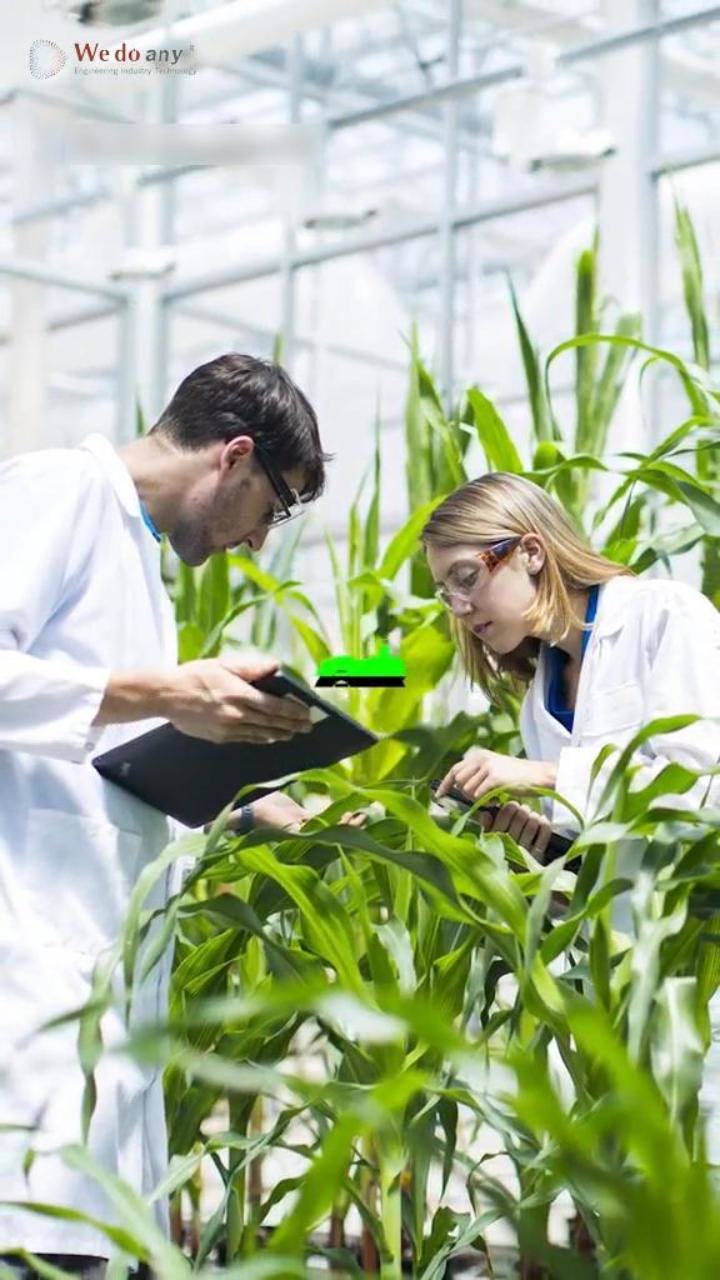
en.Wedoany.com Reported - A recent study by Aarhus University in Denmark shows that using virtual reality (VR) technology to show the public how agrivoltaic projects look and operate can help improve public understanding and acceptance of the technology.
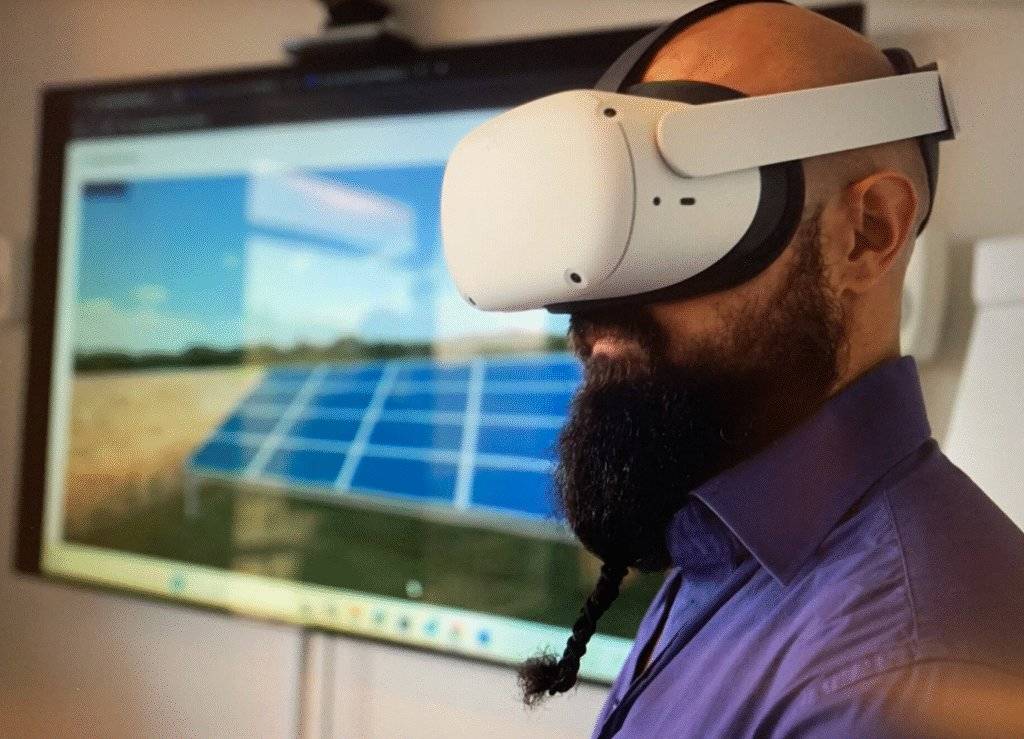
The study, conducted by a research team at Aarhus University, examined how the public compares and evaluates agrivoltaic systems with conventional solar power plants. The findings were published in the journal Environmental Science & Policy under the title "Cognitive and affective reasoning about agrivoltaics: The influence of experiential engagement on perceived purpose and acceptance intentions."
The research team used VR to show 102 participants three photovoltaic configurations: a conventional solar power plant, a vertical agrivoltaic system, and a horizontal agrivoltaic system. The displays featured two standard viewing perspectives, one approximately 50 meters from the installations and another 2 to 3 meters from them.
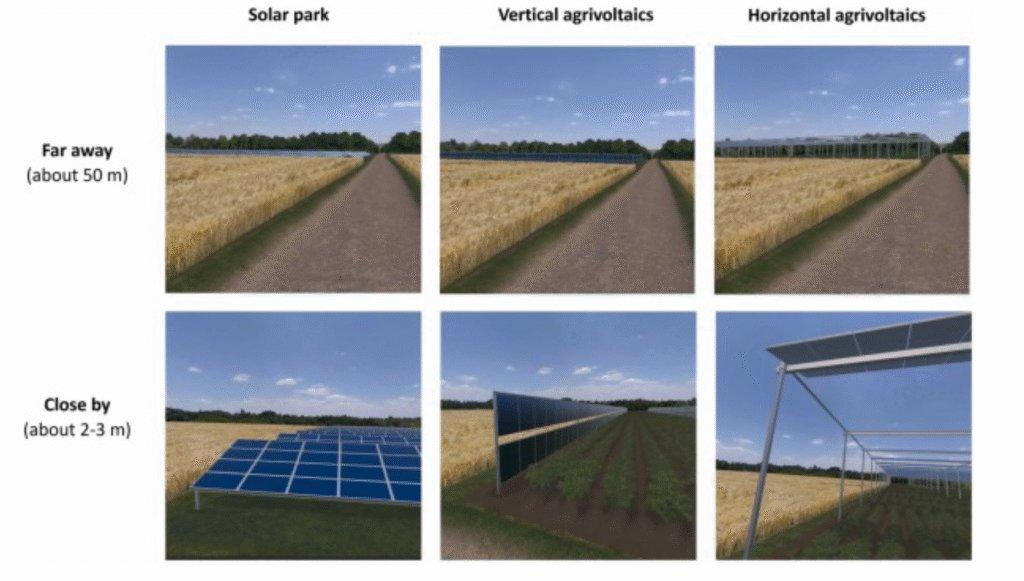
During the VR experiment, researchers recorded participants on video to capture how they formed evaluations while viewing the visualizations; questionnaires were administered before and after the experience to measure changes in participants' perceptions of and acceptance intentions toward the various installations.
Gabriele Torma, an assistant professor at Aarhus University and one of the paper's authors, told pv magazine that most participants initially knew very little about agrivoltaics. At first, participants reacted primarily based on how the installations appeared in the landscape; as the viewing perspective moved from far to near, more agricultural functions became visible, and many began to view the installations differently, understanding them as a way to use the same land for both food and energy production, rather than merely as photovoltaic modules occupying farmland.
The paper emphasizes that once participants understood the dual food and energy purpose of agrivoltaics, they rated agrivoltaic systems higher than conventional solar power plants. Quantitative analysis showed that agrivoltaics scored significantly higher than conventional solar power plants in terms of agricultural compatibility, environmental friendliness, and innovativeness, while acceptance intentions were equally high for all installation types. Based on this, the paper argues that after experiential engagement, unfamiliarity with the technology did not translate into lower self-reported local acceptance.
Torma stated that the practical takeaway of this research is that the public and stakeholders need opportunities to understand what an unfamiliar technology would actually look like and how it is intended to operate. VR, visualizations, or on-site demonstrations can make the visual impact and functional logic of agrivoltaics more intuitive, helping to foster more informed discussions about benefits, trade-offs, and design choices before projects are finalized.
Torma also noted that one limitation of the study is that all installations in the VR scenarios were approximately 1 hectare in size. Some participants explicitly indicated that the relatively moderate scale influenced their assessments. Torma believes that the same conclusions cannot necessarily be assumed to apply to larger installations; design and scale still matter, and local context also needs to be taken into account. These tools should serve dialogue rather than be seen as a way to persuade communities to accept projects.
The paper's analysis adds that these findings offer policy implications for agrivoltaic governance: formal consultation processes could be supplemented with experiential tools that allow stakeholders to directly engage with the functional logic behind such systems. The paper suggests that such tools should be deployed before specific project proposals are finalized, complementing formal planning processes, supporting transparent dialogue, and helping to clarify trade-offs without presupposing consent or acceptance.
The paper further notes that participants were able to form more informed evaluations after directly experiencing and interpreting the systems' functional logic, and these findings also have implications for social acceptance and land-use governance. The paper states that in contexts where open-field solar development raises concerns about agricultural land conversion or local acceptance, agrivoltaics can serve as a socially relevant complement to conventional solar power plants, provided that ongoing agricultural activity remains visible and practically viable.
The paper also states that although the findings do not directly address agronomic performance, the credibility of continued farming is crucial to public evaluation; agronomic feasibility, including crop compatibility, machinery access, yield expectations, and land-use efficiency, should be concretely communicated during planning and consultation processes.
Torma added that the VR scenarios used in the study are freely available for non-commercial use through the HyPErFarm project.
Related Products


Industrial and Commercial Point-Type Gas Detector
Jinan Benan Technology Development Co., Ltd.
714CD Series C-Band Weather Radar
Chengdu Zhongdian Jinjiang Information Industry Co., Ltd.
4HS-8 High-efficiency Peanut Inverted-laying Harvester
Hebei Yongfa Hongtian Agricultural Machinery Manufacturing Co., Ltd.