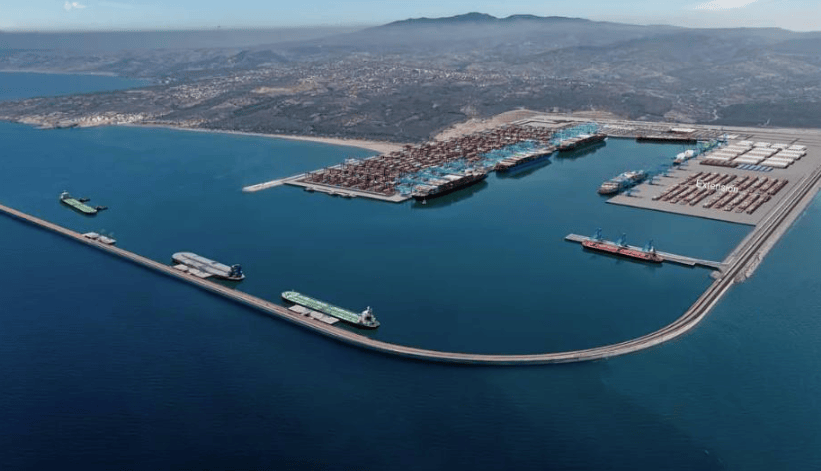
India Plans First Trial Voyage Along the Northern Sea Route in 2027
en.Wedoany.com Reported - India plans to conduct its first trial voyage along the Northern Sea Route (NSR) in 2027, marking the first extension of its maritime cooperation with Russia into Arctic waters. Officials from India's Ministry of Ports, Shipping and Waterways have confirmed the project, transitioning from inter-agency engagements in recent years to a first practical operation. Under the plan, a pilot vessel will assess the commercial potential of this route along Russia's northern coast.
India's move comes just as China has launched seasonal containerized commercial services between Asia and Europe via this route, and South Korea has also deployed its first container ship to verify the corridor's commercial viability. India thus becomes the third major Asian economy to formulate plans for utilizing the Northern Sea Route within just a few weeks, reflecting the Arctic's rising strategic attention amid uncertainties surrounding traditional trunk maritime corridors.
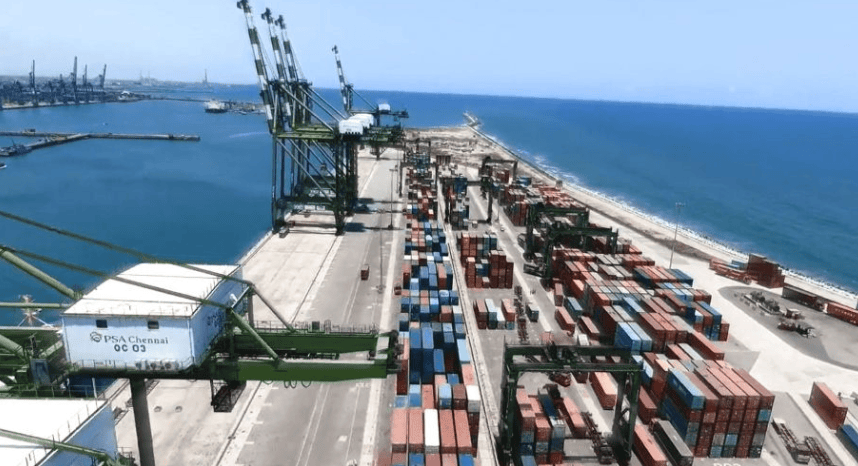
New Delhi's approach is closely linked to its Eastern Maritime Corridor development plan. India and Russia hope to boost bilateral trade through this corridor, viewing future Arctic voyages as a northward extension of it. Cargo volumes between Chennai and Vladivostok have grown by nearly 70% recently, and the two countries are also exploring new cooperation opportunities in port partnerships, shipbuilding, and cargo flows. This vision would connect India's east coast ports with Russia's Far East, with some cargo further shipped to Europe via the Northern Sea Route.
Russia has shown interest in bringing India on board, aiming to increase Arctic cargo volumes and diversify the cargo mix, which has traditionally been dominated by hydrocarbons and raw materials. The Arkhangelsk region has proposed multiple cooperation possibilities, including using local port facilities to handle Indian cargo, building ships for India, and developing new trade ties.
India's entry into the Asia-Europe Arctic route process significantly amplifies the geopolitical implications of this corridor. Three major Asian industrial and commercial economies—China, South Korea, and India—are simultaneously exploring a route to Europe that bypasses the Indian Ocean, the Bab el-Mandeb Strait, and the Suez Canal. While this corridor is not a direct substitute for the Strait of Hormuz, conflicts in the Middle East and successive disruptions to major maritime routes have heightened the value of having alternatives to reduce dependence on specific chokepoints.
For India, this option also carries special considerations. New Delhi maintains close trade ties with Moscow, and amid Western sanctions on Russia, India needs to expand international corridors while safeguarding its own energy and commercial supply needs. The Arctic is expected to become part of India's diversified corridor network, but using this route requires close coordination with Russia, which controls most of the infrastructure and services needed for navigation along the Northern Sea Route.
India's entry coincides with progress in Arctic commercial navigation this summer. On August 15, China's "Dubai Tower" departed from Ningbo Zhoushan, becoming the first vessel of Sea Legend's newly launched China-Europe Arctic Express service. The service plans weekly sailings during summer, connecting China with Felixstowe, Rotterdam, Hamburg, and Gdynia in approximately 20 days. The vessel subsequently called at Shanghai, Taicang, and Qingdao, leaving China on August 19 with 1,370 containers, including high-value cargo such as energy storage systems and batteries, for which shorter transit times are particularly attractive. China's goal is to convert the 2025 trial voyages into a regular service, marking the first test of whether theoretical distance advantages can translate into operational regularity and reliability.
South Korea's move has been nearly simultaneous. The "PanStar Acro" departed Busan at 21:00 on August 22, conducting South Korea's first test voyage of a container ship via the Northern Sea Route. The vessel has a capacity of 2,758 TEU and is carrying 837 TEU on this voyage, including 737 TEU of chemicals, used cars, and auto parts, plus 100 TEU of empty containers. Under the plan, the vessel is scheduled to enter the Northern Sea Route around August 30, exit Arctic waters around September 7, arrive at Felixstowe on September 9, Rotterdam on September 11, Gdansk on September 15, and return to Busan on October 5. The South Korean government will use this voyage to collect data on time, distance, consumption, and operating costs to determine the conditions required for commercialization. Seoul also believes that the opening of the Arctic route will help strengthen Busan's position as an international major shipping hub.
The synchronized moves are transforming the nature of Arctic projects. This route, long associated primarily with Russian interests and later linked to China's "Polar Silk Road," is now evolving into a competition among Asian economies to secure positions along a potential new maritime corridor. The Northern Sea Route's capacity remains far from comparable to the Suez Canal, and seasonality, ice conditions, vessel technical requirements, insurance costs, limited support facilities, and dependence on Russia remain significant operational and geopolitical obstacles.
The current voyages by China and South Korea will provide the first concrete benchmarks. The "Dubai Tower"'s voyage will test whether Sea Legend can replicate the approximately 20-day transit time from its 2025 trial in commercial operations; the "PanStar Acro"'s voyage will provide South Korea with its own record of costs and reliability. India's planned entry in 2027 demonstrates that the Arctic is generating widespread interest across Asia. Against the backdrop of global conflicts, sanctions, and the fragility of traditional routes, the focus is no longer just on whether the Northern Sea Route can compete with the Suez Canal, but also on which countries can secure more advantageous positions once this route gains a foothold in Asia-Europe trade.
Related Products

Pantograph-Catenary Comprehensive Detection Device (1C)
CHENGDU TANGYUAN ELECTRIC CO., LTD.

ERW Welded Pipe (Black Pipe and Hot-dip Galvanized Steel Pipe)
Handan Zhengda Steel Pipe Co., Ltd.

CLW5180TXSD6 Dongfeng Tianjin Washing and Sweeping Truck
ChengLi Special Automobile Co., Ltd.
ZY(J)7(M) Sealed Type Electro-Hydraulic Turnout Machine
TAIYUAN CR JINGFENG EQUIPMENT TECHNOLOGY CO., LTD.
One-Stop Steward Service for the Entire Logistics System Integration Chain
Zhongding Intelligent (Wuxi) Technology Co., Ltd.
Explosion-proof lithium battery dispatching monorail crane locomotive (permanent magnet frequency conversion integrated machine)
Xiangtan Hengxin Industrial Co., Ltd.
JiuTian OneSky Pilot—Intelligent Management And Service Platform
China Times Prospect Science & Technology Co., Ltd.