Electra Completes First Flight of Ultra Short Aircraft at Commercial Airport in the United States
en.Wedoany.com Reported - On September 22, U.S. aviation company Electra announced that its hybrid-electric EL2 Ultra Short demonstrator has completed a new round of advanced air mobility flight testing at multiple airports in Virginia. This testing marked the first takeoff and landing from a helicopter landing area on the commercial apron at Roanoke–Blacksburg Regional Airport, using point-in-space instrument flight procedures and dedicated airways designed for helicopters, accumulating operational data for the subsequent entry of the EL9 Ultra Short production aircraft into the U.S. National Airspace System. The testing was conducted under the framework of the U.S. Federal Aviation Administration's eVTOL and Advanced Air Mobility Integration Pilot Program (eIPP).

This flight campaign covered Virginia Tech/Montgomery Regional Airport, Roanoke–Blacksburg Regional Airport, Allan C. Perkinson/Blackstone AAF Airport, as well as two additional test points in Newport News and Richmond. The EL2 completed takeoffs and landings using helipads, vertiports, taxiways, and other areas typically not used by traditional fixed-wing aircraft, and tested point-in-space procedures and dedicated instrument airways. Electra conducted this testing jointly with the FAA, the Virginia Smart Airspace program, Virginia Tech, the Virginia Department of Aviation, and the Pennsylvania Department of Transportation.
The focus of the testing was not to validate the EL2's individual performance, but rather to verify whether fixed-wing ultra short takeoff and landing aircraft can access airports using existing helicopter operating areas and specially designed instrument procedures without occupying traditional commercial airport runways. The project team collected data during flight on the match between aircraft performance and procedure requirements, and validated new arrival and departure procedures, vertiport and helipad approach methods, and air traffic organization methods. Related work has been ongoing for more than a year, and subsequent data will be used to evaluate operational concepts for fixed-wing advanced air mobility aircraft using similar instrument procedures.
This testing supports Electra's ongoing EL9 Ultra Short program. The EL9 employs distributed hybrid-electric propulsion, blown lift, and fly-by-wire flight control technology, with a designed takeoff and landing distance of no more than 150 feet, approximately 46 meters, a capacity of 9 passengers, and a maximum range of approximately 330 nautical miles. Electra submitted its Part 23 type certificate application to the FAA in November 2025, and in July of this year the FAA completed the G-1 Issue Paper and formally established the EL9 certification basis. The subsequent G-2 phase will further determine the means of compliance, including engineering analysis, ground testing, flight testing, and inspections.
The EL9 is also concurrently advancing industrialization preparations. On September 15, Electra signed an airframe development and production agreement with Atlas Group, under which Atlas will participate in EL9 airframe production; Electra had previously determined to build its first EL9 production facility in Springfield, Ohio, with a planned investment of 850 million U.S. dollars and a designed annual production capacity of up to 800 aircraft at full rate. The program is currently in a phase where certification, flight validation, and production preparation are proceeding in parallel.
The FAA has this year incorporated Electra's related programs into the eIPP actual flight validation system. In August, Electra also completed a demonstration flight using a hybrid-electric aircraft from Manassas, Virginia, via a New Jersey airport to Philadelphia International Airport, testing the connection between small airports and large aviation hubs. This Virginia testing further extends the validation scope to non-runway areas of commercial airports and instrument flight procedures.
Related Products


Industrial and Commercial Point-Type Gas Detector
Jinan Benan Technology Development Co., Ltd.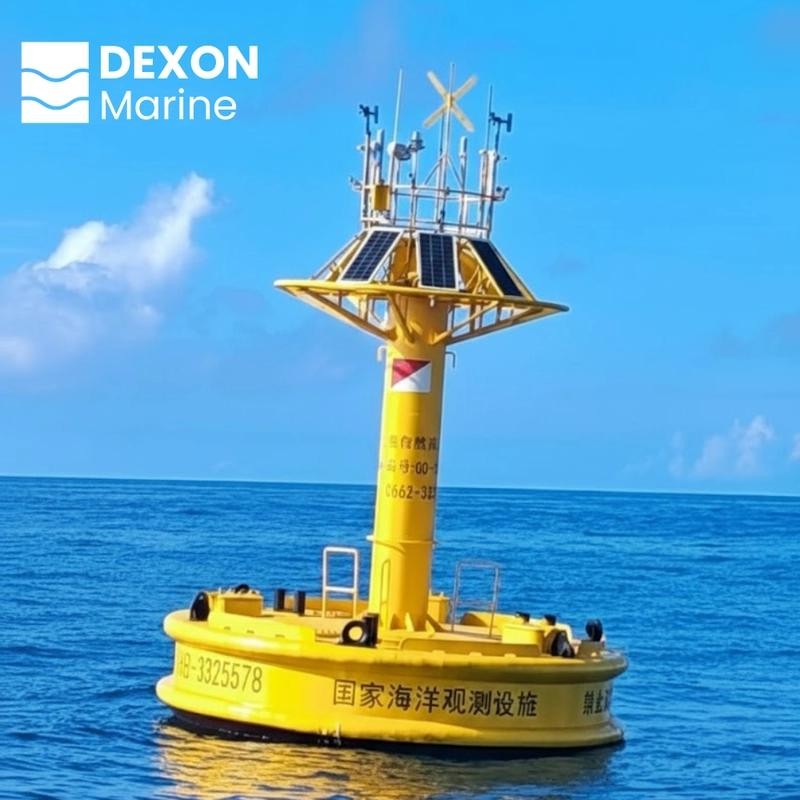
3m intelligent buoy combining navigation safety and real-time marine monitoring integrated navigation and marine monitoring system for real-time maritime data
Chengdu Dixin Technology Co., Ltd.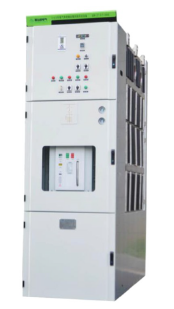
GSR6-27.5kV SF6 Free Gas-insulated Metal-enclosed Switchgear
Zhejiang Juhonkia Intelligent Electric Co., Ltd.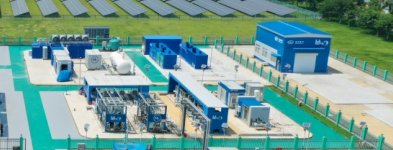


"Shunyi 1600" Deep-submerging Bottom-sitting Multi-functional Wind Power Engineering Vessel
Zhengli Offshore Engineering Co., Ltd.

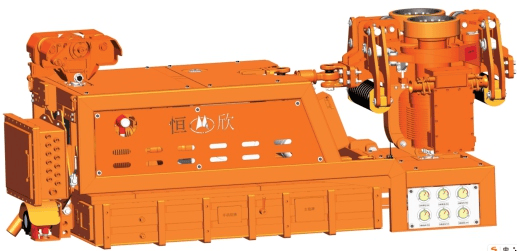
Explosion-proof lithium battery dispatching monorail crane locomotive (permanent magnet frequency conversion integrated machine)
Xiangtan Hengxin Industrial Co., Ltd.