Google's Project Suncatcher to Send TPUs into Orbit Next Week for Space AI Computing Test
en.Wedoany.com Reported - On September 24, Google announced that Project Suncatcher will conduct its first in-orbit test next week, with a prototype satellite carrying Google Tensor Processing Units (TPUs) set to enter low Earth orbit via SpaceX's Transporter-18 rideshare mission. The mission, developed in collaboration with satellite company Planet, will gather data on TPU operation in the real space environment, with testing covering rocket launch payloads, space radiation, extreme temperatures, and chip thermal management systems. The project is currently in the prototype satellite in-orbit verification phase, and the first mission will not involve commercial space data center operations.

Google will focus on verifying the reliability of TPU hardware during launch and in the orbital environment. During the rocket's ascent to low Earth orbit, the satellite will experience up to approximately 10 times the force of gravity, and some chip-level components may endure gravitational loads of 50 to 100 times. The project team has completed three-axis vibration tests on the ground and conducted radiation testing on Trillium TPUs using proton beams at the Crocker Nuclear Laboratory at the University of California, Davis, while running AI workloads simultaneously. Preliminary test results released by Google show that Trillium TPUs can withstand total ionizing radiation doses exceeding the cumulative levels expected over a five-year space mission.
Chip thermal management is also a testing item for the first mission. The vacuum environment of low Earth orbit precludes the air cooling methods commonly used in data centers, so Project Suncatcher has equipped the TPUs with a combined heat pipe and radiator system. The relevant equipment has previously completed simulated testing in a thermal vacuum chamber, and once in orbit, it will verify the operation of this cooling solution under actual orbital temperature and vacuum conditions.
Project Suncatcher's follow-up plan will group multiple TPU-equipped satellites into computing clusters. Google plans for each satellite to carry dozens of TPUs in the future, transmitting AI computing data via inter-satellite laser links. The project requires maintaining high-bandwidth communication between satellites that are relatively close together and continuously moving at high speed. Google plans to launch two satellites in 2027 to conduct in-orbit testing of the relevant high-bandwidth laser interconnect technology.
When Google previously announced Project Suncatcher, it defined it as a long-term research project for scalable space machine learning infrastructure. The project is designed to leverage the near-continuous sunlight available in low Earth orbit to power computing facilities. Google estimates that the solar power obtainable by satellite solar systems in orbit could reach up to approximately 8 times that of comparable ground-based facilities. The current engineering roadmap covers, in sequence, single-satellite TPU environmental verification, dual-satellite laser interconnect testing, and subsequent multi-satellite computing cluster research.
Related Products


MUX Series Communication Interface Device for Security and Stability Control System
Nanjing NR Electric Co., Ltd.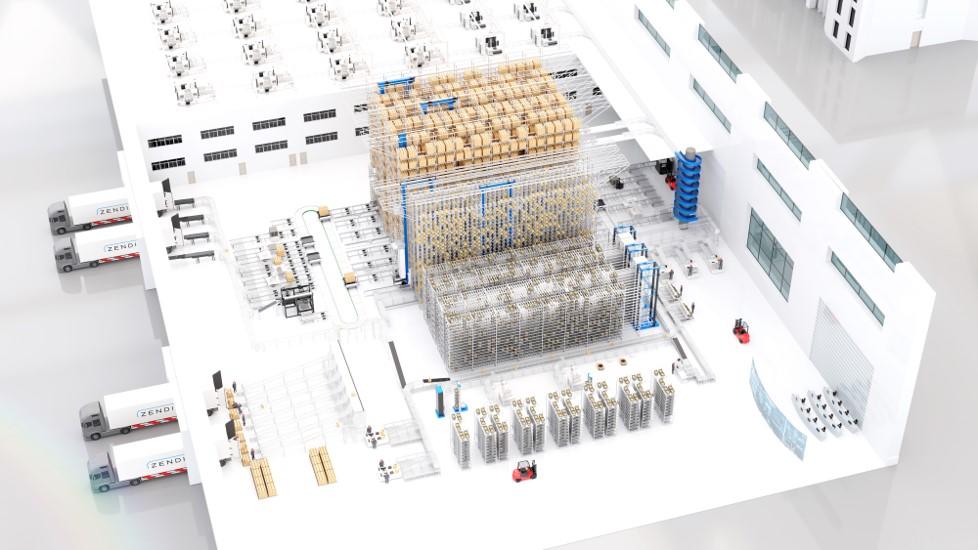
One-Stop Steward Service for the Entire Logistics System Integration Chain
Zhongding Intelligent (Wuxi) Technology Co., Ltd.
GYTA Type Non-Self-Supporting Aerial/Duct Optical Cable
TONGDING INTERCONNECTION INFORMATION CO., LTD.
Multi-function Marine Monitoring Low-altitude Detection Radar Sea-air Boundary Ocean Dynamic Environment Measurement
Chengdu Dixin Technology Co., Ltd.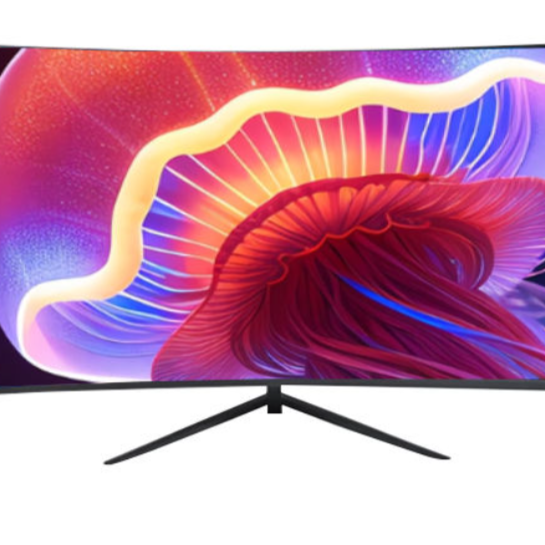
20 Inch 1600*900 Full HD 60Hz TFT LED Monitor with VGA and DP Interfaces for Desktop Computers-Business Use
Guangzhou Zanying Optoelectronics Technology Co., Ltd.
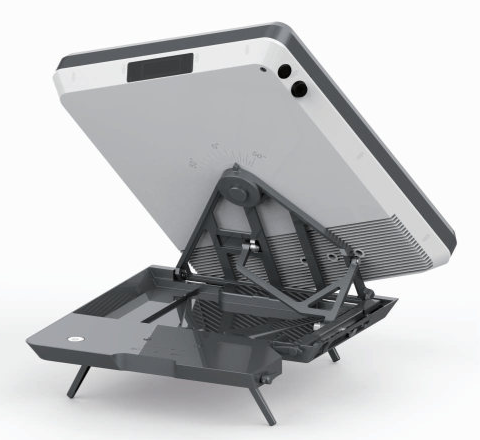
Flat Portable Satellite Terminal 0.35m Aperture Manual Portable Terminal
China Starwin Science & Technology Co., Ltd.
Mine Explosion-proof and Intrinsically Safe Industrial Ethernet Ring Network (10 Gigabit/Gigabit)
Chongqing Mas Sci&Tech Co., Ltd.