Saudi-Algerian Team Proposes Novel PVT System
en.Wedoany.com Reported - On October 30, researchers from Saudi Arabia and Algeria proposed a photovoltaic-thermal (PVT) system combining stepped air channels with perforated V-shaped fins, which improves PV module heat dissipation by optimizing the airflow channel and heat dissipation structure on the back of the module without the need for external power equipment such as fans or pumps. Computational fluid dynamics simulation results show that the system can reduce the PV surface temperature by 9 K, with a maximum thermal efficiency of 31%, higher than the 29.4% of the reference system.
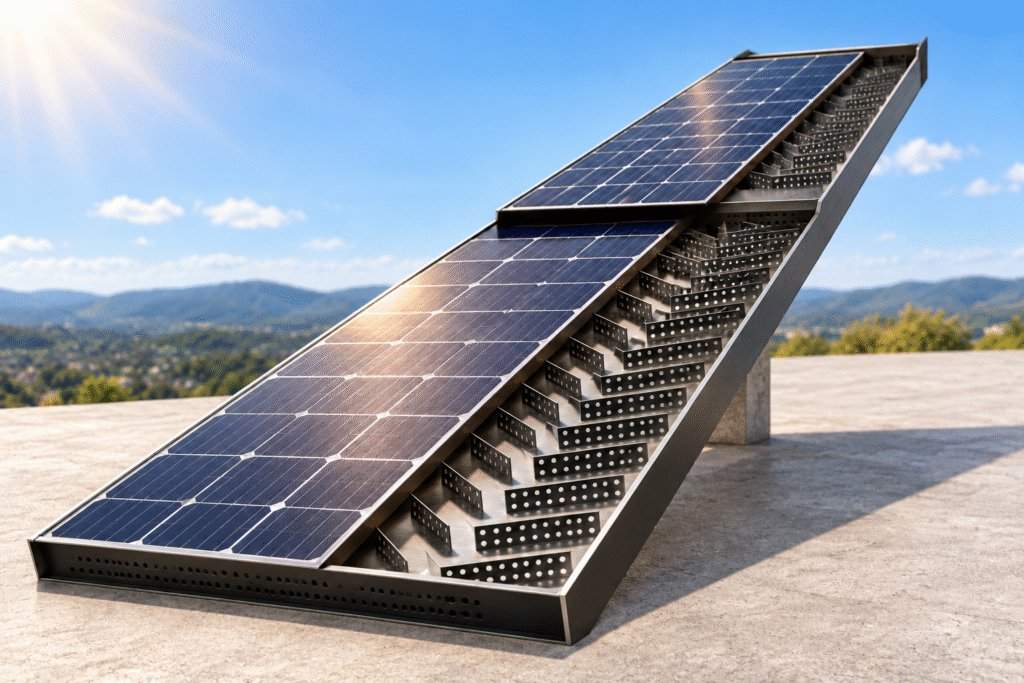
The design features stepped air channels on the back of the PV module, configured with two air inlets and one air outlet. Staggered aluminum V-shaped fins with 5 mm diameter perforations are arranged inside the channels. The stepped channels are used to disturb the air boundary layer near the heated surface, while the perforated fins enhance the convective heat transfer between the air and the fins by increasing the heat exchange area, promoting air mixing and local turbulence. The system relies on air buoyancy to form natural ventilation and requires no additional energy consumption for air circulation.
The research team used ANSYS Fluent to build a three-dimensional numerical model and simulated a PVT air collector measuring 2.4 m × 0.54 m with a tilt angle of 32°, using solar irradiance and ambient temperature data from a clear summer day in the Ghardaïa region of Algeria as calculation conditions, with a peak solar irradiance of 995 W/m². Simulation results show that the system achieved a maximum thermal efficiency of 31% versus 29.4% for the reference system, and an electrical efficiency of 14.8% versus 14.6% for the reference system. The system's peak thermal output was approximately 400 W and electrical output approximately 180 W, with the PV surface temperature reduced by 9 K compared with the reference case.
The study also estimated economic and environmental benefits. Under clear-sky conditions, the system's estimated payback period is 5.8 years, and 7.2 years under cloudy conditions; based on 10 modules per set, it is estimated that approximately 3.2 tonnes of CO₂ emissions can be reduced annually, with cumulative reductions of approximately 80 tonnes over 25 years, and an energy payback period of 0.86 years. The above data come from calculations based on the research model, and actual performance still needs to be verified through prototype testing and long-term operation.
The related research paper is titled "A computational investigation of a staircase-configured PVT air system with perforated V-shaped fins for passive cooling" and was published in the Ain Shams Engineering Journal. The research was completed with the participation of researchers from the Islamic University of Madinah in Saudi Arabia, the University of Ouargla in Algeria, and the Center for Renewable Energy Development.
Related Products
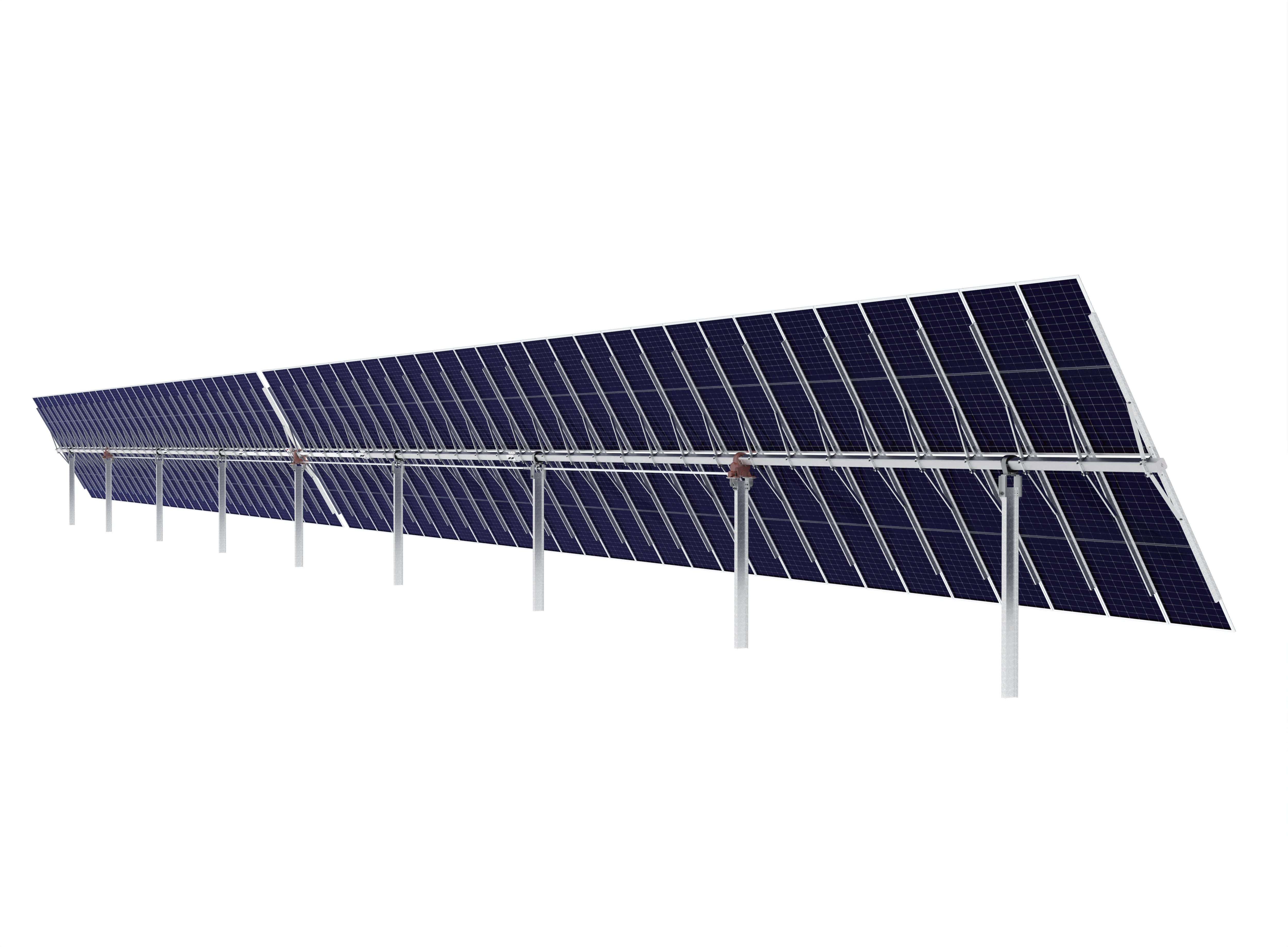

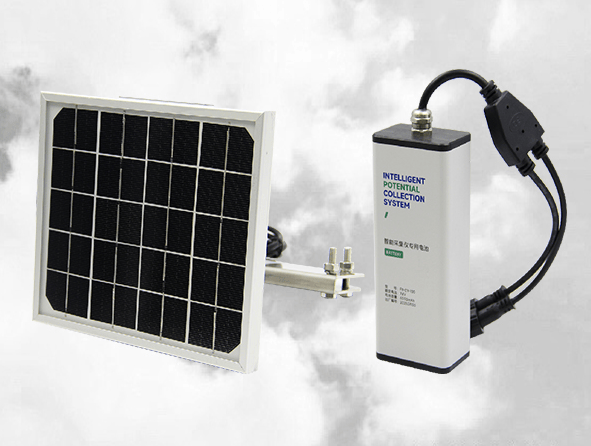
Inductive Power Harvesting Self-Powered Device - Safuneng
SELF ENERGY TECHNOLOGY (SHENZHEN) CO., LTD.
Hydrogen Production Technology: Hydrogen Purification by Pressure Swing Adsorption
Chengdu Yizhi Technology Co., Ltd.
Optional Accessory - Auxiliary Sampling Module
Beijing Soaring Electric Technology Co., Ltd.

Pneumatic high-pressure wear-resistant ball valve
Zhejiang Deca Control Valve Meter Co., Ltd.

220kV Composite Outdoor Cable Terminal
Shenyang Guolian Cable Accessories Manufacture Co., Ltd.