Three Companies Compete for INR 117.33 Billion Outer Harbour Works at India's VOC Port
en.Wedoany.com Reported - On November 7, technical bids were opened for the marine infrastructure package of the outer harbour works at VOC Port in Thoothukudi, Tamil Nadu, India, with three companies competing: Adani Ports and Special Economic Zone Limited (APSEZ), Megha Engineering & Infrastructures Limited (MEIL), and Vishwa Samudra Engineering. The evaluated amount for this package is INR 117.3328 billion, implemented under a hybrid annuity model. The contract scope includes breakwaters, rubble-mound containment dikes, berths, channel and basin dredging, land reclamation, and associated onshore facilities.
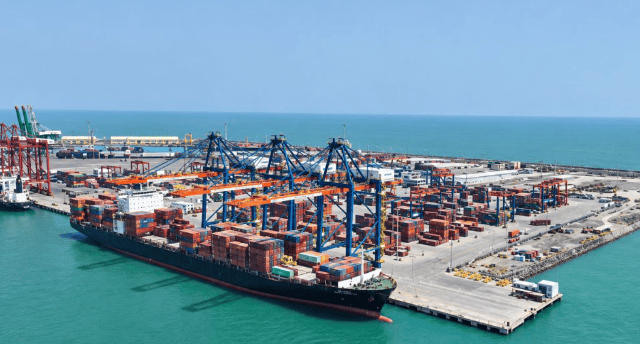
The tender was organized by the VOC Port Authority of India and constitutes the marine infrastructure package within the overall development plan for the outer harbour container terminal. According to the scheme reviewed by the Indian government's Public-Private Partnership Appraisal Committee on April 23, 2026, the project is divided into two parts: first, construction of basic marine works under a hybrid annuity model with an evaluated investment of INR 1,173.328 billion; second, construction of two container terminals under a design, build, finance, operate, and transfer model with an evaluated investment of INR 543.409 billion. The combined investment for both parts totals approximately INR 1,716.736 billion.
The marine infrastructure works include north and south breakwaters with a total length of approximately 5,650 meters; construction of approximately 2,800 meters of rubble-mound containment dikes to retain dredged material and form the reclaimed land area for the backup yard; dredging of the berth frontage, basin, and approach channel; construction of two container berths each 1,000 meters long, along with a port gate area and a six-lane connecting road. The dredged soil and rock will be used for land reclamation of the backup yard, the containment dikes will serve to protect the reclamation area, and the breakwaters will constitute the protective infrastructure for the outer harbour waters.
The engineering design for this round has undergone significant adjustments compared with the previous scheme. The design vessel draught for the outer harbour has been increased from 16 meters to 18 meters, and the target maximum container capacity of vessels has been raised from 18,000 TEU to 24,000 TEU. To accommodate the entry and exit requirements of large container vessels, the dredging volume has been increased from the originally planned 10.96 million cubic meters to 20.30 million cubic meters, the outer channel length has been extended from 8.6 kilometers to 10.5 kilometers, and the width has been increased from 230 meters to 295 meters. The design dredged bottom elevations for the basin, turning circle, and approach channel have been adjusted to approximately minus 17.9 meters, minus 18.7 meters, and minus 19.5 meters, respectively.
The two container terminals will each have a designed handling capacity of 2.6 million TEU per year, totaling 5.2 million TEU. In addition to berths and yards, the terminal construction portion also includes ship-to-shore container handling equipment, rubber-tyred gantry cranes, rail handling equipment, container transport vehicles, and supporting facilities. Each terminal is planned to be equipped with 12 ship-to-shore container cranes, 36 electric rubber-tyred gantry cranes, and rail yard lifting equipment, along with yard paving, gantry crane rails, rail connections, power supply and distribution, lighting, fire protection, water supply and drainage, and communication systems.
This re-tendering follows the failure of two previous procurement rounds. The original scheme planned to develop the outer harbour container terminal as a whole through a traditional public-private partnership model, with an estimated project investment of approximately INR 705.595 billion, excluding goods and services tax, and viability gap funding support of up to INR 195 billion. In the first tender round, although companies submitted applications, they failed to meet the qualification requirements; the second round received no bid documents. The port authority subsequently prepared a revised detailed project report, splitting the basic marine works from the container terminal mechanization and operations, adopting the hybrid annuity and concession models respectively.
Bid qualification requirements have also been adjusted. The port authority changed the previous requirement emphasizing dredging and land reclamation experience to a requirement for breakwater construction track record within India, requiring the bidder or consortium member to have completed at least 2 kilometers of breakwater construction in a single project within five years prior to the bid deadline. Adani Ports and Special Economic Zone Limited is competing on the strength of its 2.96-kilometer breakwater construction at Vizhinjam Port; Megha Engineering & Infrastructures Limited has 2.325 kilometers of breakwater construction experience at Machilipatnam Port in Andhra Pradesh; and Vishwa Samudra Engineering is participating on the basis of its 3.435-kilometer breakwater construction project at Mulapeta Port. All three companies possess relevant port breakwater construction experience.
The marine works adopt a hybrid annuity model, with a construction period of 4 years followed by a 10-year operation and maintenance period. Under the project financing arrangement, the port authority will pay 45% of the bid project cost for each corresponding construction stage during the construction phase, in 10 installments of 4.5% of the corresponding cost each, adjusted according to the agreed price index. The remaining 55% will be raised by the concessionaire through debt and equity financing, and the port authority will repay it through 20 semi-annual installments after completion of the works, with the first installment calculated from the 180th day after completion of the corresponding stage. During the operation and maintenance period, the marine works contractor shall not charge users any toll or usage fees.
The two container terminals will each adopt a 30-year concession period, including a 2-year construction period, with the selected operator responsible for terminal equipment configuration, yard facilities, handling systems, and daily operations, and charging users service fees according to market conditions. The marine infrastructure and terminal operations are organized for construction and financing separately, forming an implementation arrangement that links port public works with commercialized terminal operations.
Related Products

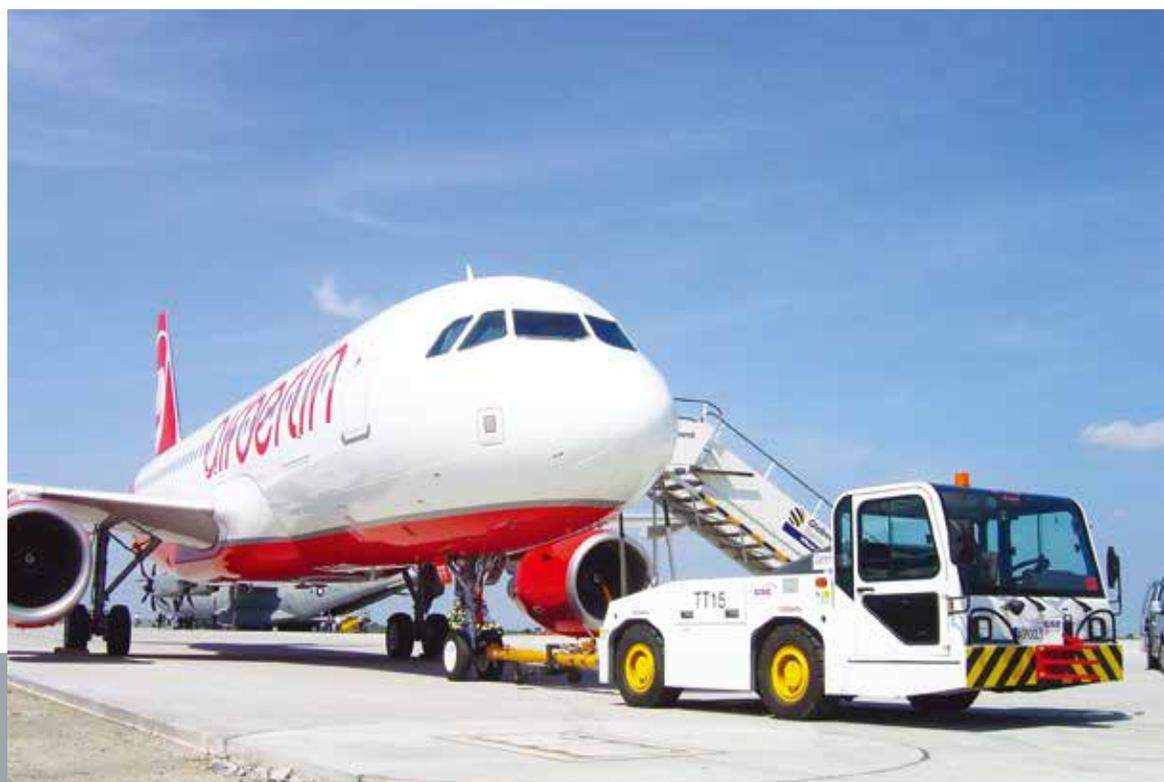
WGQY Series Aircraft Tow Tractor-WGQY15, WGQY27
Weihai Guangtai Airport Equipment Co., Ltd.
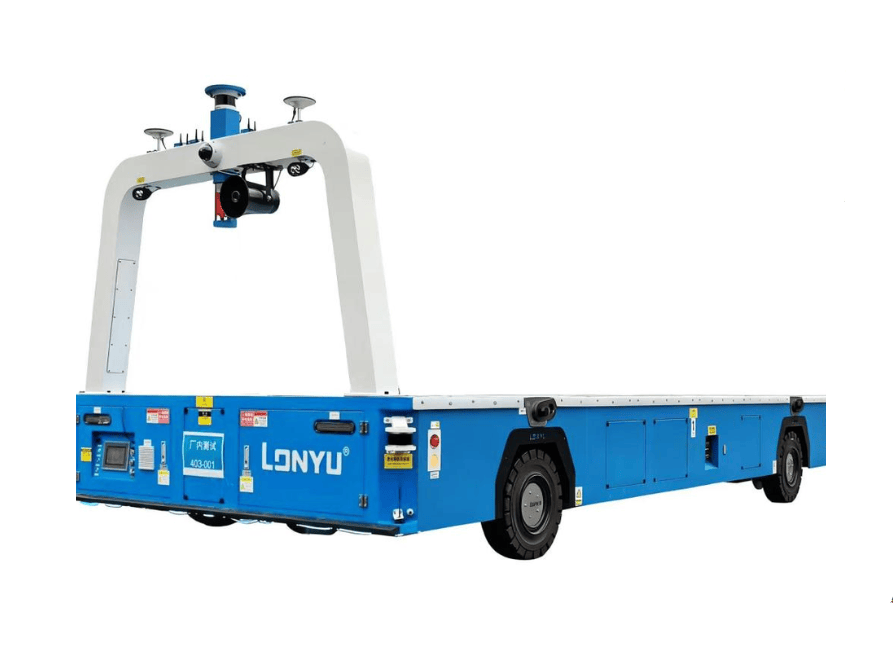
One-Stop Steward Service for the Entire Logistics System Integration Chain
Zhongding Intelligent (Wuxi) Technology Co., Ltd.

D12 Humanoid Robot
Automation Research Institute Co., Ltd. of China South Industries Group Corporation