World Fusion Outlook 2026 Analyzes Global Capital Investment and Engineering Equipment Market
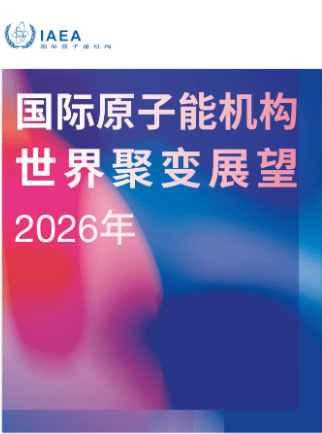
en.Wedoany.com Reported - On November 12, 2026, the International Atomic Energy Agency (IAEA) released the World Fusion Outlook 2026 in Vienna, Austria, providing a systematic assessment of global fusion technology progress, industry financing, engineering facilities, supply chain development, and commercialization prospects. The report shows that the global private fusion industry has accumulated US$21.9 billion in committed capital, paid suppliers more than US$530 million in 2025, and that the number of fusion facilities operating, under construction, and planned worldwide has reached 174. The fusion industry is gradually expanding from a development stage dominated by scientific research and experiments to engineering system integration, advanced equipment manufacturing, and demonstration power plant development, with the industrial supply chain becoming a significant factor influencing the commercialization process.
I. Cumulative Private Capital Investment Reaches US$21.9 Billion, Commercialization Financing Needs Still at US$80 Billion
FusionX research compiled by the International Atomic Energy Agency shows that the global private fusion industry has accumulated approximately US$21.9 billion in committed capital, with more than 90% concentrated in the most recent five years. In the 12 months ending July 2026, private fusion companies raised approximately US$4.5 billion in new financing, setting a record for the same period. Based on the investment pace at the time of the 2026 report's release, full-year financing could reach US$7.6 billion.
As industry financing continues to expand, funding sources and investment purposes are also beginning to shift. Early investment primarily supported plasma research, experimental device development, key technology validation, and prototype equipment manufacturing. Construction of large demonstration facilities requires expenditures for industrial buildings, complete equipment sets, system integration, installation and commissioning, and long-term operational validation, with funding requirements and risk structures significantly different from the research phase.
Based on data from 92 private fusion companies and investment models, FusionX estimates that the industry may require an additional approximately US$80 billion in private capital over the next 20 years to support fusion's path to commercial deployment.
The existing US$21.9 billion in cumulative committed capital and the future US$80 billion funding requirement do not belong to the same statistical scope. The former reflects capital commitments already made, while the latter is a financing demand estimate based on a commercialization development pathway. Future funding needs have not yet been fully secured, nor do they represent equivalent engineering construction or equipment procurement orders.
Once fusion projects enter the large-scale engineering construction phase, capital allocation will be directly affected by technology maturity, construction timelines, and project risk-sharing mechanisms. R&D projects can continue to advance through staged equity financing, while commercial demonstration power plants require clearer engineering budgets, equipment delivery arrangements, and long-term financial support.
At present, capital markets have provided fusion companies with relatively large-scale R&D funding, but a funding structure gap remains in the transition from technology investment to fixed asset investment. Whether the first batch of commercial demonstration facilities can establish a stable financing model will affect the pace of engineering construction and the scale of subsequent industry procurement.
II. Global Fusion Facilities Reach 174, Engineering Development Enters Multi-Project Parallel Phase
The IAEA Fusion Facility Database includes 174 fusion facilities operating, under construction, and planned worldwide. Since 2021, the number of fusion facilities backed by private funding has tripled.
The growth in facility numbers reflects the continued increase in fusion R&D entities and engineering activities. The global industrial system now covers public research institutions, private technology development companies, engineering contractors, and specialized equipment manufacturers.
The 174 facilities include research devices employing different technology pathways and at different development stages, and not all are commercial power generation projects. Existing facilities primarily undertake plasma experiments, key component validation, system integration, and engineering technology development tasks, and cannot yet be used to calculate commercial fusion power generation capacity.
The report lists 26 fusion power plants in the planning stage, with proposed power generation target dates ranging from the early 2030s to the 2050s. Different projects show significant differences in technical design, financing, regulatory review, and engineering readiness, with some projects yet to determine specific construction timelines.
Existing fusion facilities have formed a three-tier engineering market.
Operating research devices continuously generate demand for equipment upgrades, diagnostic system modifications, power supply upgrades, and control system optimization. Experimental facilities under construction involve civil engineering, large mechanical structures, industrial electrical systems, equipment installation, and system commissioning. Planned demonstration and commercial power generation projects must complete technical solutions, engineering design, construction financing, and regulatory licensing before corresponding procurement procedures can be initiated.
The engineering value of fusion projects is determined by their actual development stage. Facilities that have entered the equipment manufacturing and construction phase have a clear contractual implementation basis, while the long-term goals of planned projects remain subject to technology validation and investment decisions.
Global fusion engineering construction is expanding from a small number of large-scale scientific research projects to a pattern of parallel development of multiple types of facilities, and the importance of engineering management, equipment manufacturing, and specialized subcontracting capabilities is increasing accordingly.
III. Annual Supplier Spending Exceeds US$530 Million, Industrial Procurement Market Begins to Take Shape
In 2025, global private fusion companies paid suppliers more than US$530 million. This figure reflects industry procurement expenditures that have already occurred and is fundamentally different from total corporate financing and future power plant investment projections.
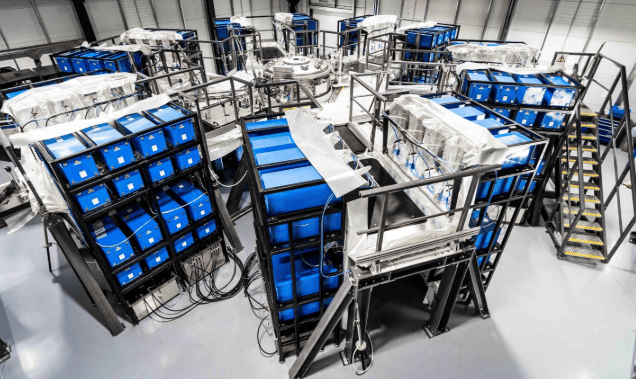
Industrial procurement of fusion equipment primarily revolves around large experimental devices and key technology validation. Superconducting magnets, vacuum vessels, cryogenic systems, high-power power supplies, diagnostic instruments, and industrial control equipment constitute important technical systems for some magnetic confinement fusion projects.
Superconducting magnet manufacturing involves superconducting materials, complex winding structures, mechanical supports, cryogenic insulation, and performance testing. The manufacturing quality and operational stability of magnet systems directly affect device performance, and key components must undergo rigorous material validation, dimensional control, and system testing.
Vacuum vessel and large structural component manufacturing relies on precision machining, complex welding, non-destructive testing, and high-reliability sealing technology. Some devices employ specially designed components of large size and complex structure, with manufacturing processes that intersect technically with large high-end equipment, though products must still meet the engineering requirements of specific devices.
High-power power supplies undertake the electrical energy conversion and control tasks required for device operation, with related equipment including pulsed power supplies, power electronic components, conversion equipment, and associated measurement and control systems. Equipment performance must match the operating cycles, load variations, and control requirements of experimental devices.
Fusion devices also involve industrial cooling, special materials, remote operation, robotic maintenance, and equipment condition monitoring. During large facility construction, mechanical manufacturing, electrical installation, industrial piping, and system commissioning form multi-disciplinary collaborative relationships.
The existing industrial manufacturing system already possesses the technical foundation for some equipment and components, but fusion applications typically require more stringent material traceability, performance validation, and manufacturing consistency. Entering the supply chain requires completing prototype testing, process qualification, quality system audits, and engineering adaptation.
The 2025 supplier spending data indicates that fusion has generated real industrial procurement activity. Its scale does not yet represent a mature commercial power plant equipment market, and procurement by public research institutions is not fully captured in this private enterprise statistic.
As device construction expands, supplier competition will gradually extend to volume manufacturing, delivery capability, long-term reliability, and full equipment lifecycle services. Industrial enterprises capable of achieving stable production of key components will develop stronger supply assurance capabilities in subsequent demonstration facility construction.
IV. Demonstration Power Plant Development Raises System Integration Requirements, Engineering Construction Becomes Key to Commercialization
Fusion devices are evolving from individual experimental systems to highly integrated engineering facilities. Large devices must not only meet plasma performance requirements but also coordinate the operation of multiple systems including magnets, heating, power supplies, vacuum, cooling, diagnostics, and control.
Complex technical interfaces exist between key equipment. The output capability and control precision of power supply systems must meet device operating requirements, cryogenic systems must maintain the operating conditions of superconducting magnets, and vacuum structures must satisfy sealing performance, structural precision, and on-site assembly requirements.
Individual equipment meeting design specifications does not mean the complete device has achieved stable operational capability. System integration, joint commissioning, and engineering reliability validation remain important tasks in large fusion facility construction.
The International Thermonuclear Experimental Reactor (ITER) is a major project in global large-scale fusion engineering collaboration. The IAEA 2026 report notes that ITER is being executed according to the project baseline established in 2024, with some work progressing ahead of that baseline.
ITER adopts an international collaborative construction model, involving cross-national equipment manufacturing, transportation, on-site installation, and comprehensive commissioning. Different manufacturing entities must meet unified technical interfaces and quality requirements, and equipment delivery schedules directly affect overall project arrangements.
Complex engineering organization capability has become an important condition for fusion technology to move toward industrialization.
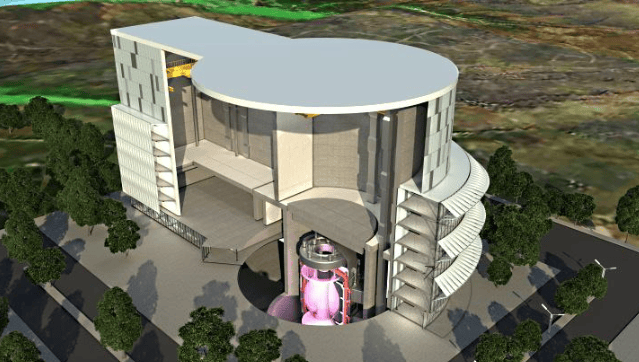
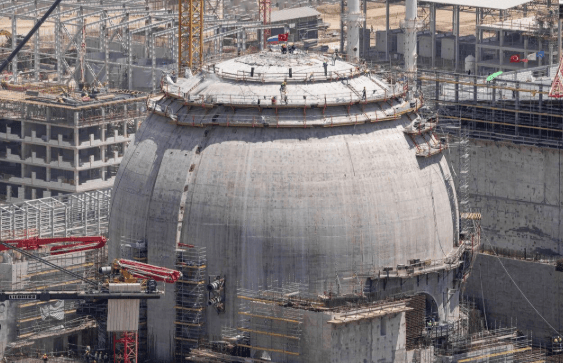
Large experimental facility construction encompasses industrial buildings, foundation engineering, mechanical equipment installation, electrical systems, cooling systems, and automated control. Engineering implementation requires coordination of design, manufacturing, construction, and commissioning, with technical interfaces and quality management running throughout the project construction process.
Demonstration power plants must further address issues of continuous device operation, equipment maintenance, system reliability, and engineering costs. These requirements will expand the connections between fusion projects and traditional high-end equipment manufacturing, energy engineering construction, and industrial service systems.
The engineering experience from the first batch of demonstration power plants will provide a basis for subsequent device standardization, construction process optimization, and equipment manufacturing process improvement. Commercial deployment capability depends not only on fusion experimental results but also on whether complex engineering systems can achieve reliable delivery.
V. Artificial Intelligence Enters Fusion R&D, Demand for Data Infrastructure and Real-Time Control Increases
Artificial intelligence is one of the key topics in the World Fusion Outlook 2026. Google DeepMind contributed to the related research, analyzing AI applications in fusion simulation, experiment optimization, real-time control, and advanced materials development.
Fusion research requires processing complex plasma behavior and high-dimensional physics data. Some advanced simulations require weeks or even months to complete, and experimental time and data acquisition conditions at large experimental devices are also constrained.
AI has begun to participate in some fusion research tasks, including accelerating complex simulations, optimizing experimental plans, and assisting real-time control. The combination of computational models and experimental data helps improve the efficiency of some R&D work, but related methods still need to be validated through physics experiments and engineering tests.
The accessibility and reusability of research data have become important constraints in application.
Different fusion experimental facilities employ different diagnostic equipment, control systems, and data processing methods, and experimental parameters, measurement precision, and data formats are not yet fully standardized. Research data is difficult to access and integrate across institutions, affecting model training, result comparison, and technology achievement reuse.
The IAEA is advancing international scientific research data cooperation efforts such as the Fusion Data Lake to improve sharing conditions for fusion experimental data.
Data system development will increase demand for high-precision measurement instruments, real-time data acquisition, industrial communications, computing infrastructure, and control system integration.
Data acquisition platforms for experimental devices need to coordinate multiple types of sensors and measurement equipment to ensure correspondence between experimental parameters, equipment status, and operational results. High-frequency data processing and real-time control also require computing systems to meet specific response speeds, reliability, and operating conditions.
The materials R&D field similarly needs to integrate manufacturing parameters, test results, and operational performance data to support material performance analysis and engineering validation.
AI applications are expanding the connections between the fusion industry and industrial software, automation equipment, and advanced computing technologies. Data acquisition, control interfaces, and experimental data management already have clear technical requirements, while AI applications in autonomous operation of commercial fusion power plants still require long-term validation.
VI. Regulatory Frameworks Continue to Adjust, Technical Standards Affect International Project Implementation
The IAEA 2026 report identifies fusion regulation as an important factor affecting industry development. Multiple countries are adjusting existing regulatory frameworks or studying the development of dedicated provisions applicable to fusion facilities.
Fusion facilities differ from traditional nuclear fission power plants in technical structure, operational processes, and risk characteristics. Different technology pathways also involve specific requirements for radiation protection, tritium management, material safety, equipment operation, and environmental regulation.
National regulatory systems are not yet fully harmonized, with differences in facility classification, licensing procedures, and applicable standards.
Such differences will directly affect cross-national engineering design, equipment certification, and project implementation. Exported equipment must meet the laws, regulations, and technical requirements of the project location, while engineering construction is subject to facility licensing, safety assessment, and acceptance systems.
The clarity of regulatory rules also affects project design and investment arrangements. If major compliance adjustments are still required after the technical solution is completed, risks of equipment modification, design changes, and project delays may increase.
The international fusion industry is advancing technology development and regulatory system development in parallel. Unified technical standards, improved engineering validation procedures, and clarified regulatory requirements will provide more stable implementation conditions for cross-national supply chain cooperation and subsequent power plant construction.
Improved regulatory systems can reduce some development uncertainties, but commercial power plant construction must still meet technology maturity, funding availability, and engineering feasibility requirements.
VII. Long-Term Power Generation Share Depends on Construction Scale, Equipment Standardization Determines Industry Expansion Speed
The EUROfusion research included in the report assesses the long-term development prospects of fusion power generation under different technical conditions and energy system scenarios.
The research considers factors including fusion technology availability timing, capital costs, power plant construction rates, and renewable energy development. Models show that under different assumptions, fusion may account for only a few percentage points of global electricity generation by the end of this century; under some favorable scenarios, its share could reach 15% to 20%.
These figures are long-term scenario research results, not definitive predictions of future actual power generation shares.
The EUROfusion research emphasizes that the timing of fusion's first commercial power generation is not the only factor determining its long-term market scale. Whether power plants can be continuously built and deployment scaled up has more far-reaching implications.
Fusion commercialization requires progressing through stages including first demonstration device operation, engineering design optimization, equipment manufacturing capability improvement, and subsequent power plant replication and construction.
Even if the first batch of commercial facilities achieves expected power generation targets, if key equipment still relies on highly customized manufacturing, engineering construction cycles remain long, and equipment costs are difficult to reduce, the number of subsequent projects may still be limited.
Large-scale deployment requires establishing relatively stable power plant technical solutions, forming a continuously supplying equipment manufacturing system, and improving engineering installation, commissioning, and operation and maintenance efficiency.
Fusion technology pathways have not yet fully converged, with different companies continuing R&D on magnetic confinement, inertial confinement, and other approaches. Technology pathway differences directly affect key materials, equipment structures, and manufacturing processes, and supply chain standardization still faces significant challenges.
The long-term power generation market scale is also affected by the costs of other energy technologies, market electricity prices, financing conditions, and power system structure. Fusion power plants need acceptable construction costs and operational economics to form sustained investment.
Fusion industrialization competition will gradually extend from individual technology performance to engineering construction efficiency, equipment manufacturing costs, and power plant operational reliability. Achieving first power generation is an important milestone in technology development, but forming a replicable commercial power plant system is the foundation for industry scale expansion.
VIII. Industrial Supply Chain Shows Multi-Level Demand, Equipment Manufacturing and Engineering Services Markets Gradually Expand
The industrial demand currently generated by the global fusion industry is mainly concentrated in experimental facility construction, key component R&D, engineering system integration, and related technical services.
Large equipment manufacturing enterprises can participate in the development and manufacturing of complex mechanical structures, high-power electrical equipment, vacuum systems, and cryogenic equipment. Related business requires dedicated engineering design, material processing, precision machining, and large-scale system testing capabilities.
High-end component suppliers participate in areas including special metal materials, precision machined parts, vacuum sealing components, measurement instruments, sensors, and testing services. Some technologies can leverage existing industrial manufacturing foundations, but entering fusion applications still requires dedicated validation.
Engineering contracting enterprises' business scope mainly involves experimental facility civil engineering, industrial mechanical and electrical installation, complex system integration, engineering inspection, and commissioning. Project implementation capability, quality management, and cross-disciplinary technical coordination are important competitive conditions.
Industrial automation and software enterprises mainly participate in data acquisition, experiment control, equipment monitoring, simulation computing, and scientific research data management. Different fusion technology pathways may adopt different control architectures, with actual procurement depending on device design and operational requirements.
Expansion of industrial supply chain demand does not mean equipment orders will grow in sync. Project financing, technical design, construction permits, and procurement arrangements jointly determine the pace of contract release.
Equipment supply also has strong project specificity. Some R&D facilities employ specially designed non-standard components with high manufacturing difficulty and limited order volumes; only as subsequent devices increase can repeated design and standardized manufacturing potentially expand procurement quantities.
The development of the fusion industry supply chain will first be reflected in specialized equipment, R&D manufacturing, and engineering services with clear technical requirements. Volume production of equipment and complete equipment set procurement for large commercial power plants still belong to the subsequent industrialization stage.
IX. Industry Progress in the Next Two Years Depends on Financing Conversion and Engineering Validation
From 2027 to 2028, the global fusion industry needs to continue completing the conversion of capital investment into engineering construction, key technologies into industrial products, and planned facilities into actual projects.
Financing progress will remain an important factor affecting construction pace. Private companies have attracted relatively large-scale capital investment, but large facility construction requires sustained financial support. Whether project developers can complete the next stage of financing will directly affect equipment procurement and engineering implementation plans.
Key equipment manufacturing and system testing determine the pace of technology maturity. Superconducting magnets, cryogenic systems, high-power power supplies, vacuum structures, and related materials need to complete validation under actual device operating conditions. Once some equipment enters the engineering application stage, manufacturing process stability, reliability, and maintenance requirements will become important evaluation indicators.
Demonstration power plant planning also needs to be gradually translated into engineering procedures. Design solution finalization, construction permit acquisition, supplier qualification review, equipment contract signing, and construction initiation can reflect the degree to which projects have moved from development planning to actual implementation.
The more than US$530 million in private company supplier spending in 2025 provides an initial benchmark for observing fusion industry procurement activity. Whether future procurement scale continues to expand, whether repeat orders increase, and whether equipment manufacturing cycles can be shortened will directly reflect the development level of the industrial supply chain.
Technology pathway selection still constitutes an important uncertainty. Different fusion approaches have different requirements for core components and auxiliary systems, and technology adjustments during the R&D phase may affect equipment design and supplier procurement arrangements.
Industry development speed is also affected by public research investment, international cooperation, regulatory policies, and energy market conditions. The fusion commercialization process requires multiple conditions to mature simultaneously; a single technology achievement or financing increase is insufficient to determine overall market development speed.
X. Fusion Industry Competition Extends to Industrial Manufacturing Systems
The World Fusion Outlook 2026 reflects the development trend of continued expansion in global fusion industry capital investment, engineering facility construction, and supply chain procurement.
The US$21.9 billion in cumulative committed capital reflects the scale of private investment, the US$4.5 billion in new financing reflects recent capital inflows, and the more than US$530 million in annual supplier spending indicates that fusion has generated actual industrial procurement activity.
The 174 facilities operating, under construction, and planned worldwide form the foundation of fusion R&D and engineering development, and the 26 planned fusion power plants demonstrate the long-term commercialization goals of some development companies.
A clear gap remains between the existing industry scale and the commercial power generation market. The potential future funding requirement of US$80 billion and the wide range presented by long-term power generation share models reflect that technology, financing, and industrial deployment still face multiple constraints.
Competition in the next phase of the fusion industry will depend not only on plasma research and power generation technology progress. Core equipment manufacturing, complex system integration, engineering construction, quality control, and supply chain organization capabilities will directly affect the pace of demonstration facility construction and subsequent power plant replication.
In the early commercialization stage, the fusion industry will primarily form an industrial market through experimental devices, key components, engineering systems, and specialized technical services. The release of large-scale commercial power generation equipment demand still requires technology validation, engineering optimization, and power plant economic verification.
The global fusion industry has entered a stage of parallel development of capital investment and industrial system construction. The conversion of scientific research achievements into stable manufacturing capabilities and replicable engineering delivery capabilities will become the key factor determining the pace of fusion commercialization and the market scale of the industry chain.
Sources
1. International Atomic Energy Agency (IAEA)
"World Fusion Outlook 2026: AI, the US $80 Billion Financing Challenge and Future Deployment Scenarios"
Release date: November 12, 2026.
https://www.iaea.org/newscenter/news/world-fusion-outlook-2026-ai-the-us-80-billion-financing-challenge-and-future-deployment-scenarios
2. International Atomic Energy Agency (IAEA)
"IAEA World Fusion Outlook 2026"
Publication year: 2026. Publication number: IAEA/PAT/017. 128 pages.
https://www.iaea.org/publications/16135/iaea-world-fusion-outlook-2026
DOI: https://doi.org/10.61092/iaea.wu84-ej4j
3. IAEA Fusion Facility Database
"IAEA Fusion Facility Database"
Used to verify the statistical scope and facility classification of global fusion facilities.
https://nucleus.iaea.org/sites/fusion-portal/SitePages/Home.aspx
4. Fusion for Energy (F4E)
Materials related to the European fusion industrial supply chain and engineering procurement.
https://fusionforenergy.europa.eu/
Related Products


Pneumatic high-pressure wear-resistant ball valve
Zhejiang Deca Control Valve Meter Co., Ltd.
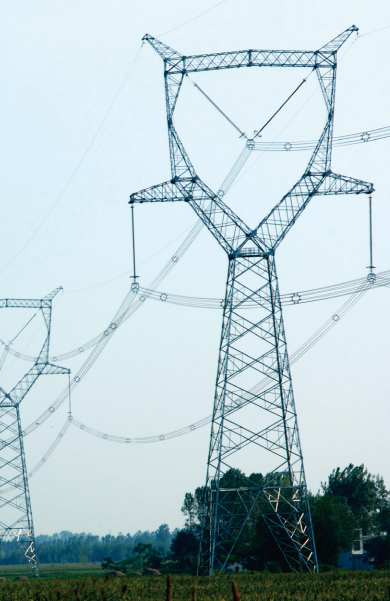
1000kV Jin Southeast-Nanyang-Jingmen UHV AC Transmission and Transformation Pilot Demonstration Project
Anhui Hongyuan Steel Tower Co., Ltd.
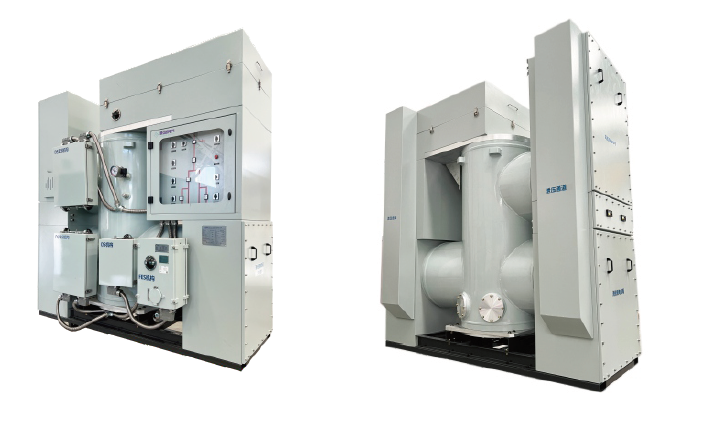
72.5kV 1250A 31.5kA SF6 free Gas-insulated Metal-enclosed Switchgear
Zhejiang Juhonkia Intelligent Electric Co., Ltd.
Modular Multifunctional Water Supply and Drainage Vehicle (18T)
Changsha Dewater Machinery Technology Co., Ltd.
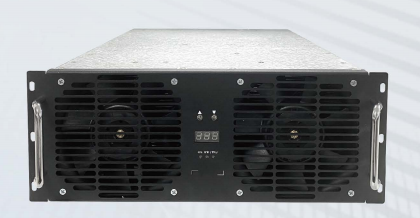
80kW Megawatt Supercharging Module TH80F10030C9
Shijiazhuang Tonhe Electronics Technologies Co., Ltd.

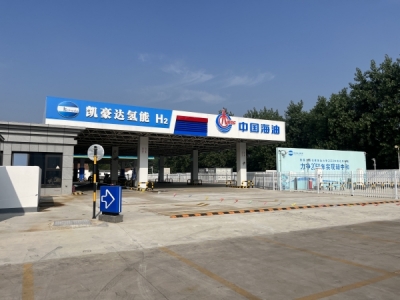
Hydrogen production and hydrogenation charging refueling gas integrated energy station
Shenzhen Kohodo Hydrogen Energy Co., Ltd.