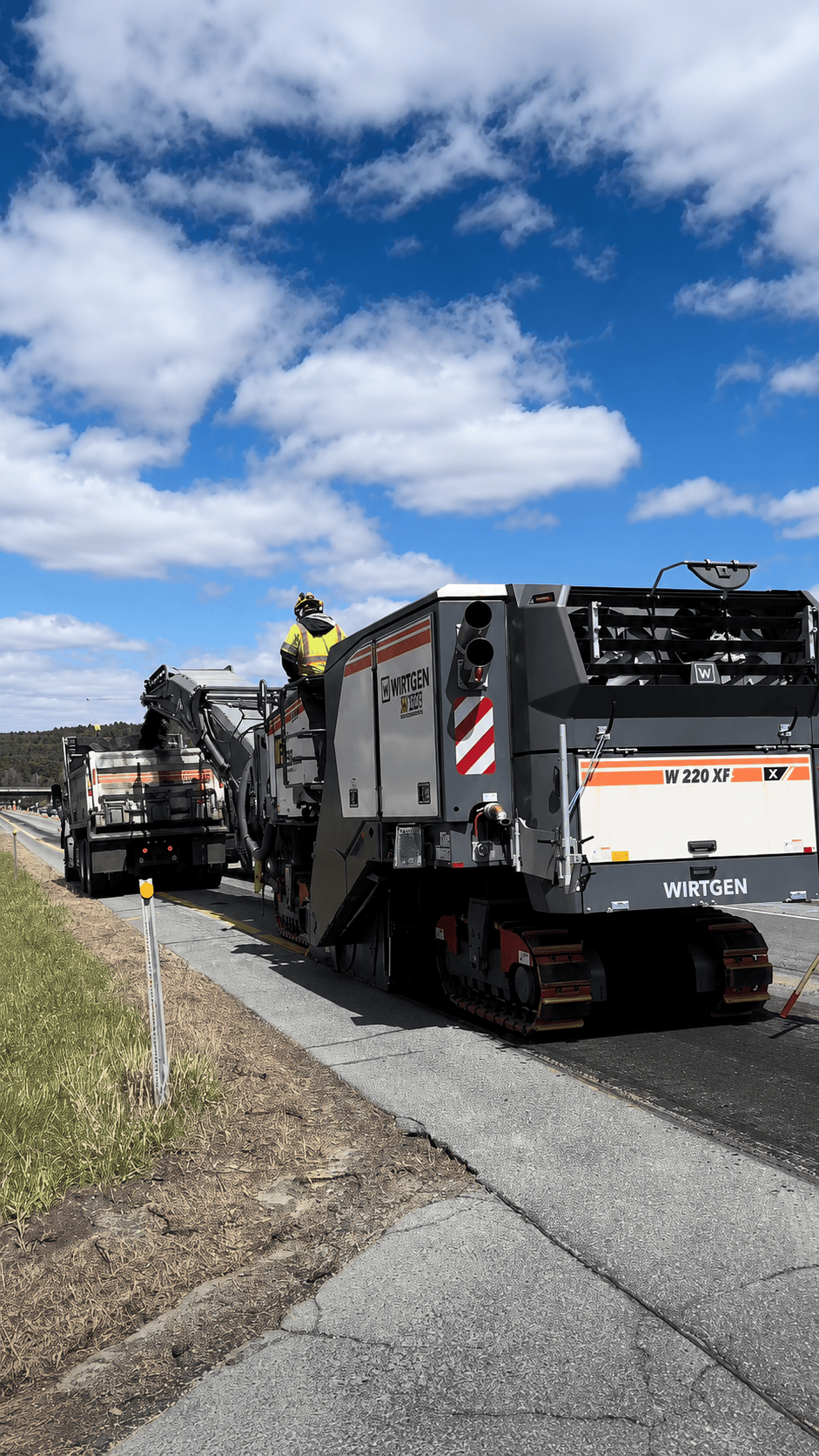
Heilongjiang Road Viaduct in Qingdao, China Officially Opens to Traffic
en.Wedoany.com Reported - In the early hours of November 25, the newly built Heilongjiang Road Viaduct, part of the Shuangshan Tunnel and South Extension Supporting Project in Qingdao, officially opened to traffic, forming an approximately 5.6-kilometer express passage from Fuzhou North Road to the Jiaozhou Bay Bridge Viaduct. The road starts from the Jiaozhou Bay Bridge Viaduct in the north and splits into two branches at its southern end, connecting respectively to Harbin Road and Fuzhou North Road. A total of 4 pairs of on/off ramps and 2 directional ramps are provided along the entire line. With this, a new north-south elevated express corridor has been added to Qingdao's main urban area.

The project is located in the built-up area of Shibei District, Qingdao, where residential neighborhoods and commercial and office areas are densely distributed. Traffic volume around the existing Huaren Interchange is heavy, and underground pipelines and subway facilities are complexly distributed. China Railway No. 3 Engineering Group was responsible for the upgrading and reconstruction of the Huaren Interchange and its ramps, as well as the construction of the new directional ramp bridge from Heilongjiang Road to Fuzhou Road and the bridges, roads, pipeline relocation, landscaping, and pedestrian overpasses toward Harbin Road and Fuzhou North Road.
The demolition and reconstruction of the Huaren Interchange was a key focus of the project. Due to limited working space, conventional mechanical demolition methods were prone to generating significant vibration, noise, and dust. The construction team, for the first time in the demolition of an interchange bridge in Qingdao, adopted a wire-saw cutting and hoisting technique, finely decomposing the old bridge into more than 1,000 components, which were then hoisted and transported away in batches by two 500-tonne cranes. This technique reduced the interference of large-scale breaking operations with surrounding buildings, underground pipelines, and the subway operating environment, creating favorable conditions for the demolition of the old interchange and the construction of the new bridge.
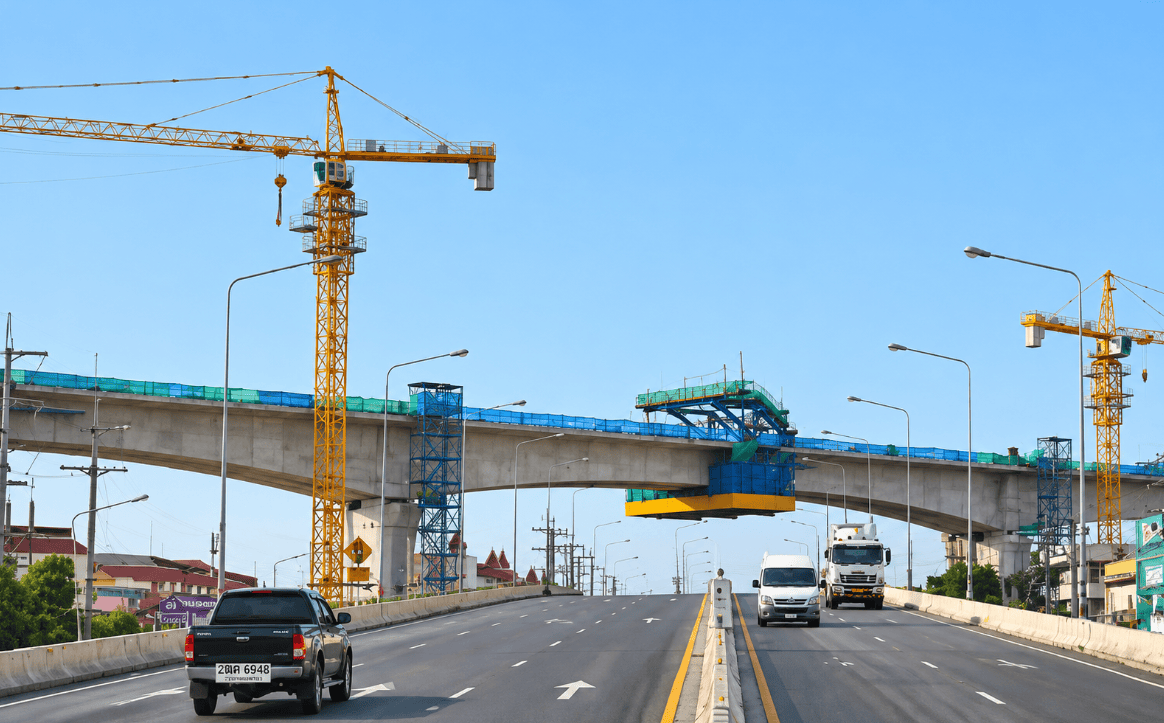
During the new bridge construction phase, the China Railway No. 3 Engineering Group project team completed the erection of 130 spans of box girders. In response to challenges such as limited hoisting space in the urban core area and high requirements for controlling the lifting posture of girder segments, the construction team used Building Information Modeling (BIM) technology to conduct multi-condition simulation verification of crane positioning, lifting trajectories, and girder posture, and installed monitoring systems for pier-top displacement and girder posture to control axis and elevation deviations during girder erection.
During construction, the project department also relied on a digital construction management platform to coordinate personnel and equipment scheduling, and conducted real-time monitoring of the old bridge's stability through high-point surveillance and drone patrols. For high-risk construction operations, the project team combined digital simulation, on-site monitoring, and hoisting operation organization to complete bridge demolition, girder erection, and related supporting works.
Regarding the overall project construction, Qingdao municipal-level reports disclosed that the bridge superstructure adopted 100% prefabricated assembly construction, with 216 concrete box girders and 107 steel box girders all prefabricated in factories and transported to the site for hoisting. The construction method of centralized production of prefabricated components and on-site assembly reduced on-site processing procedures in the core urban area and also lowered the impact of bridge construction on surrounding traffic and residents' daily lives.
What opened to traffic this time is the Heilongjiang Road Viaduct portion of the Shuangshan Tunnel and South Extension Supporting Project; the overall supporting project still has subsequent construction tasks. After the viaduct opens, Fuzhou North Road, Heilongjiang South Road, and the Jiaozhou Bay Bridge Viaduct will be rapidly connected, and vehicles from the Harbin Road direction can also enter the viaduct system via directional ramps, further improving the north-south express traffic connections in Qingdao's east coast urban area.
Related Products


D12 Humanoid Robot
Automation Research Institute Co., Ltd. of China South Industries Group Corporation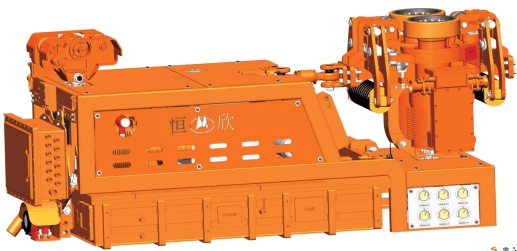
Explosion-proof lithium battery dispatching monorail crane locomotive (permanent magnet frequency conversion integrated machine)
Xiangtan Hengxin Industrial Co., Ltd.
CLW5180TXSD6 Dongfeng Tianjin Washing and Sweeping Truck
ChengLi Special Automobile Co., Ltd.

China - Alashankou/Khorgos - Europe Full Range Transportation (Mala/Hamburg/Duisburg/Budapest, etc.)
Shenzhen Neptune Logistics Co., Ltd.