Wedoany.com Report-Nov. 4, Mitsubishi Heavy Industries, Ltd. (MHI; Tokyo, Japan) and Nippon Shokubai Co., Ltd. (Osaka, Japan) announced that their joint proposal has been approved by Japan’s New Energy and Industrial Technology Development Organization (NEDO) under the “Development of Technologies for Building a Competitive Hydrogen Supply Chain” project. The selected initiative focuses on developing technologies for establishing a hydrogen supply chain using ammonia as a hydrogen carrier for storage and transport, and aims to advance medium-scale, decentralized ammonia cracking systems located near hydrogen consumption sites.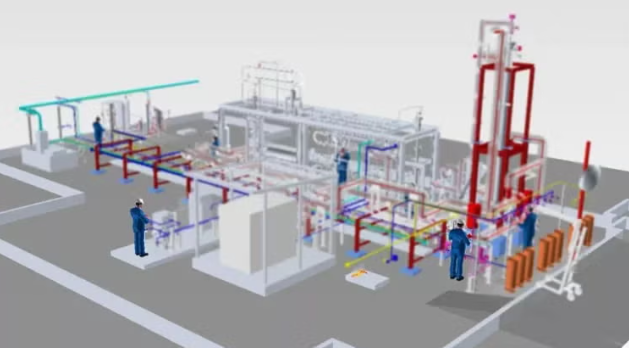
The project will promote the development of ammonia cracking technology that utilizes steam and exhaust gases while employing a low-temperature, highly active, and durable catalyst that does not contain noble metals. This catalyst was independently developed and is designed to improve performance and reduce costs compared with conventional low-temperature catalysts. The companies intend to use this innovative technology to address technical challenges and move closer to practical, commercial application.
During the project period, which extends through fiscal 2027, MHI and Nippon Shokubai will carry out long-term testing using a commercial-scale demonstration plant. MHI will apply its extensive experience in ammonia plant design and operation to complete the basic design (Front End Engineering Design: FEED) of the demonstration plant. It will also work on finalizing plant specifications to overcome technical hurdles to commercialization, with support from Hokkaido Electric Power Co., Inc. (HEPCO).
Nippon Shokubai will focus on developing and verifying the durability and performance of the ammonia cracking catalyst, building on its expertise in catalyst technologies for chemical processes and environmental applications. The company’s experience includes developing process catalysts such as acrylic acid catalysts and environmental catalysts for automotive and exhaust gas treatment. Through this project, Nippon Shokubai will contribute to enhancing catalyst reliability and efficiency for continuous industrial use.
Together, MHI and Nippon Shokubai aim to develop ammonia cracking systems that will help establish robust hydrogen and ammonia supply chains. Their collaboration seeks to accelerate the implementation of decarbonization technologies and contribute to realizing a sustainable, carbon-neutral society. The project represents a key step toward supporting Japan’s energy transition and improving hydrogen utilization infrastructure.
HEPCO, one of the project’s partners, has set a goal of achieving carbon neutrality in Hokkaido by 2050 across the entire energy sector. The company is advancing initiatives to expand renewable energy generation and reduce emissions from power sources. In parallel, it is promoting projects related to ammonia, hydrogen, and carbon capture utilization and storage (CCUS), particularly in the Tomakomai region and other parts of Hokkaido.
Through this collaboration, MHI, Nippon Shokubai, and HEPCO will work toward establishing practical and efficient hydrogen supply solutions using ammonia as a key carrier, contributing to the development of sustainable energy systems and supporting Japan’s long-term decarbonization goals.