Wedoany.com Report-Nov. 6, The National Statistics and Information Authority (NSIA) reports that wheat output in Afghanistan reached 4.54 million metric tonnes during the current solar year 1404.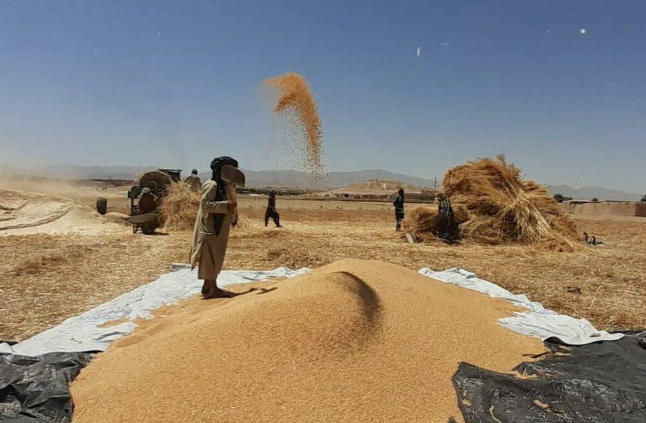
In an update shared via its X account, NSIA explained that remote sensing and satellite imagery were employed to map wheat cultivation areas across the country.
Results show 4.13 million metric tonnes harvested from irrigated fields and 404,000 metric tonnes from rain-fed areas.
Leading provinces for irrigated wheat include Helmand at 848,000 metric tonnes, Kunduz at 478,000 metric tonnes, Herat exceeding 410,000 metric tonnes, Kandahar surpassing 366,000 metric tonnes, and Farah at 237,000 metric tonnes.
Top rain-fed production occurred in Badghis, Takhar, and Herat provinces.
Total cultivated land amounted to 891,000 hectares, comprising 1.33 million hectares under irrigation and 562,000 hectares dependent on rainfall.
Relative to the previous year, irrigated acreage declined by four percent, while rain-fed planting fell by 24 percent, primarily attributed to drought conditions, postponed precipitation, and crop pest incidents.
With an estimated national requirement of 6.87 million metric tonnes based on population figures, current output leaves a shortfall of about 2.33 million metric tonnes.
This assessment highlights the critical role of irrigation in sustaining staple crop yields, where managed water sources account for over 90 percent of production. Advanced monitoring techniques enable precise area delineation, supporting evidence-based agricultural planning and resource allocation.
Regional disparities reflect varying access to water infrastructure and soil suitability. Southern and western provinces demonstrate robust irrigated systems, benefiting from river basins and canal networks that mitigate seasonal variability.
Rain-fed zones, concentrated in northern and central highlands, remain highly sensitive to climatic fluctuations. Reduced planting in these areas underscores the impact of irregular weather patterns on smallholder operations.
The overall contraction in cultivated extent signals caution for food security frameworks. While irrigated stability provides a buffer, the sharp drop in rain-fed contribution amplifies dependency on imports and aid channels to bridge consumption gaps.
Strategic interventions may focus on expanding efficient irrigation, promoting drought-resistant varieties, and enhancing pest management protocols. Satellite-derived insights facilitate targeted support, identifying priority zones for infrastructure investment and extension services.
Domestic milling capacity and storage facilities play complementary roles in preserving harvest quality and managing distribution. Coordinated efforts between statistical bodies, agricultural ministries, and international partners strengthen data-driven responses to production challenges.
Looking ahead, integrating climate forecasts with cultivation calendars could optimize sowing windows and input application. Sustainable land practices, including conservation tillage and water harvesting, offer pathways to rebuild rain-fed resilience over time.
The reported deficit emphasizes the need for balanced import strategies that stabilize supply without undermining local incentives. As population dynamics evolve, aligning production goals with consumption trends remains essential for long-term self-sufficiency in this foundational commodity.