Abnormal Rainfall and Climate Stress in India Lead to Rice Losses Threatening Food Security
Wedoany.com Report on Feb 7th, during the rice harvest season in Kerala, India, abnormal rainfall forced farmers to leave mature crops in flooded fields. The local non-profit organization Thanal Trust stated that harvesters could not operate in the rain, and due to a lack of storage and drying facilities, grains and straw left in the open quickly rotted, resulting in the complete loss of both food and fodder.
For farmers, the losses extend beyond reduced yields. Delayed harvesting, spoilage, and contamination lower grain quality, reduce income, and even render some crops unsafe for consumption. As climate variability, pests, and environmental pressures reshape agricultural conditions, such losses are becoming increasingly common in India.
Usha Soolapani, head of Thanal Trust, told SciDev.Net: "Abnormal rainfall during the rice harvest period has now become the norm. Farmers are forced to delay harvesting because mechanized harvesting cannot be done in the rain, which exacerbates their losses." Extreme rainfall and floods are only part of the problem. Human-induced land degradation is causing crop yield reductions, while pests and invasive species continue to spread under changing climatic conditions.
As a major global producer of rice and wheat, India's response to crop losses is of significant importance. According to UN Food and Agriculture Organization data, up to 40% of global crops are lost annually to pests and diseases, with the Indian government estimating this figure at around 30%.
A recent FAO report pointed out that extreme weather and land degradation cause additional losses, with South Asia being one of the most severely affected regions. The report estimates that 1.7 billion people globally live in areas where land degradation has reduced crop yields, threatening food security and ecosystem health.
Beyond visible field losses, pollution is also a serious issue. Research by the Tata-Cornell Institute in Uttar Pradesh found alarming levels of aflatoxins in staple foods like rice and wheat, raising concerns for both public health and farmer livelihoods. Bhaskar Mittra, the institute's deputy director, said: "We know mycotoxins are known carcinogens, so we must consider this from both a public health and a farmer income loss perspective."
Artificial intelligence, remote sensing, and drones are providing real-time risk information, improving early warning and proactive response. These technologies enhance traditional conservation methods like crop rotation and cover cropping. However, the impacts of crop loss are not borne equally; female, male, and young farmers face different risks, requiring targeted response strategies.
Vinod Pandit, Regional Director for South Asia at the agricultural research organization CABI, stated: "Understanding crop loss from a gender perspective will help lay the foundation for resilient agriculture and inclusive policies." The organization's Global Burden of Crop Loss project uses data collection, mapping, and modeling, combined with satellite imagery and machine learning, to monitor extreme weather and pest pressure.
India already uses satellite data to monitor rice and wheat crops, mapping growth and detecting early stress. However, farmers report that technology cannot fully offset climate pressures. In Kerala, abnormal rainfall has become a recurring threat. Soolapani noted: "Due to a lack of storage and drying facilities, crops rot." Farmers growing cash crops like cardamom are also affected by extreme climate, with crops completely lost last year due to drought.
Rising ground-level ozone poses an emerging threat, particularly in the Gangetic Plain and central India. Ozone damages plant tissues and interferes with grain filling, reducing yields and grain quality. Scientist Jayanarayanan Kuttipurath from the Indian Institute of Technology estimates that ozone-related damage to rice production alone costs India over $3 billion annually.
Solutions include reducing pollution emissions and developing ozone-tolerant crop varieties. In China and East Asia, ozone pollution has caused wheat yields to drop by 33% and rice yields by 23%. Although ozone is primarily a harmful pollutant, CABI research is exploring its use as an antimicrobial agent for pest control.
Pests like rice blast and brown planthopper continue to threaten major crops in the Asia-Pacific region. Remote sensing data combined with machine learning models can track pests, providing earlier warnings. For researchers and policymakers, the challenge lies in reducing losses and measuring them more accurately. Improving data collection is crucial for designing effective and inclusive response measures.
Related Products


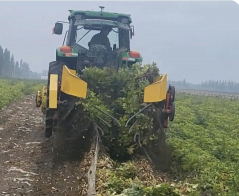
4HS-8 High-efficiency Peanut Inverted-laying Harvester
Hebei Yongfa Hongtian Agricultural Machinery Manufacturing Co., Ltd.
714CD Series C-Band Weather Radar
Chengdu Zhongdian Jinjiang Information Industry Co., Ltd.


Industrial and Commercial Point-Type Gas Detector
Jinan Benan Technology Development Co., Ltd.