Wedoany.com Report-Jan.2, China’s National Development and Reform Commission (NDRC) has announced intensified efforts to raise the country’s grain production capacity by 50 million tonnes (equivalent to 100 billion jin or 50 billion kilograms). This initiative focuses particularly on increasing output of corn and soybeans.
The plan aims to accelerate the modernization of agriculture and rural areas across the country. It seeks to strengthen overall agricultural production capacity, enhance quality and efficiency, and ensure stable and secure supplies of grain and other key agricultural products.
In addition to prioritizing corn and soybean production, the NDRC will promote expanded cultivation of high-quality feed crops such as silage corn and alfalfa. The efforts also include developing specialized and high-quality crop varieties to support diverse agricultural needs.
The strategy emphasizes strict protection of arable land, balanced utilization of land resources, and improved coordination and compensation mechanisms. These measures aim to optimize agricultural land use and maintain sustainable farming practices.
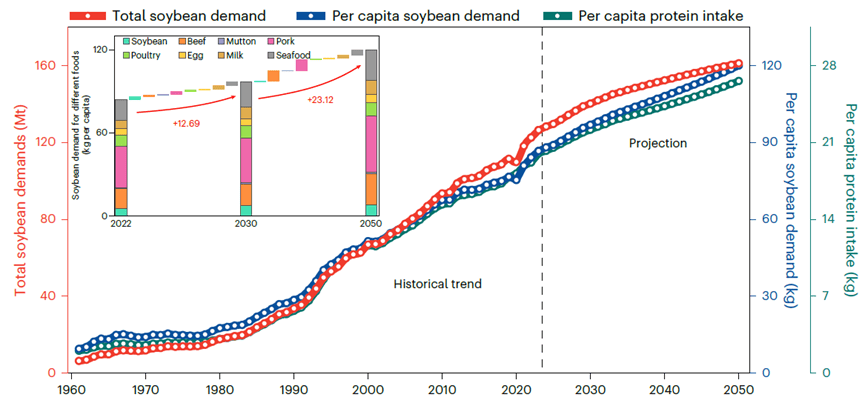
The NDRC highlighted that demand for feed grain continues to increase, with corn and soybeans serving as primary components. While domestic soybean production has shown progress, supply remains below full requirements, leading to reliance on imports to meet total needs.
According to data from the National Bureau of Statistics released on December 12, 2025, China’s corn production reached 301.235 million tonnes in 2025. Soybean output totaled 23.932 million tonnes during the same period.
These production figures reflect steady advancements in agricultural output, building on record grain harvests in recent years. The initiative supports long-term goals of improving strategic autonomy in food supplies and creating stronger buffers against uncertainties in global trade.
The NDRC's approach integrates technological improvements, better seed varieties, and efficient resource management to achieve the targeted capacity increase. This will contribute to enhanced food security and agricultural resilience nationwide.
Overall, the renewed focus on key crops like corn and soybeans aligns with ongoing efforts to modernize farming practices and ensure reliable domestic production to meet growing internal requirements.