Sino-Japanese Collaboration Develops Low-Cadmium Rice Lines Using Base Editing Technology
en.Wedoany.com Reported - Dr. Sheng Huang and Professor Jianfeng Ma from the Institute of Plant Science and Resources at Okayama University, Japan, in collaboration with Professor Jiayang Li's team from the Institute of Genetics and Developmental Biology at the Chinese Academy of Sciences, have identified a beneficial point mutation in the rice metal transporter gene OsNramp5 using precise base editing technology. They successfully developed a rice line with a 48% reduction in cadmium content without affecting the absorption of essential nutrients or yield.
Cadmium pollution poses a serious threat to global food safety. As a toxic and carcinogenic heavy metal, cadmium can accumulate in agricultural soils through industrialization and urbanization, subsequently entering the human food chain. Rice is particularly susceptible, as it absorbs more cadmium than other major cereal crops, making it the primary source of dietary cadmium exposure for nearly half of the global population. Although researchers have long sought to develop low-cadmium rice varieties, existing methods often reduce the absorption of essential nutrients or affect crop growth and yield, limiting their practicality.
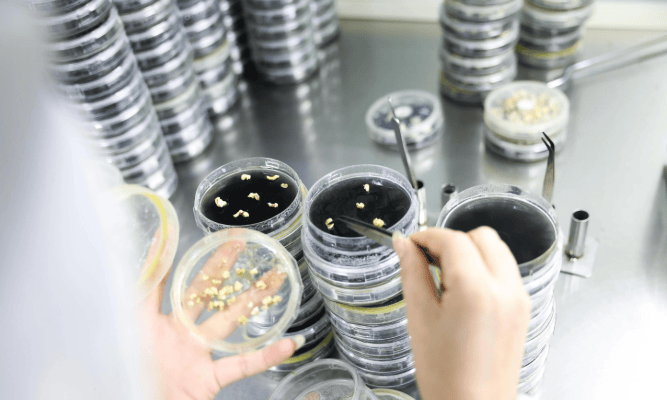
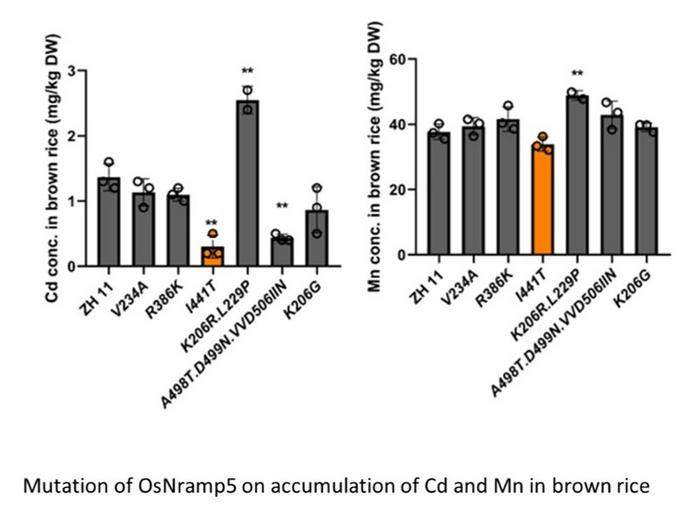
The research team performed saturation mutagenesis on the OsNramp5 gene, generating over 1,600 genome-edited rice lines using adenine and cytosine base editors. By screening hundreds of lines, they identified variants that reduced cadmium accumulation while maintaining normal manganese uptake and plant performance. The study found that replacing the 441st amino acid from isoleucine to threonine (OsNramp5I441T) produced the most promising results. The findings were published on June 18, 2026, in Volume 123 of the Proceedings of the National Academy of Sciences (PNAS).
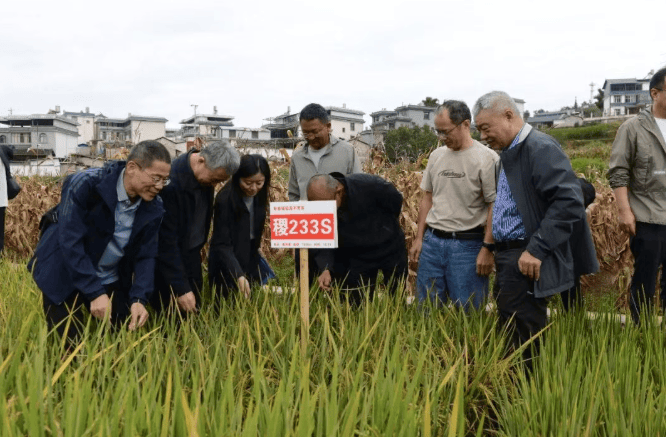
After identifying the most promising mutant, the researchers conducted detailed physiological analyses, gene expression studies, protein localization experiments, yeast transport assays, and field trials on cadmium-contaminated soil. The results showed that the OsNramp5I441T mutation reduced cadmium accumulation in stems, leaves, and grains without altering gene expression, protein abundance, cellular localization, or yield. In field experiments, cadmium concentration in brown rice decreased by 48%, from 0.14 mg/kg in wild-type plants to 0.07 mg/kg in edited plants, while concentrations of essential micronutrients such as iron, manganese, and zinc remained unchanged.
Further research revealed the mechanism behind this single amino acid change. OsNramp5 is known to transport manganese and cadmium, but the researchers found it also transports zinc. The I441T mutation increased the transporter's preference for zinc, causing more zinc to accumulate in root cells. This elevated zinc then competed with cadmium during transport from roots to shoots, reducing cadmium movement to shoots and ultimately to grains. Rather than completely blocking cadmium uptake, the mutation selectively limits its transport, addressing the long-standing challenge of reducing grain cadmium without disrupting the plant's supply of essential minerals.
This study provides a practical solution for improving food safety through precision breeding. Existing strategies to reduce cadmium in rice, including soil remediation, water management, or complete knockout of OsNramp5, can be costly, time-consuming, or detrimental to plant growth due to OsNramp5's role in transporting the essential nutrient manganese. By modifying only a single amino acid rather than abolishing the entire gene, the researchers achieved a significant reduction in cadmium levels while maintaining normal plant growth, yield, and accumulation of essential micronutrients. Professor Jianfeng Ma explained that his team has studied cadmium accumulation in rice for over 20 years and identified several key genes. Since OsNramp5 also transports essential metals, the team aimed to alter its metal selectivity rather than eliminate its function, leading to the discovery of this point mutation.
The researchers believe that the newly identified OsNramp5I441T allele can accelerate the development of low-cadmium rice varieties suitable for cultivation on mildly contaminated soils while maintaining productivity and nutritional quality. Professor Jianfeng Ma concluded: "This mutation provides an effective strategy to reduce cadmium accumulation in rice grains without sacrificing yield or essential mineral nutrition, offering a promising pathway to produce safer rice for consumers."
Related Products



Industrial and Commercial Point-Type Gas Detector
Jinan Benan Technology Development Co., Ltd.


MH220E Two-Row Hybrid Packaged Cotton Picker
CHINA RAILWAY CONSTRUCTION HEAVY NDUSTRY XINJIANG CO., LTD.
4HS-8 High-efficiency Peanut Inverted-laying Harvester
Hebei Yongfa Hongtian Agricultural Machinery Manufacturing Co., Ltd.
714CD Series C-Band Weather Radar
Chengdu Zhongdian Jinjiang Information Industry Co., Ltd.