Nvidia Releases Open-Source Software for Self-Driving Car Development
Wedoany.com Report-Dec.2, Nvidia announced on Monday the release of Alpamayo-R1, a new open-source software framework designed to accelerate the development of autonomous vehicles by incorporating advanced reasoning capabilities from artificial intelligence.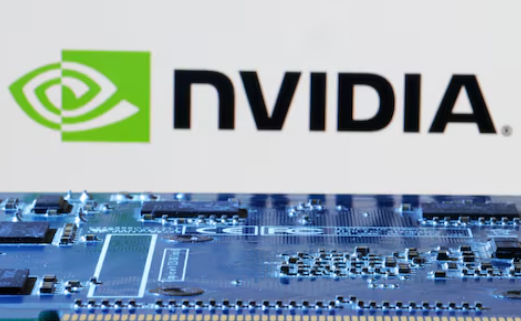
NVIDIA logo is seen near computer motherboard in this illustration taken January 8, 2024.
The software represents a vision-language-action (VLA) model that enables self-driving systems to interpret sensor data, describe observations in natural language, and generate detailed explanations for every driving decision. Named after Peru's challenging Alpamayo mountain peak, the model essentially "thinks aloud" while planning routes.
For instance, when detecting a bicycle lane, the system verbally notes the presence of the path and articulates its decision to adjust trajectory accordingly. This transparent reasoning process marks a significant advance over earlier autonomous driving software, which typically provided limited insight into decision-making logic.
The increased interpretability allows engineers to more easily identify areas for improvement and enhance overall vehicle safety. By making the code openly available, Nvidia aims to foster industry-wide collaboration on evaluation standards and best practices.
Katie Washabaugh, Nvidia's product marketing manager for autonomous vehicle simulation, explained: "One of the entire motivations behind making this open is so that developers and researchers can... understand how these models work so we can, as an industry, come up with standard ways of evaluating how they work."
Alpamayo-R1 builds on Nvidia's established leadership in AI hardware while expanding its contributions through software innovation. The company, currently the world's most valuable publicly traded corporation, continues to support the broader ecosystem by releasing high-performance open-source tools that can be adopted by other organisations, including Palantir Technologies.
The framework is particularly suited for integration with Nvidia's existing DRIVE platform, which combines chips, sensors, and simulation environments used by numerous automotive manufacturers and technology partners worldwide. Developers can now access the code to train, test, and refine autonomous driving systems using real-world and simulated scenarios.
This release aligns with growing industry emphasis on explainable AI, especially in safety-critical applications such as transportation. By providing detailed reasoning traces, Alpamayo-R1 enables more systematic debugging and validation, potentially shortening development cycles for next-generation self-driving capabilities.
Nvidia stated that future updates will expand the model's language understanding and planning abilities, while maintaining full compatibility with its open-source licensing to encourage widespread adoption and contribution from the global research community. The software is immediately available for download through Nvidia’s developer portals.
Related Products


G.652.D Wavelength-extended Non-dispersion Shifted Single-mode Optical Fiber
HONGAN GROUP CO., LTD.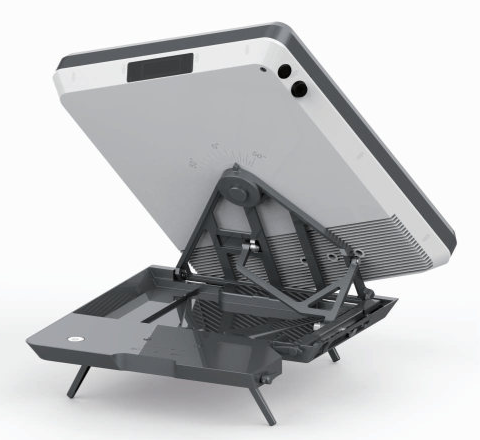
Flat Portable Satellite Terminal 0.35m Aperture Manual Portable Terminal
China Starwin Science & Technology Co., Ltd.
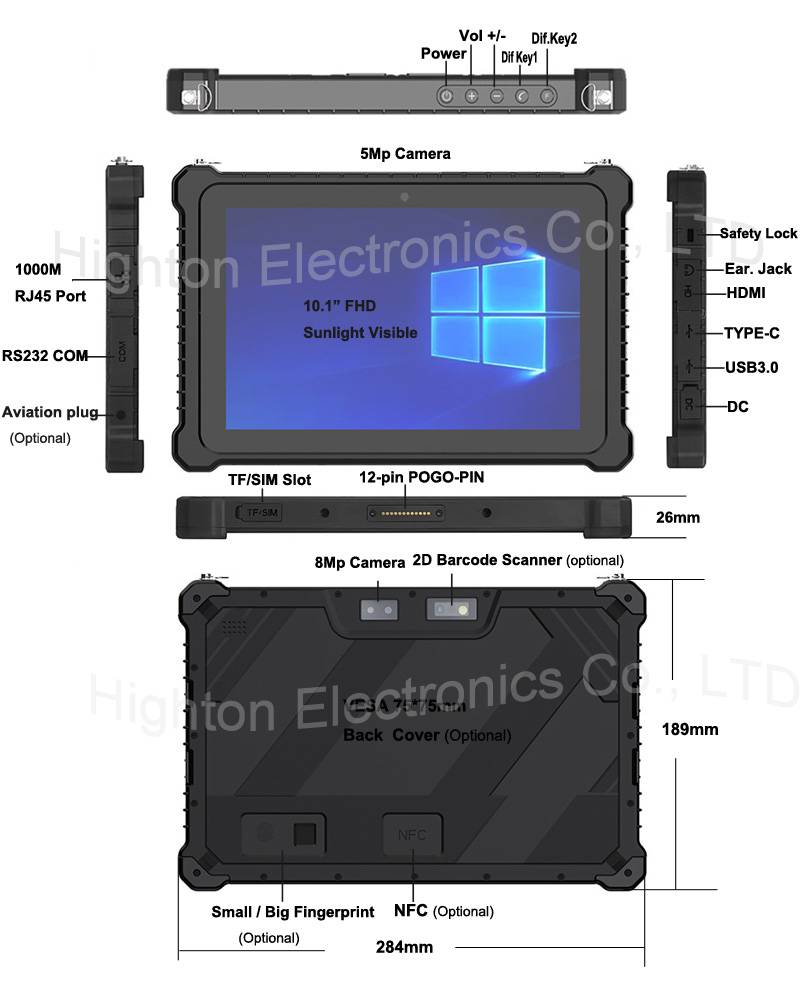
Hot Selling 10 Inch Intel N5100 I5 I7 FHD 8 +128GB 16+256GB Win10 Pro Win11 Pro 4G 5G Rugged Tablet PC Pad with NFC Barcode
Highton Electronics Co., Ltd.
Automatic Aiming Laser Remote Obstacle Removal Robot
Pinggao Group Weihai High-Voltage Apparatus Co., Ltd.
Conveyor Belt Intelligent Monitoring System
LUO YANG WIRE ROPE INSPECTION TECHNOLOGY CO., LTD.

GYTA Type Non-Self-Supporting Aerial/Duct Optical Cable
TONGDING INTERCONNECTION INFORMATION CO., LTD.