India Advances Open and Resilient Internet Development; Krishnan Outlines Key Initiatives
Wedoany.com Report on Feb 6th, S. Krishnan, a senior official from India's Ministry of Electronics and Information Technology, recently stated that the country is committed to building an open, resilient, and inclusive internet ecosystem to serve over a billion users. This goal is being progressively advanced as more citizen-centric services and applications are launched. 
Krishnan pointed out at a press conference: "India is interested in an open, resilient, and inclusive internet." He explained that the early development of the internet was relatively free, with governments and industries primarily focused on expanding the user base. Today, the internet has become infrastructure for multiple sectors, including financial services, making its stable operation crucial.
"We rely on it as a key part of network infrastructure. Therefore, we also need to protect it. Ensuring the internet functions effectively and does not cause significant harm is in everyone's interest," Krishnan emphasized, stating that maintaining internet resilience is one of the current priorities.
To achieve this goal, India is actively promoting the adoption of the .in country code top-level domain by entities such as banks and government agencies. Krishnan said: "We have been consciously pushing for its adoption. The fundamental reason is that we want to build trust in Indian domains, and we will build this trust by establishing a stronger KYC system for these domains."
Currently, the National Internet Exchange of India is responsible for the registration and management of the .in and .भारत domains, while the Ministry of Electronics and Information Technology provides policy support, driving multiple initiatives including BhashaNet to promote multilingual internet access and digital sovereignty.
Data shows that the number of .in domains in India has grown from around 1,000 in 2003 to nearly 400,000. Internationalized domain names also cover all 22 official languages, with registrations of approximately 3.1 million. Krishnan revealed: "We currently have about 15.5 million IPv6 addresses and about 10.54 million IPv4 addresses available for use. In fact, we can provide more to support significant further expansion of the internet."
Additionally, the Ministry of Electronics and Information Technology is conducting capacity building through programs like internships, aiming to broaden public participation in internet governance. It is reported that over 30 institutions across about 15 states will train around 10,000 students, creating a talent pool for the sustainable development of the internet ecosystem.
Related Products


Multi-function Marine Monitoring Low-altitude Detection Radar Sea-air Boundary Ocean Dynamic Environment Measurement
Chengdu Dixin Technology Co., Ltd.
Comprehensive Mining Automation Control System
Beijing Tianma Intelligent Control Technology Co., Ltd.
Conveyor Belt Intelligent Monitoring System
LUO YANG WIRE ROPE INSPECTION TECHNOLOGY CO., LTD.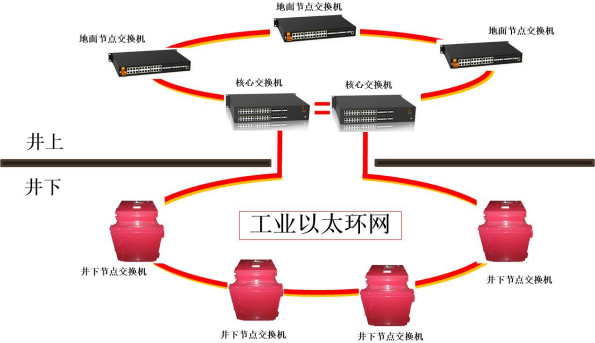
Mine Explosion-proof and Intrinsically Safe Industrial Ethernet Ring Network (10 Gigabit/Gigabit)
Chongqing Mas Sci&Tech Co., Ltd.
Industrial and Commercial Point-Type Gas Detector
Jinan Benan Technology Development Co., Ltd.




Hot Selling 10 Inch Intel N5100 I5 I7 FHD 8 +128GB 16+256GB Win10 Pro Win11 Pro 4G 5G Rugged Tablet PC Pad with NFC Barcode
Highton Electronics Co., Ltd.