
Researchers from Brazil, the United States, and the United Kingdom conducted a study at the Tanguro Research Station located in the Amazon deforestation arc zone, discovering that frequent forest fires and agricultural expansion are severely damaging soil health in the southwestern Amazon region of Brazil, causing lasting damage to carbon (C) and nitrogen (N) reserves as well as the overall function of ecosystem soils. The study was published in the journal CATENA.
Mario Lucas Medeiros Naval, the lead author and researcher, pointed out that this refers to unnatural fires, with record-breaking fires resulting from a combination of multiple human activity factors, including agricultural and livestock expansion, degradation of adjacent native forests, and long-term droughts caused by climate change.
The study analyzed the impact of forest conversion to agricultural land and burning frequency on soil organic matter as well as various physical and chemical indicators of soil health, comparing four scenarios: intact forest, forest burned once a year, forest burned once every three years, and areas converted to agricultural use under no-till crop rotation systems.
The study results show that annual burning reduces soil carbon reserves by 17%, burning once every three years reduces soil carbon reserves by 19%, and conversion to agricultural use leads to a 38% decline in soil carbon reserves. Even if agriculture adopts good farming practices such as crop rotation and cover crops, the soil carbon loss caused is still more severe than that from native forest fires.
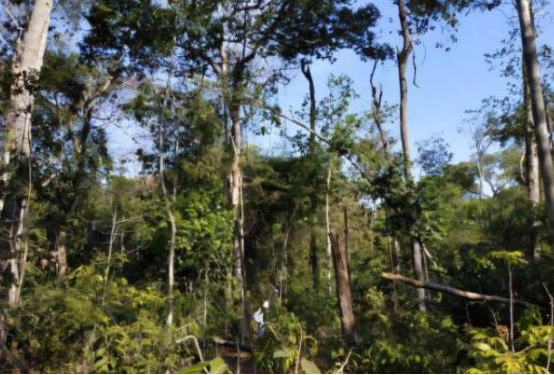
The study area is a transitional forest similar to "Cerradão," with an average tree height of 20 meters, where the agricultural frontier is developing rapidly, mainly planting soybeans. The research was conducted in a 150-hectare experimental area managed by the Amazon Environmental Research Institute (IPAM), located in a legally protected area of a private property at the Tanguro Research Station site, with 50 hectares of land for each treatment type to ensure sample representativeness.
The researchers emphasized that soil assessments were conducted nine years after the last fire, and even considering forest recovery time, carbon and nitrogen reserves remained significantly reduced. Given the many benefits of organic matter to soil health indicators, these losses damage basic soil properties, such as reduced carbon reserves leading to the loss of most cation exchange capacity (CEC, one of the methods to measure soil nutrient retention capacity). In addition, the study revealed impacts on other physical and chemical indicators, indicating that soil health deterioration is more widespread.
The study indicates that total carbon loss (the sum of carbon stored in aboveground biomass and soil) reaches 33% in annual burning and 48% in burning every three years. From the perspective of the entire ecosystem, there are differences in the impact of fire frequency, but statistically, there is no significant difference in the soil between the two cases.
Naval concluded that fire in the Cerrado region is a natural product of the ecosystem with ecological roles, but in the Amazon region, fires are exogenous factors caused by land use changes, and burning the Amazon rainforest means disrupting an environment not adapted to fire.
The authors recommend policies to curb the agricultural frontier, prevent forest fires, and implement more biodiverse agricultural systems, such as agroforestry, which can store large amounts of carbon—crucial for global climate stability—while maintaining Amazon soil health. One of the study coordinators, researcher Plínio Barbosa de Camargo, also stated that finding alternatives to traditional agricultural production models is not only crucial for environmental protection and preventing new fires but also essential for ensuring food security for the population.
It is reported that this work is part of the International Amazon Fire Carbon Project, coordinated by Camargo and Ted Feldpausch from the University of Exeter, aimed at studying the impact of fires on different regions of the Amazon. The work at the Tanguro Research Station is just one part of a broader plan to map how fires affect soils at various points in the Amazon biota.