
Researchers at Memorial Sloan Kettering Cancer Center in the United States have recently developed a novel "spinal cord micro-tissue" model, providing a new tool for ALS drug development. The research results were published in the journal Stem Cell Reports, demonstrating the application potential of micro-tissues constructed from patient-specific stem cells in drug screening.
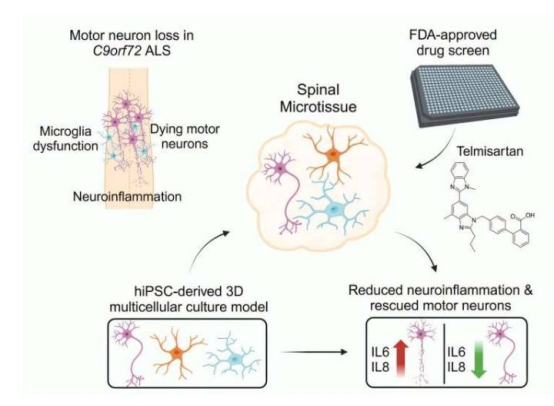
The research team, led by Dr. Elisa Giacomelli and Dr. Lorenz Studer, successfully simulated the neuroinflammatory environment in the spinal cord of ALS patients by co-culturing motor neurons with immune cells. Experimental data shows that micro-tissues derived from ALS patients secrete more inflammatory proteins than healthy controls and reproduce the typical pathological features of progressive motor neuron death.
"This model allows us to recapitulate key pathological processes of ALS in vitro," the researchers stated. The team used this platform to screen 190 FDA-approved drugs and found that specific drug classes can effectively reduce inflammatory protein levels and significantly decrease motor neuron death.
The study provides breakthroughs in two aspects for ALS treatment: first, it establishes an experimental model that can simulate disease progression; second, it identifies potential therapeutic candidate drugs. The researchers pointed out that this platform can be used in the future for large-scale drug screening and personalized medicine research, accelerating the development process of ALS treatment protocols.