
An interdisciplinary research group from the Leibniz Institute for Farm Animal Biology (FBN), the University of Rostock, the University of Munich, and the University of Vienna has discovered that willow leaves hold promise for significantly reducing ammonia and nitrous oxide emissions from cattle farming. The findings, published in the journal Agriculture, Ecosystems & Environment, suggest that natural feed additives could make pasture-based farming more environmentally friendly.
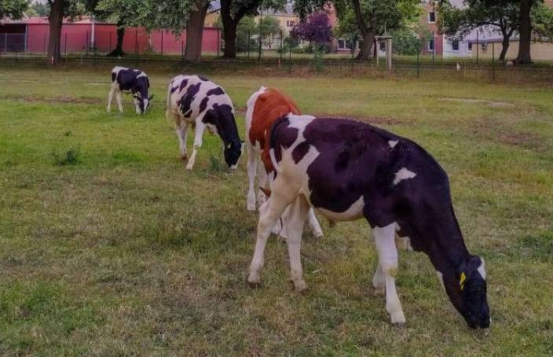
Nitrogen emissions pose a major challenge in agriculture. Ammonia (NH₃) and nitrous oxide (N₂O) are the primary gaseous nitrogen compounds emitted globally from agriculture, accounting for about 80% of ammonia and 81% of nitrous oxide emissions worldwide. Ammonia acidifies soils and leads to ecosystem eutrophication, while nitrous oxide has a climate impact approximately 300 times greater than carbon dioxide and persists in the atmosphere for about 150 years. A large portion of these emissions originates directly from pastures, produced through the urine of ruminants such as cattle, sheep, and goats, and pasture manure emissions are difficult to control with traditional technologies or chemical measures.
"If we want to preserve pasture-based farming as an animal-friendly and sustainable form of livestock husbandry, we must control its environmental impact," said Dr. Björn Kuhla, head of the FBN's key topic "Animal Husbandry in Sustainable Resource Cycles."
Inspired by earlier studies on the effects of plant compounds on metabolism, Dr. Kuhla and colleagues from the Universities of Rostock, Munich, and Vienna investigated whether salicin (a plant precursor molecule of salicylic acid) in willow leaves could influence nitrogen conversion in animals. The experiment was conducted at FBN in Dummerstorf, and the results showed that feeding cattle willow leaves containing salicylic acid significantly reduced the production of ammonia and nitrous oxide in urine. Compared to the control group, on standard flooring, ammonia emissions decreased by 14% and nitrous oxide by 81% within 48 hours. These effects are not solely attributable to salicylic acid but likely also to other bioactive compounds in willow leaves.
Willow (genus Salix) is a fast-growing woody plant traditionally used as a medicinal and fodder plant, with applications in New Zealand and North America, and primarily as an energy crop or in agroforestry systems in Germany. Willow leaves effectively prevent nitrogen loss, opening new perspectives for sustainable animal nutrition. Dr. Kuhla said: "Willow leaves are a locally available renewable raw material, particularly suitable as a natural feed supplement for pasture-based farming, where other solutions may fail."
It remains to be seen whether these positive effects can be confirmed under real agricultural conditions, where factors such as feed intake, soil type, climate, and microbial activity are crucial. Researchers are also investigating the potential impact of willow leaves on nitrate formation in soil, while FBN scientists are studying other deciduous tree species, such as poplars, which have similar properties and contain high levels of salicylates.
In the long term, the researchers see great potential in "silvopastoral systems" (combining pastures and woodlands). Woody plants like willow can serve directly as fodder sources for pastures, improve the microclimate, and help naturally reduce emissions. Additionally, the use of willow leaf extracts as additives to barn manure or slurry is being tested, though more research is needed in this area.