
A research group at Colorado State University has recently achieved a breakthrough, developing a method to convert fossil fuels into useful industrial chemicals using only visible light.
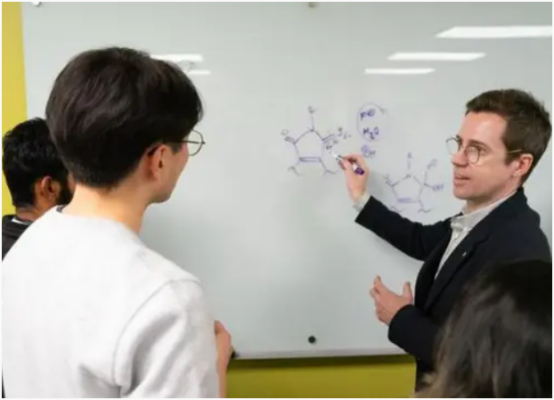
This new process requires no heating and operates at room temperature, offering a cleaner and more energy-efficient alternative to traditional chemical manufacturing. For industries long reliant on high heat and high energy consumption, this advancement promises to significantly reduce environmental impact, making processes like plastics and pharmaceutical production more sustainable.
The research was led by chemistry professors Garret Miyake and Robert Paton from Colorado State University. The team designed a catalytic system that mimics plants' absorption and utilization of light, inspired by photosynthesis. The process involves exposing compounds to visible light to trigger high-energy reactions. The system does not rely on heat or high pressure but uses photoredox catalysis, where visible light rearranges or reduces stubborn molecules with minimal energy input to achieve chemical transformation. This work was conducted at the Center for Sustainable Photoredox Catalysis (SuPRCat) at Colorado State University, directed by Professor Miyake.
Professor Miyake stated: "We assembled an all-star team of chemists to tackle these challenges and create a more sustainable future for this world. The clock is ticking, and we must meet the urgent demand for sustainable technologies, or our current way of doing things will lead us to a point of no return."
A key innovation of the system is its ability to use two photons (particles of light) simultaneously. A single photon lacks sufficient energy to drive the reaction, but two photons combined can initiate powerful chemical changes. Professor Miyake said: "This technology is the most efficient system currently available for reducing arenes—such as benzene in fossil fuels—for the production of chemicals needed for plastics and medicine. Usually, generating these reactions is difficult and energy-intensive because the original bonds are so strong."
The research group tested the method on aromatic hydrocarbons (also known as arenes). These compounds are highly stable and difficult to manipulate, but the system successfully performed "super-reduction" reactions, breaking strong molecular bonds and opening the door to transformation into useful materials. Using light instead of heat for reducing arenes holds major significance for industrial applications. These compounds are widely used in the chemical manufacturing of pharmaceuticals, polymers, and specialty chemicals, where traditional methods to alter their structure require high temperatures, high pressures, or hazardous reagents. The new light-driven approach operates at room temperature, reducing operational costs, minimizing industrial emissions, and making chemical production overall cleaner.
The method also has broader potential. Professor Miyake noted that the center is developing similar systems to aid fertilizer production, plastic upcycling and recycling, and the breakdown of toxic PFAS compounds (also known as forever chemicals).
This project is part of a larger national initiative under the U.S. National Science Foundation's Center for Sustainable Photoredox Catalysis. The center brings together experts in synthetic chemistry and computational chemistry to pioneer sustainable methods for chemical synthesis. Katherine Caufman, director of the NSF Chemistry Innovation Centers program, said: "Photoredox catalysis has become an indispensable part of drug development and other industries."