
In the critical 72 hours after disasters like earthquakes or explosions, every second counts in locating survivors. However, rapid action often puts first responders at risk. Thanks to collaborative efforts between EU and Japanese researchers, disaster rescue operations are poised to become safer and more efficient.
On August 24, 2016, a powerful earthquake struck central Italy, killing 299 people. Over 5,000 emergency responders were mobilized, saving dozens from the rubble. Yet, they faced unstable environments and unknown hazards, making rescue efforts challenging.
From 2019 to 2023, rescue organizations, research institutes, and companies from Europe and Japan collaborated on the four-year international CURSOR research program. Partners included six EU countries, Norway, the UK, and Tohoku University in Japan. The goal was to develop next-generation tools integrating robotics, drone technology, and chemical sensing to transform emergency teams' operations in disaster zones, creating a precise rescue toolkit to locate trapped survivors faster while enhancing responder safety.
Tiina Ristmäe, research coordinator at Germany's Federal Agency for Technical Relief (THW) and vice-chair of the International Forum to Promote Innovation in Emergency Aid, noted that technology supporting search and rescue teams is limited and has many constraints.
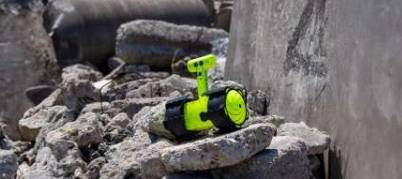
At the heart of the research is the "Soft Miniaturised Underground Robotic Finder" (SMURF), a small robot designed to navigate collapsed buildings and rubble piles to locate trapped individuals. Rescue teams can remotely control SMURF, allowing it to identify people in the most dangerous areas from a safe distance during early rescue phases.
SMURF is compact and lightweight, with a dual-wheel design to traverse debris and climb small obstacles. Professor Satoshi Tadokoro, a robotics expert at Tohoku University and one of the project's chief scientists, explained that multiple SMURFs can cover an entire rubble pile to search for victims. The development team tested various designs before finalizing the two-wheel version as the most effective.
Despite its small size, SMURF is "fully equipped," featuring a video camera and thermal imager, a microphone and speaker for two-way communication, and the powerful chemical sensor SNIFFER. SNIFFER detects substances naturally emitted by humans, such as carbon dioxide and ammonia, and can even distinguish between living and deceased individuals. Tested under real conditions, SNIFFER provides reliable data even in smoke or rain, helping rescuers prioritize living victims.
To expand SMURF's coverage, researchers integrated drone support into the system. Custom drones deliver robots directly to hard-to-reach or dangerous sites, transporting multiple units and placing them in various locations. The CURSOR team also developed aerial tools, including a "mothership" drone serving as a flying communication hub linking ground equipment to the command center; others carry ground-penetrating radar to detect victims under rubble, and some capture high-definition footage for detailed 3D maps of disaster zones, aiding rescue planning. These tools not only speed up searches but also minimize responders' time in hazardous areas.
The integrated system has undergone real-world testing, including large-scale field trials in Japan and Europe. In November 2022, a simulated disaster test in Afidnes, Greece, utilized the full suite of CURSOR technologies. Although the prototype rescue kit is not yet commercially available, it has garnered global interest, with Ristmäe reporting hundreds of purchase inquiries. The CURSOR team hopes to secure additional funding to refine the technology and bring it to market, potentially transforming future disaster responses.