
In the field of green energy, scientists at the National University of Singapore (NUS) have achieved a major breakthrough. Led by Assistant Professor Hou Yi, the team has demonstrated a perovskite-organic tandem solar cell with a power conversion efficiency of 26.4% over a 1cm² active area, setting a world record and marking the highest performance among devices of its kind. The results were published in Nature on June 25, 2025.
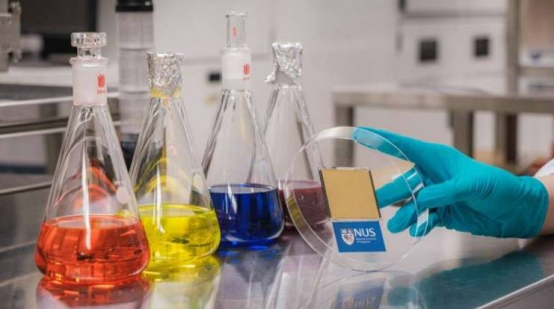
The breakthrough stems from a newly designed narrow-bandgap organic absorber layer. For years, near-infrared (NIR) photon harvesting has been a bottleneck in thin-film tandem solar cells. The new absorber significantly enhances this capability, laying the foundation for improved efficiency. Asst Prof Hou Yi, a President's Young Professor in the Department of Chemical and Biomolecular Engineering at the NUS College of Design and Engineering, leads the perovskite-based multijunction solar cell group at the Solar Energy Research Institute of Singapore (SERIS) and guided the team to this milestone.
Perovskite and organic semiconductors offer widely tunable bandgaps, enabling tandem cells to achieve extremely high theoretical efficiencies. Asst Prof Hou explained that perovskite-organic tandem solar cells are lightweight and flexible, making them ideal for directly powering drones, wearable electronics, smart fabrics, and AI-enabled devices. However, progress had lagged due to the lack of efficient NIR thin-film absorbers.
To overcome this, the team developed an asymmetric organic acceptor with an extended conjugated structure. This design enables deep NIR light absorption while maintaining sufficient driving force for efficient charge separation and promoting ordered molecular packing. Ultrafast spectroscopy and device physics analysis confirmed high free carrier collection with minimal energy loss. Leveraging the superior performance of the organic sub-cell, the researchers stacked it beneath a high-efficiency perovskite top cell, connecting the layers via a transparent conductive oxide (TCO)-based interconnect. The resulting tandem cell achieved 27.5% efficiency on a 0.05cm² sample and 26.7% on a 1cm² device, with 26.4% independently certified—leading among perovskite-organic, perovskite-CIGS, and single-junction perovskite cells of the same size.
Asst Prof Hou noted that these flexible thin films are expected to exceed 30% efficiency, are suitable for roll-to-roll production, and can be seamlessly integrated into curved surfaces or fabric substrates. For example, self-powered health patches could run onboard sensors using sunlight, while smart textiles could monitor biometrics without bulky batteries. In the next phase, the NUS team will focus on improving real-world operational stability and advancing pilot-scale production lines—key steps to commercializing flexible, high-performance solar technology. This achievement injects new vitality into green energy development and is poised to drive broader adoption of solar technology across diverse applications.