
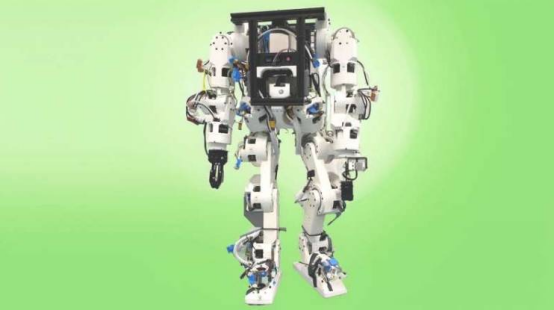
A team of engineers from UC Berkeley has successfully developed a low-cost, open-source humanoid robot called Berkeley Humanoid Lite, with research presented at the 2025 Robotics: Science and Systems (RSS 2025) conference. The team includes Chi Yufeng, a Ph.D. student in Electrical Engineering and Computer Sciences, among others.
Over the years, humanoid robotics has advanced rapidly, finding applications in industrial automation, healthcare, and beyond. However, Chi notes that most current hardware remains relatively expensive, and complete robots from commercial companies feature proprietary hardware and software designs, making part replacement or component modification difficult. This limits customization attempts and exploration of technological boundaries by new robotics researchers. Additionally, not everyone has access to advanced equipment, and many research projects demand overly sophisticated tools, leaving hobbyists and DIY enthusiasts unable to build robots from scratch.
To address these challenges, the team developed Berkeley Humanoid Lite. Its core design features modular 3D-printed gearboxes to drive actuators and the robot body, with other components sourced from e-commerce platforms or manufactured using standard desktop 3D printers. The total hardware cost is under $5,000 (based on U.S. market prices)—a fraction of comparable commercial robots—and 3D printing enables easy replacement parts.
Once assembled, Berkeley Humanoid Lite stands ~1 meter tall, weighs ~16kg, and can be built by a novice in about one week, depending on skill and experience. Users have already shared images of assembled robots in community chats.
Since development began four years ago, while some startups now offer more affordable metal actuators, Chi emphasizes that Berkeley Humanoid Lite's modular design offers key advantages: users can start by building and testing a single actuator, then integrate multiple into simple arms or legs.
To address 3D-printed part strength concerns, the team used cycloidal gear designs in actuator gearboxes, distributing load over a larger surface area to reduce stress and wear. Testing showed 3D-printed actuators perform at least as well as others, with no failures observed.
The team also tested Berkeley Humanoid Lite's ability to perform simple tasks, such as grasping objects and walking forward. For hand manipulation, a teleoperation system was implemented using joysticks to control grasping and object handling. A reinforcement learning-based motion controller enabled bipedal walking. However, Chi notes the robot's movements are currently "somewhat unstable and not very graceful," and he hopes the community will collaborate to improve the software.
Notably, all hardware designs, embedded code, and training/deployment frameworks for Berkeley Humanoid Lite are fully open-source. The team aims to enable users to understand its operation and easily customize the robot, advancing the democratization of humanoid robotics development.
In addition to Chi, co-authors include Associate Professor Koushil Sreenath (Mechanical Engineering, principal investigator), Ph.D. students Qiayuan Liao, Junfeng Long, Xiaoyu Huang, and Zhongyu Li (Mechanical Engineering), and Associate Professor Sophia Shao and Professor Borivoje Nikolic (Electrical Engineering and Computer Sciences).