
The global decline in wild bee populations has raised widespread concern. In regions characterized by intensive agriculture, suitable habitats are scarce, and isolated local conservation efforts often fail to compensate for these losses. However, researchers from the University of Göttingen and the University of Halle have recently made new discoveries, revealing that combining certain agricultural and environmental measures at the landscape level can provide greater protection for wild bees.
The research findings were published in the Journal of Applied Ecology. The researchers analyzed the impact of three large-scale environmental measures across 32 agricultural landscapes, including the creation of organic farmland, planting annually flowering plants, and establishing near-natural habitats with perennial plants, to determine the effects of different habitat combinations on wild bee populations and species diversity.
The study found that not all habitat combinations yield the same results. The combination of organic farming and perennial natural habitats (such as grasslands with perennial plants) proved particularly effective, supporting significantly higher wild bee populations than either habitat type alone. Many wild bee species, especially those other than bumblebees, benefited the most from this combination. The reason lies in the complementary nature of these areas, which provide diverse food sources and nesting sites over an extended period.
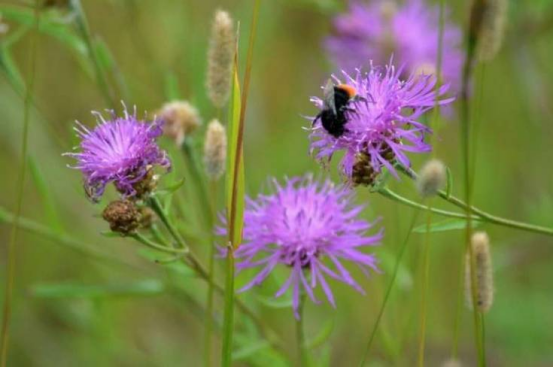
Bumblebees, however, are unique in that they can benefit from organic farming areas and near-natural habitats independently, regardless of whether both are present in the landscape.
Less successful combinations included organic farmland paired with areas planted with annually flowering plants. These habitats provide similar floral resources as food sources but lack additional variety, failing to enhance overall benefits for bees.
Katharina Czechowski, a doctoral researcher in Functional Agrobiodiversity and Agroecology at the University of Göttingen, explained that carefully designed combinations of habitat types are crucial. When different areas complement each other in terms of food and nesting resources, they can support a broader range of wild bee species. Dr. Annika Hass, the lead researcher of the ComBee project, added that this study provides important guidance for the development of future agricultural and environmental measures, highlighting the value of coordinated landscape-scale planning.
The study is part of the ComBee project, a collaborative effort between the University of Göttingen and the University of Halle.