
A rare opportunity to explore one of the solar system's most distant objects—Sedna—may be on the horizon. Scientists are investigating two breakthrough propulsion technologies that could send a spacecraft to this icy, reddish dwarf planet, far beyond Pluto's orbit, before it drifts into deep space centuries from now.
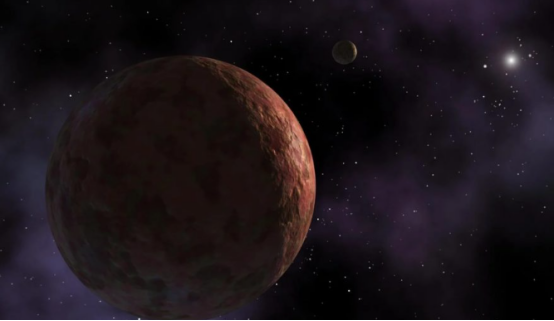
Sedna is extraordinarily distant from Earth, even at its closest approach, when it is nearly three times farther than Neptune is from Earth. Its orbit is vast, taking over 11,000 years to complete one revolution around the Sun. This makes Sedna's next close approach to Earth in 2075–2076 particularly significant, as it will not come this close again for thousands of years.
Sedna is more than just a distant rock. It is considered part of a new class of objects called "Sednoids" and may be the first known member of the inner Oort Cloud. Studying Sedna could reveal insights into the formation of the solar system and the mysteries of its outermost regions. Its surface, one of the reddest known, suggests it may be rich in complex or even organic chemical compounds. Additionally, with temperatures around -240°C, it is one of the coldest known places in the solar system.
A new study led by Elena Ancona at the Polytechnic University of Bari examines two radically different approaches to send a spacecraft to Sedna within the narrow time window of its closest approach to Earth.
The first approach involves a "Direct Fusion Drive" (DFD), a futuristic engine powered by nuclear fusion—the same process that powers the Sun. This engine could provide both thrust and electrical power, potentially revolutionizing space travel if successful.
The second approach is a more innovative enhancement of solar sails. This method uses heat to desorb particles from the sail's surface, a process called thermal desorption, and relies on Jupiter's gravity to accelerate the spacecraft as it departs from the solar sail.
Each approach has its strengths and weaknesses. The solar sail is faster, reaching Sedna in just seven years, while the fusion engine would take about ten years, including one and a half years for the thruster. However, the DFD could decelerate and enter Sedna's orbit upon arrival, allowing scientists ample time to conduct in-depth studies, map its surface, analyze its composition, and possibly discover any moons. In contrast, the solar sail would only perform a flyby, providing just a quick snapshot.
Both technologies currently face significant challenges. While nuclear fusion engines hold great promise, they remain in the conceptual stage, requiring major breakthroughs in controlling fusion reactions—a goal scientists have pursued for decades. Solar sails, based on existing technology, may be easier and quicker to deploy but still depend on precise timing, advanced materials, and clever use of planetary gravity.
With Sedna's approach in the 2070s, time is of the essence. To capture this distant planet while it remains within reach, scientists must act swiftly and embrace some risks. If successful, the mission would not only be an engineering triumph but also a rare and extraordinary journey to one of the solar system's most distant and mysterious realms.