
Space-based solar power has the potential to reduce Europe’s demand for land-based renewable energy by as much as 80%, potentially transforming the path to net-zero emissions by 2050. Researchers at King’s College London have conducted the first assessment of the potential impact of space-based solar power on Europe, with the findings published in the journal Joule.
The researchers analyzed the potential of a solar power system designed by NASA, planned for operational use by 2050. The study found that space-based solar power could reduce battery storage requirements by more than two-thirds. The design could also save money, lowering the total cost of Europe’s electricity system—including generation, storage, and grid infrastructure—by up to 15%, with projected annual savings of €35.9 billion.
This is the first study to explore the potential application of this form of renewable energy generation in the European grid and provides the first cost estimates for deploying the technology in the European market.
Lead author Dr. He Wei, Senior Lecturer in the Department of Engineering at King’s College London, said: “We have shown for the first time the positive impact this technology could have on Europe. While its feasibility is still under review, the research highlights the enormous economic and environmental potential once it is adopted. Achieving net-zero emissions by 2050 requires a massive shift toward renewable energy, and this emerging technology could play a critical role in that transition.”
Widespread use of renewable energy is essential for reaching net-zero by 2050, but the scale of investment and the pace of technological innovation still face major challenges. Solar energy collected in space is minimally affected by cloud cover and is not vulnerable to natural disasters such as floods and earthquakes, unlike terrestrial infrastructure.
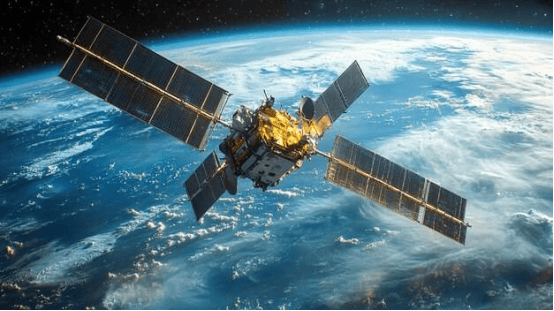
The NASA RD1 system analyzed in this study is one of two space-based solar power (SBSP) concepts designed by NASA. Space-based solar power involves placing large solar panels on orbiting satellites to continuously collect energy unaffected by clouds or day-night cycles. The energy is then transmitted to one or more receiving stations on Earth, converted into electricity, and fed into the grid or stored in batteries.