
Determining the age of stars is crucial for astronomical research, yet traditional observational methods cannot achieve this directly. A team of astronomers from the University of Toronto has developed an artificial intelligence model called ChronoFlow, which analyzes datasets of rotating stars in clusters and uses machine learning to uncover how stellar rotation speeds change with age. The research findings were published in The Astrophysical Journal, with prediction accuracy surpassing existing analytical models.
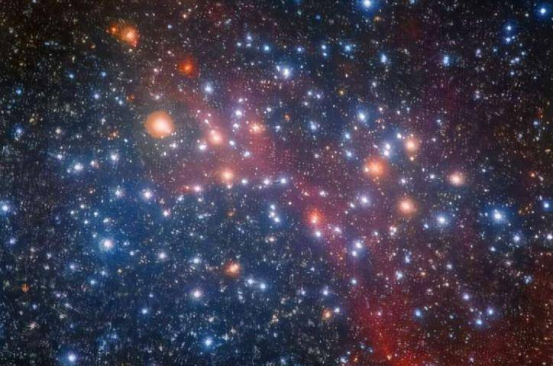
"The first 'wow' moment came during the proof-of-concept phase when we realized this technology actually showed great promise," said project leader Phil van Loon, a PhD student in the David A. Dunlap Department of Astronomy and Astrophysics at the Faculty of Arts & Science. The research team, collaborating with Assistant Professors Josh Speagle and Gwen Eadie from the fields of statistical science and astrostatistics, integrated two traditional approaches: leveraging differences in stellar evolutionary stages caused by mass variations within clusters, and the phenomenon where stellar rotation slows with age due to interactions between magnetic fields and stellar winds.
The ChronoFlow system is built on data from sky survey projects such as Kepler, K2, TESS, and GAIA, creating a catalog of rotating stars that includes over 30 clusters of different ages and approximately 8,000 stars. By training the AI model, the system successfully simulated the time-varying characteristics of stellar group rotation speeds. "It's like guessing the age of people in a new photo by looking at group photos of people at different ages," explained Professor Speagle, who supervised the project throughout. "Stars in a cluster share the same age, but the age of individual stars is unknown—our model solves this challenge."
The model not only provides a key tool for understanding stellar mechanisms but also holds significant value for exoplanet evolution and Galactic history research. The success of ChronoFlow validates the potential of machine learning in solving astrophysical problems. Its code and documentation have been made publicly available on GitHub, enabling researchers worldwide to infer stellar ages using observational data.