
Researchers at the Centre for Crop and Food Innovation (CCFI) at Murdoch University have achieved a major breakthrough by generating the first pangenome specifically for Australian chickpea varieties, laying the foundation for nationwide improvements in chickpea yield.
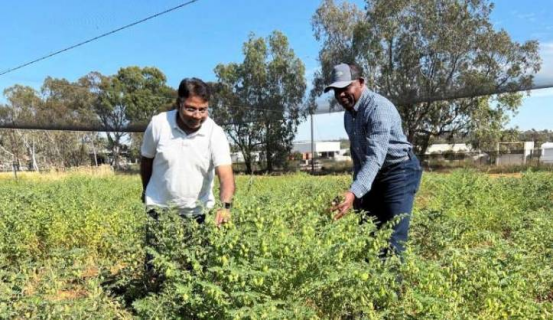
This comprehensive genetic resource comprises high-quality genome assemblies from 15 of the most popular chickpea varieties grown by Australian farmers and has revealed previously uncharacterized genetic diversity. This is critical for understanding and enhancing the key agronomic traits that underpin the success of Australian chickpea production, including yield, flowering time, acid soil tolerance, and drought resistance.
Published in the Plant Biotechnology Journal, the pangenome analysis identified 34,345 gene families, of which 13,986 are dispensable and enriched for genes associated with important agronomic traits.
The research was conducted in collaboration with the Australian Chickpea Breeding Program (jointly funded by the Grains Research and Development Corporation and the NSW Department of Primary Industries and Regional Development), Agriculture Victoria, the Department of Primary Industries and Regional Development Western Australia, the UWA Institute of Agriculture, and the BGI Research Centre.
The study identified structural variations influencing flowering time, seed weight, disease resistance, drought tolerance, and acid-soil adaptation, highlighting significant opportunities to broaden the genetic base of Australian chickpeas and ultimately support the long-term sustainability of production.
Researchers also found that introducing drought-tolerance QTL hotspot regions—already proven to deliver 15–22% yield advantages in elite varieties from India, Ethiopia, Kenya, and Tanzania—can further improve Australian chickpea varieties. Partners are currently working with industry to incorporate these hotspot regions into Australian germplasm and deliver them to growers.
Professor Rajeev Varshney, CCFI Director and corresponding author, stated that establishing the Australian chickpea pangenome is a vital step toward securing future production. It will accelerate the development of region-specific varieties that are more drought-tolerant, acid-soil tolerant, and resistant to diseases such as Ascochyta blight across Western Australia and nationwide. He looks forward to collaborating with breeding programs to get improved varieties into farmers' hands and thanked all partners, expressing hope that the research will increase farmer profitability and maintain Australia's position as a global leader in chickpea production.
Dr. Francis Ogbonnaya, Senior Manager for Oilseeds and Pulses at GRDC, said GRDC is proud to invest in this groundbreaking research on behalf of Australian grain growers. Seeing leading chickpea researchers unite to develop this critical genetic resource is essential for ensuring future productivity and sustainability under challenging growing conditions. This milestone investment in the Australian chickpea pangenome represents a major leap forward in understanding chickpea genetics and lays the foundation for breeding varieties with stronger drought and abiotic stress tolerance, directly addressing the urgent challenges faced by growers and demonstrating GRDC's commitment to delivering world-class science with real on-farm impact.
Dr. Kristy Hobson, chickpea breeder at the Australian Chickpea Breeding Centre, noted that since the first commercial chickpea variety was released in Australia in the 1970s, the industry has grown into a multi-billion-dollar sector, with last season's production exceeding 2 million tonnes and Australia ranking among the world's top chickpea exporters. However, the industry faces significant challenges including changing farming practices, shifting market demands, soil constraints, and severe disease pressure. The findings from this research fill critical knowledge gaps about the genetic makeup of Australian chickpea varieties and are essential for further variety improvement and identifying genes that control yield, stress tolerance, and disease resistance.