
Foam materials are widely used in automotive, household, mechanical engineering, and leisure sports sectors. However, conventional production relies heavily on crude oil, causing negative environmental impacts. In the EU-funded "BreadCell" project, an international consortium has successfully developed cellulose-based foam using a production process similar to baking bread. The foam is fully biodegradable and recyclable, with results published in the TAPPI Journal.
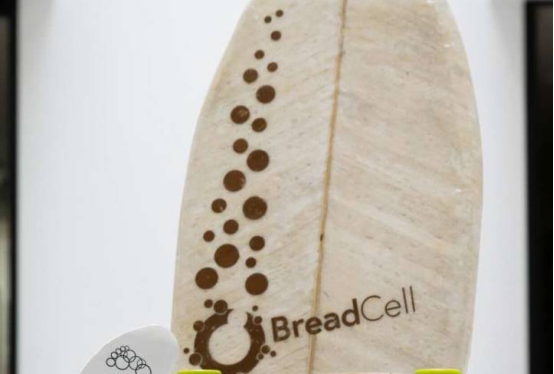
The Institute of Bioproducts and Paper Technology and the Institute of Vehicle Safety at Graz University of Technology played key roles in the technology development. Stefan Spirk from the Institute of Bioproducts and Paper Technology emphasized that implementing sustainability measures in as many areas as possible is crucial. Cellulose, derived from plants and abundantly available, was used in the project to replace petroleum-based products, yielding foam with broad application prospects.
Researchers found that this eco-friendly foam holds great potential in multiple fields: collision energy management in the automotive industry, insulation in construction, and sporting goods and shoe soles in the sports sector. The material also shows promise in humidity management and acoustic performance.
A core aspect of the project was using advanced simulation models to establish correlations between foam strength and fiber design. Comprehensive material characterization provided the data needed for simulations. Various load tests were conducted, and a dedicated test rig at Graz University of Technology characterized material behavior under dynamic and rapid loading. Using the data and models, foams with different densities and mechanical properties were produced and applied in demonstrators such as skateboards, surfboards, bicycle helmets, and insoles.
Florian Feist from the Institute of Vehicle Safety at Graz University of Technology noted that maintaining uniform density throughout the foam thickness proved challenging during development. However, this inhomogeneity offers an advantage in bicycle helmets: a softer middle layer creates shear forces between inner and outer layers, reducing rotational loads on the brain during impact—similar to the principle behind modern safety systems like MIPS.
In addition to project coordinator Chalmers University of Technology and Graz University of Technology, participants included University of Vienna (researching lightweight sandwich structures), Tecnalia in Spain (testing industrial feasibility), and BioNanoNet (BNN) in Graz (evaluating biodegradability and life-cycle performance).
Notably, the project has spawned the spin-off company FOAMO, which manufactures lightweight cushioning insoles based on the developed foam, bringing new commercial opportunities and directions to green manufacturing.