
As electronic device performance continues to rise, overheating has become a critical bottleneck limiting further development. Energy loss as electrons pass through materials generates heat buildup that not only slows devices but can also cause malfunctions or complete failure. To address this challenge, researchers are actively exploring next-generation semiconductor materials, particularly ultra-wide bandgap (UWBG) materials such as gallium oxide, aluminum gallium nitride, and diamond, aiming to enable revolutionary electronics in energy, health, and communications.
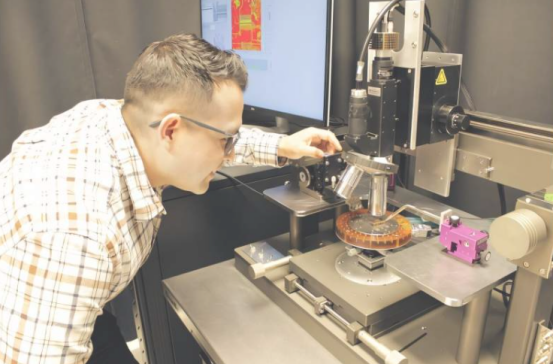
Ultra-wide bandgap materials have emerged as a research hotspot due to their superior electrical properties and high-temperature tolerance. Assistant Professor of Mechanical Engineering Georges Pavlidis notes that UWBG materials can withstand voltages up to 8,000V and operate stably above 200°C, opening possibilities for smaller, more efficient electronics. However, high cost, manufacturing difficulties, and the challenge of precisely measuring thermal behavior remain major obstacles.
To overcome these hurdles, Professor Pavlidis and colleagues from the University of Connecticut and the U.S. Naval Research Laboratory collaborated on new methods to measure temperature in UWBG devices. Their findings, published as a "Perspective" article in Applied Physics Letters, outline emerging technological trends and encourage more researchers to enter the field. The paper proposes several innovative techniques—including optical, electrical, and scanning probe methods—to accurately measure temperature at the microscale, providing engineers with powerful tools to design faster, more robust electronics.
The research is supported by the Microelectronics Commons project, which aims to accelerate commercialization of UWBG devices in power electronics. Professor Pavlidis, recently elevated to IEEE Senior Member, plans to partner with semiconductor companies to develop cost-effective strategies for reducing temperatures in power electronics. By pushing the limits of temperature measurement resolution, his lab hopes to drive innovation in fields like quantum computing and photonic circuits.
"We hope our work lays the foundation for thermal design of the next generation of UWBG devices," said Professor Pavlidis. As research progresses, ultra-wide bandgap materials are expected to play a pivotal role in electronic thermal management, driving electronics toward greater efficiency and reliability.