
A research team led by Dr. Julia Gutzweiler at the Institute of Cell Biology and Immunology, University of Konstanz, Germany, has made a significant breakthrough in understanding mammalian erythropoiesis. The study reveals that the chemokine CXCL12 triggers the expulsion of the nucleus from erythroid precursor cells—an essential final step in red blood cell maturation. Published in Science Signaling, the findings provide new insights for large-scale production of artificial blood.
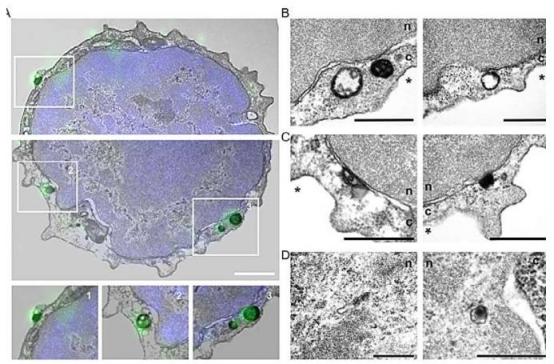
Dr. Gutzweiler stated: "In the final stage of red blood cell development, nuclear expulsion creates more space for hemoglobin. This process is unique to mammals. We have demonstrated that CXCL12, in cooperation with multiple factors, can artificially induce enucleation in nucleated erythroid cells." This discovery not only helps optimize industrial-scale red blood cell production under laboratory conditions but also deepens understanding of chemokine signaling mechanisms.
Professor Antal Rot, Professor of Inflammation Science at the William Harvey Research Institute, Queen Mary University of London, commented: "This study is the first to reveal intracellular functions of a chemokine receptor, offering a new perspective in cell biology." The breakthrough is expected to address clinical challenges such as blood shortages and transfusion safety, accelerating the development of artificial blood technology.