
Astronomers officially confirmed on Wednesday that the third interstellar object, 3I/ATLAS, is passing through the Solar System—the first since "Oumuamua" in 2017 and 2I/Borisov in 2019. This object, potentially the largest interstellar visitor discovered to date, is classified as a comet or "cosmic snowball" and is currently hurtling into the inner Solar System at over 60km/s, posing no threat to Earth.
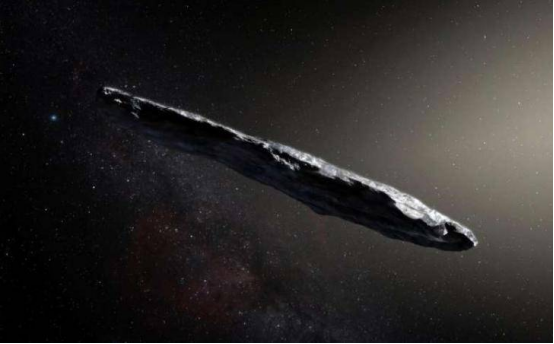
Peter Veres, an astronomer at the Minor Planet Center, described it as: "It looks a bit fuzzy with gas around it, and some telescopes have spotted a very short tail." Richard Moissl, head of planetary defense at the European Space Agency, explained that 3I/ATLAS was initially designated A11pl3Z, with its trajectory indicating it is not orbiting the Sun but originating from interstellar space. It is expected to reach perihelion on October 29 before gradually receding. Jonathan McDowell from the Harvard-Smithsonian Center for Astrophysics hypothesized: "These icy bodies may be linked to star system formation, later ejected into the Milky Way by stellar gravitational perturbations."
Chilean observatories first captured the object on Tuesday, and global astronomers confirmed its trajectory dates back to June 14 through archival data review. Moissl estimates its diameter at 10–20km, though it could be smaller if composed of highly reflective ice. Mark Norris, astronomer at the University of Central Lancashire in the UK, noted that 3I/ATLAS moves significantly faster than its predecessors and is currently about as distant as Jupiter. Models suggest up to 10,000 interstellar objects may exist in the Solar System at any time, and with the upcoming Vera C. Rubin Observatory in Chile, monthly detections could become routine.
While intercepting it with a spacecraft is infeasible, such visitors provide unique windows into exosolar environments. Norris emphasized: "If we detect amino acids or other life precursors on its surface, it would bolster confidence in life conditions in other star systems." Global teams are racing to analyze 3I/ATLAS's shape, composition, and rotation to uncover more secrets of this mysterious visitor.