
On July 2, TASS reported that, according to the official publication Science in Siberia of the Siberian Branch of the Russian Academy of Sciences, scientists in Novosibirsk have proposed a new formulation for wood chipboard (WCB) used in furniture production. The board incorporates agricultural, woodworking, and metallurgical waste, resulting in higher strength, water resistance, and fire resistance.
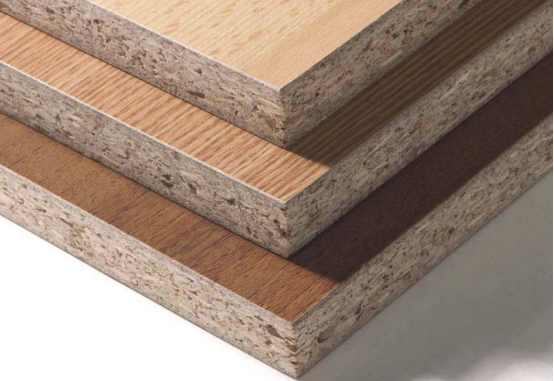
Chipboard is widely used for furniture, structural building elements, and containers. Traditional chipboard uses calibrated wood chips as filler and phenol-formaldehyde resin as binder, but these materials have poor durability, limited moisture resistance, and other drawbacks.
Scientists at the Institute of Solid State Chemistry and Mechanochemistry, Siberian Branch of the Russian Academy of Sciences of Russia, have developed a method to produce chipboard using agricultural waste (rice husks), woodworking waste (sawdust and shavings), and metallurgical waste (silica dust). The key innovation is the use of liquid sodium silicate (water glass) — an aqueous sodium silicate solution with a specific modulus — as the binder.
The main goal was to create an environmentally safe chipboard that completely replaces toxic phenol-formaldehyde resins, expands the range of recyclable waste, and ensures the new composite has sufficient strength, water resistance, improved fire resistance, and emits no harmful substances when burned.
To ensure environmental safety, the researchers used liquid sodium silicate solution and silicate modules as the binder. Silica dust waste and crushed rice husks serve both as fillers and as modifiers for liquid glass, enhancing the final product's water and fire resistance. Chromium, aluminum, zirconium, and other components in the waste accelerate hardening and increase material strength.
Testing of the resulting chipboard samples according to Russian national standards (GOST) showed adequate water resistance (thickness swelling less than 3% after 24 hours) and high strength characteristics, and the boards successfully passed fire tests. Senior researcher Zoya Korotaeva from the institute noted that the main feature of this chipboard is its fire resistance, achieved through the use of silicate water-based binder. However, due to the high cost and specific technology of silicate glue, the price is higher than traditional counterparts. She also emphasized the important contribution of Chinese colleagues in implementing this work.