
Clean, safe water is essential for human health, food security, high-tech industry development, and sustainable urbanization, yet rapid and accurate pollution detection remains a global challenge. Researchers at the National University of Singapore (NUS) have now achieved a breakthrough by developing a novel water quality sensor called ReSURF, poised to significantly advance water quality monitoring and management.
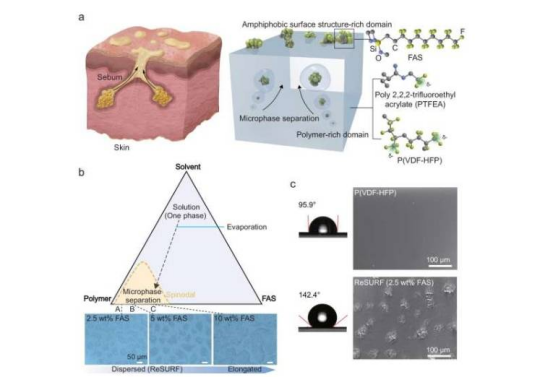
Inspired by the oily protective layer of human skin, a team led by Associate Professor Benjamin Tee from the NUS Department of Materials Science and Engineering, College of Design and Engineering, has translated this biological function into a multifunctional material called ReSURF that spontaneously forms a waterproof interface. The team's findings on ReSURF material design and the performance of the new sensor have been published in Nature Communications.
ReSURF is fabricated via rapid microphase separation and features self-healing and recyclable properties. The researchers integrated it into a triboelectric nanogenerator (TENG) to create the ReSURF sensor. Assoc Prof Tee explained that the ReSURF sensor can detect multiple contaminants, including oil and fluorinated compounds — challenging for many existing sensors — while offering unique advantages: self-powered, self-healing, reusable, and recyclable. It represents a sustainable solution for real-time, on-site, and sustainable water quality monitoring.
Current water monitoring technologies — such as electrochemical sensors, optical systems, and biosensors — are effective for specific applications (e.g., heavy metals, phosphorus, microbial contamination) but suffer from slow response, high cost, dependence on external reagents or power, limited reusability, and the need for bulky lab equipment or specialized instruments. The NUS ReSURF sensor overcomes these limitations and excels in real-time field sensing: the self-powered device detects contaminants in water in ~6 milliseconds (40 times faster than a blink).
Moreover, the ReSURF sensor is self-healing and recyclable, making it a sustainable, low-maintenance solution. Its stretchable and transparent nature allows easy integration into flexible platforms such as soft robotics and wearable electronics — unlike traditional sensing materials. ReSURF material used in the sensor dissolves readily in solvent, enabling easy recycling and reuse in new devices without performance loss, providing an environmentally friendly approach.
The ReSURF sensor monitors water quality by analyzing electrical signals generated when water droplets contact its surface. When analyte-containing droplets hit the waterproof surface, they spread rapidly, slide off, and generate charge; signal amplitude and characteristics vary with analyte composition and concentration. Real-time signal monitoring enables fast, accurate water quality assessment without external power.
To demonstrate capability, the team tested the ReSURF sensor on a pufferfish-like soft robot, detecting oil and perfluorooctanoic acid (PFOA) in water. Encouraging results showed distinct voltage signals for each pollutant, confirming potential for early contamination monitoring.
The ReSURF sensor has broad application potential: it can be deployed in rivers, lakes, and reservoirs for early pollution monitoring and rapid response to water contamination emergencies; in agriculture, it can monitor water safety in areas such as rice paddies; in industrial environments and wastewater treatment plants, it can provide reference data for wastewater management.
The research team plans to further optimize the ReSURF sensor by enhancing pollutant detection specificity, integrating wireless data transmission capabilities, scaling the system for long-term or large-scale environmental monitoring, and exploring additional eco-friendly material alternatives to increase sustainability and compliance with environmental regulations. Associate Professor Tee stated that future iterations could incorporate other sensing modalities or machine-learning-based signal analysis for more precise identification and classification of pollutants, positioning the platform as a foundation for developing smarter and faster-responding water quality monitoring systems.