
Scientists from the SKIF Shared Research Center, together with Russian research and education teams, have secured funding under the federal scientific and technical program "Development of Synchrotron and Neutron Research and Research Infrastructure for 2030 and Beyond." Over the next three years, the program requires researchers to develop technologies for restoring aircraft engine blades and gas turbine components and to improve the efficiency of extracting hard-to-recover oil and gas reserves.
Synchrotron Radiation Applications in Aviation and Energy
Aircraft engine components require regular maintenance and repair. Engine blades are constantly exposed to high temperatures, combustion products, and dust particles. As part of the funded project, scientists will develop techniques to restore damaged blades – a task equally applicable to gas turbine blades and to increasing the durability of components in metallurgy and mining equipment.
Junior researcher Alexey Studennikov from the Khristianovich Institute of Theoretical and Applied Mechanics (Siberian Branch of the Russian Academy of Sciences) stated that modern synchrotron research methods not only enable control of the restoration process of gas turbine engine blades but can also diagnose the appearance and volumetric structure of cracks with sub-micron precision (>1µm) at the earliest stages of formation. Implementing this technology will extend power plant lifetimes and create new opportunities for unit restoration.
SKIF scientists will use synchrotron radiation to diagnose and monitor the strength characteristics of materials and structures and to study friction welding techniques that produce welded joints with strength equal to the base material. Academician Vasily M. Fomin, Scientific Director of ITAM SB RAS, emphasized the need to investigate material behavior under load and to observe atomic lattice dynamics at the atomic level.
Participating institutions include the Siberian Branch of the Russian Academy of Sciences, the Khristianovich Institute of Theoretical and Applied Mechanics SB RAS, the SKIF Shared Research Center, and others. Faculty from the Physics Department of Novosibirsk State University will be involved in personnel training and professional retraining.
Synchrotron Radiation for Oil and Gas Challenges
With conventional oil and gas reserves inevitably depleting, the petroleum industry must develop effective technologies for extracting hard-to-recover hydrocarbons from deep, geologically complex formations with low permeability. Western Siberia's Bazhenov and Abalak Formations contain enormous volumes of such "tight" oil that traditional methods cannot economically produce. Experts estimate the geological oil resources of the Bazhenov Formation alone at 18–60 billion tonnes, compared to roughly 15 billion tonnes of oil already extracted from Western Siberia historically.
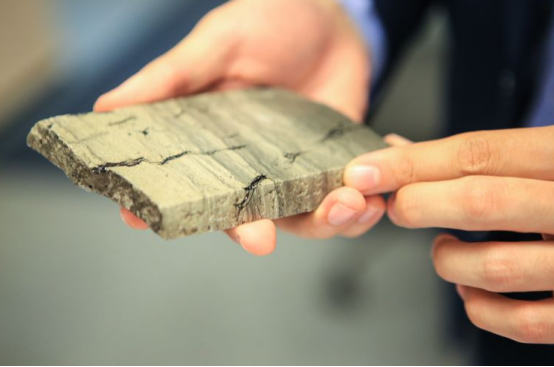
Digital core technology is an innovative tool for improving recovery from tight reserves: it creates a "digital twin" of deep rock samples using X-ray tomography data from real core samples.
Synchrotron radiation enables dynamic observation of microscopic processes inside rock during hydrocarbon production at micrometer and nanometer scales, dramatically increasing digital core model accuracy, deepening understanding of reservoir processes, and optimizing production rates. Professor Sergey Golovin, Director of the Gazpromneft – Novosibirsk State University Scientific and Educational Center and Corresponding Member of the Russian Academy of Sciences, noted that the digital core project combines cutting-edge techniques and that the unique capabilities of synchrotron radiation allow tracking the impact of various enhanced recovery methods on rock, thereby selecting the optimal development strategy.
The research involves staff from Novosibirsk State University, the SKIF Shared Research Center, Tomsk Polytechnic University, and other institutions. In 2023, these organizations signed agreements to address these challenges.